Key takeaways
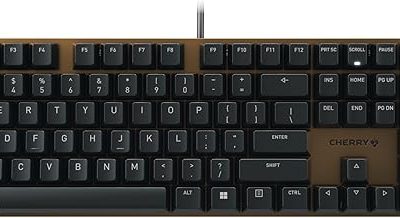
- Best default for a homework desk: A full-size, quiet wired keyboard with standard spacing. It is easy to connect, needs no battery management, and preserves familiar key placement.
- Best for carrying between locations: A tenkeyless or 75% keyboard with clearly labeled keys. Confirm that its function-layer shortcuts are manageable for the child.
- Best for a tablet: A compact Bluetooth keyboard only when the tablet supports it and pairing is allowed. Check that the child can reconnect it independently and that the typing position is comfortable.
The best keyboards for kids are simple, comfortable models with familiar key spacing, a sturdy build, and a connection that works reliably with the child’s school device. For most younger students, start with a full-size wired keyboard; choose a compact layout only if the child has limited desk space or needs to carry it, and treat spill resistance as a safeguard rather than permission to use drinks nearby.
Choose by age, desk, and school device
A keyboard that looks smaller is not automatically easier to learn on. Full-size keys with standard spacing help children build typing habits that transfer to school computers. Compact keyboards can be a good fit for small desks and backpacks, but tightly packed keys or missing navigation keys may frustrate a beginner.

Keyboard Piano for Kids, BIGFUN 37 Keys Toddler Piano Instrument Toy, Blue
Included for 'Best Keyboards for Kids' because the listing specifies BIGFUN 37 Keys Toddler Piano Instrument Toy and Blue, details this guide uses to compare options.
View on Amazon
Kids Piano Keyboard, 61 Key Portable Electronic Piano with Teaching Mode
Included for 'Best Keyboards for Kids' because the listing specifies 61 Key Portable Electronic Piano with Teaching Mode, details this guide uses to compare options.
View on Amazon
Love&Mini Kids Piano Keyboard Toys for Girls
Included for 'Best Keyboards for Kids' as a relevant option in this category; details come from the product listing.
View on Amazon
Upgraded 37 Keys Kids Piano Keyboard with Mic for 3 4 5 6 Boys Girls - Pink
Included for 'Best Keyboards for Kids' because the listing specifies Pink, details this guide uses to compare options.
View on Amazon| Child’s situation | Best starting point | What to check |
|---|---|---|
| Learning to type at a fixed desk | Full-size, wired USB keyboard | Standard key spacing, low typing force, and a cable that reaches the device without crossing a walkway |
| Small desk or frequent travel | Compact 75% or tenkeyless keyboard | Whether the child can still reach arrow keys and the keys needed for schoolwork |
| Tablet-based schoolwork | Compact Bluetooth keyboard, if the tablet supports it | Operating-system compatibility, pairing steps, and whether a case or stand is also needed |
| Shared or spill-prone workspace | Keyboard with documented spill resistance | What kind of spill protection the manufacturer specifies; no keyboard should be treated as waterproof |
| School-managed laptop | Wired USB or approved Bluetooth model | School policy, available ports, and whether Bluetooth pairing is allowed or restricted |
Layout and spacing: prioritize familiar keys
Full-size keyboards include a number pad, which is useful for number-heavy homework but takes up more desk space. Tenkeyless models remove that pad while keeping the main typing area and usually the arrow keys. A 75% layout is more compact still, but some navigation keys may be combined with other keys or accessed through a function layer.
For a child just learning to type, look for a conventional layout with clearly separated keys and a standard QWERTY arrangement. Small hands do not necessarily benefit from unusually tiny keys: reaching is only one part of typing, and crowded keys can make it harder to locate letters by touch. If possible, have the child try the keyboard at a library or school before choosing an unusually compact model.
Comfort matters more than gaming features
For schoolwork, prioritize a stable base, comfortable key height, and keys that do not require excessive force. A keyboard that slides around or makes the child stretch their wrists can turn short assignments into tiring sessions. Keep the keyboard flat or use only a mild tilt, and position it close enough that the child’s elbows stay near their sides.
Mechanical keyboards can be durable and customizable, but they are often taller and louder than basic membrane keyboards. Loud switches may distract classmates or family members, and a high profile may feel awkward without a suitable desk setup. A quiet, low-profile keyboard is often the more practical default for homework. Backlighting, macros, and elaborate gaming software are optional—not evidence of better typing comfort.
Spill resistance: useful protection, not a waterproof guarantee
Spill-resistant designs can help protect against small accidents, but the level of protection varies. Check the manufacturer’s description rather than assuming that “washable,” “spill-proof,” or a drainage feature means the keyboard can be submerged or used while wet. If a spill happens, disconnect a wired keyboard or switch off a wireless one, then follow its care instructions and let it dry fully before reconnecting it.
The simplest protection is still to keep drinks off the desk area around the keyboard. This is particularly important for rechargeable wireless models: moisture can affect both the keyboard and its charging port.
Wired or wireless? Match the connection to the device
Wired USB
A wired keyboard is usually the easiest choice for a desktop or laptop with an available USB port. It does not need charging or pairing, and there is no wireless link to troubleshoot. Check whether the school device has the right port: a USB-A keyboard may require an adapter for a laptop with only USB-C, and school policies may limit which accessories can be connected.
Route the cable behind the desk, leave enough slack for typing, and keep it away from feet and chair wheels. This avoids a common safety problem: a child pulling a device off the desk by catching the cable.
Wireless USB receiver or Bluetooth
A keyboard with a USB receiver avoids a cable across the desk, but the receiver is easy to lose and may not work with a tablet or a port-limited laptop. Bluetooth avoids a dedicated receiver, though initial pairing and reconnection can add steps. For either type, check battery requirements, charging method, and whether the school permits wireless accessories. Keep charging cables and loose receivers away from younger children when they are not in use.
Check compatibility before buying
Most standard USB keyboards work with common desktop operating systems without special software, but school-managed devices may restrict peripherals. Tablets need a compatible keyboard connection, and some compact models rely on function-layer shortcuts that can behave differently across operating systems. Verify the device’s ports, Bluetooth support, school rules, and any required keyboard shortcuts before choosing.
For example, if a student uses a USB-C-only Chromebook and the school allows wired peripherals, a USB-A keyboard may need a USB-C adapter. If the school blocks Bluetooth pairing, a Bluetooth keyboard is not a dependable choice even if it is otherwise compatible. In either case, confirm that the child can use the keys needed for class before removing packaging or discarding the receipt.
Three practical choices
- Best default for a homework desk: A full-size, quiet wired keyboard with standard spacing. It is easy to connect, needs no battery management, and preserves familiar key placement.
- Best for carrying between locations: A tenkeyless or 75% keyboard with clearly labeled keys. Confirm that its function-layer shortcuts are manageable for the child.
- Best for a tablet: A compact Bluetooth keyboard only when the tablet supports it and pairing is allowed. Check that the child can reconnect it independently and that the typing position is comfortable.
A quick buying checklist
- Choose a familiar layout and readable key labels.
- Measure desk space, including room for a mouse or school materials.
- Check that the connection matches the actual school device and its rules.
- Look for manufacturer-documented spill resistance if accidents are a concern.
- Prefer stable, quiet keys and a comfortable typing height over flashy extras.
- Consider whether the child can manage charging, pairing, or a small receiver without help.
For most children, a standard full-size or tenkeyless keyboard is the safest starting point. Move to a smaller Bluetooth model when portability or tablet use makes it worthwhile—not just because a compact keyboard appears more child-sized.