Key takeaways
- 330 ml bottle or 11.2-ounce can: choose 13–15 ounces.
- 12-ounce bottle or can: choose 15–16 ounces.
- 16-ounce can or draft pour: choose 18–22 ounces.
- Large-format sharing pour: use a pitcher or divide the beer between glasses rather than overfilling one.
The best pilsner glasses for a better pour are tall, gently tapered glasses with a moderate bowl, a clean rim, and enough capacity for roughly 12 ounces of beer plus a stable head.
That shape is not only traditional: it gives carbonation room to rise, helps preserve a dense foam cap, and lets you see the beer’s color and clarity. The right choice depends on whether you value maximum head retention, easy storage, dishwasher convenience, or a more refined drinking experience.

Libbey Stockholm Pilsner Beer Glasses Set of 4, 14.5oz, Tall, Slender Pint Glasses for Pilsner, Kolsch, Lager, and More, Unique Beer Gift Set
Included for 'Best Pilsner Glasses for a Better Pour' because the listing specifies 14.5oz and Tall, details this guide uses to compare options.
View on Amazon
JoyJolt Callen 15.5oz Beer Glasses Set of 4 Beer Pint Glass. Craft Beer Glass, Pilsner Glasses, IPA Beer Glass. Solid Glassware Beer Cup. Classic Beer Gifts, Beer Cups, Mugs and Beer Glasses for Men
Included for 'Best Pilsner Glasses for a Better Pour' because the listing specifies Pilsner Glasses and IPA Beer Glass. Solid Glassware Beer Cup. Classic Beer Gifts, details this guide uses to compare options.
View on Amazon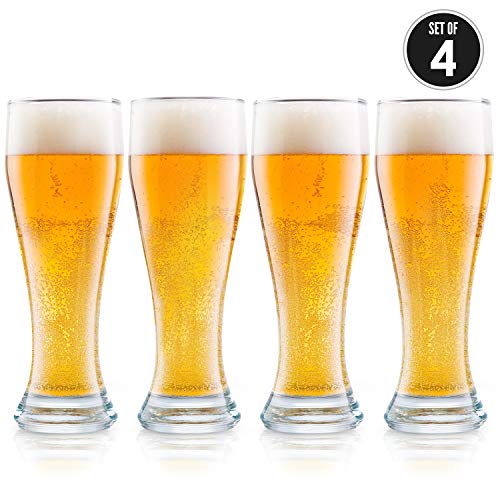
DU VINO USA Made Nucleated Pilsner Glasses- Etched Beer Glass for Better Head Retention, Aroma and Flavor - 16 oz Craft Beer Glasses for Beer Drinking Bliss - 4 Pack
Included for 'Best Pilsner Glasses for a Better Pour' because the listing specifies Aroma and Flavor and 16 oz Craft Beer Glasses for Beer Drinking Bliss, details this guide uses to compare options.
View on Amazon
Libbey Craft Brews Assorted Beer Glasses Set of 6, Versatile, Premium Beer Glass Set, Craft Beer Glasses for Pilsner, Stout, Lager, IPA & More
Included for 'Best Pilsner Glasses for a Better Pour' because the listing specifies Versatile and Premium Beer Glass Set, details this guide uses to compare options.
View on AmazonBest pilsner glass shapes compared
Pilsner glasses generally fall into three useful shape categories. Each changes the way beer pours, smells, and feels in the hand.
| Shape | Typical capacity | Head retention | Best for | Main compromise |
|---|---|---|---|---|
| Tall, narrow, strongly tapered | 12–16 oz | Good to very good | Classic German or Czech pilsner, visual presentation | Less forgiving of an aggressive pour |
| Tall bowl with a wider lower body | 16–20 oz | Very good | Highly carbonated lagers and aroma | Uses more cupboard space |
| Flared or trumpet rim | 12–16 oz | Moderate to good | Foam display and generous sips | Foam can spread and collapse faster |
Tall, narrow pilsner glasses
The classic narrow pilsner glass emphasizes clarity, color, and a tall white head. Its smaller opening limits the exposed surface area of the beer, which can slow aroma loss and help carbonation remain lively. A modest taper also encourages foam to collect at the top rather than spreading across a broad bowl.
This is the safest all-purpose design if you mainly drink traditional pilsners, kölsch, helles, and other crisp lagers. Look for a capacity of 14–16 ounces if you typically pour a standard 12-ounce bottle or can. That leaves around 2–4 ounces of headroom for a controlled head.
Wider, tulip-like pilsner glasses
A wider lower bowl provides more room for aromas and makes the glass less likely to overflow when pouring highly carbonated beer. The narrowing near the rim still concentrates some aroma and supports foam. This shape is a strong choice for unfiltered pilsners, fresh draft lager, and beers with noticeable hop or malt fragrance.
The trade-off is that a broad bowl warms slightly faster in a warm room and can make a small head look less dramatic. It is also more vulnerable to fingerprints and requires more cupboard space.
Flared-rim glasses
A flared rim creates the familiar “tower of foam” appearance and directs beer toward the front of the palate. It can make a very crisp pilsner feel especially refreshing. However, the wider opening gives foam more room to spread, so head retention depends more heavily on clean glassware and a careful pour.
Capacity: choose for the pour, not the label
Glass capacity is often misunderstood. A 16-ounce glass does not necessarily hold a full 16-ounce beer while leaving a proper head. If you pour a 12-ounce beer and reserve 20% of the glass for foam and air space, the calculation is:
12 oz ÷ 0.80 = 15 oz
That makes a 15–16-ounce glass a sensible minimum for a 12-ounce serving. For a 16-ounce can, use:
16 oz ÷ 0.80 = 20 oz
In practice, a 20-ounce glass is more comfortable for a full pint-sized serving. Avoid filling any glass to its marked maximum; the final ounce or two is useful working space for foam and a steady grip.
- 330 ml bottle or 11.2-ounce can: choose 13–15 ounces.
- 12-ounce bottle or can: choose 15–16 ounces.
- 16-ounce can or draft pour: choose 18–22 ounces.
- Large-format sharing pour: use a pitcher or divide the beer between glasses rather than overfilling one.
Rim profile and drinking comfort
The rim has more effect than its small size suggests. A thin, polished rim gives a precise flow and makes the glass feel lighter. It is usually preferred for delicate lagers, but thin rims can be more vulnerable to chips and thermal shock.
A slightly rolled or reinforced rim is more durable and comfortable for everyday use. It may feel less refined, but it is a sensible choice for households where glasses are frequently loaded into a dishwasher.
A flared rim makes foam easier to appreciate and can soften the first sip. A straight rim gives a more concentrated stream of beer and tends to look cleaner with a narrow head. If you dislike foam running down the outside of the glass, choose a straight or only mildly flared rim.
Stemmed versus stemless pilsner glasses
Stemmed designs
A stem keeps your hand away from the bowl, reducing heat transfer and fingerprints. This matters when serving a cold pilsner slowly: warm hands can raise the beer’s temperature and accelerate loss of carbonation. A stemmed glass also looks more formal and makes it easier to inspect the beer without covering its color.
The drawbacks are practical. Stems are vulnerable to knocks, take more vertical storage space, and may need extra care in a crowded dishwasher. A broad, stable foot helps, but no stemmed design is as impact-resistant as a thick stemless glass.
Stemless designs
Stemless pilsner glasses are easier to store, harder to tip, and generally better for patios or casual gatherings. They are also easier to replace as a matching set. Choose one with a narrow waist or a lower gripping area so your hand does not wrap around the entire beer-filled bowl.
If you drink slowly, serve beer outdoors, or frequently use a dishwasher, stemless is usually the more practical choice. If temperature control and presentation matter more, choose a stemmed model.
How glass shape affects head retention
Head retention depends on more than shape. Proteins from the malt, hop compounds, carbonation level, pouring angle, and glass cleanliness all contribute. A well-designed glass can support the foam, but it cannot rescue detergent residue or an over-warm beer.
For the most persistent head, prioritize these features:
- A narrow upper bowl or gentle inward taper.
- A polished, undamaged rim.
- Vertical walls or subtle nucleation points near the lower interior.
- A capacity that leaves at least 15–20% room above the beer.
- A surface free of oil, lipstick, and rinse-aid residue.
Laser-etched or molded nucleation points can release carbon dioxide from the bottom of the glass, helping maintain a lively stream of bubbles. They are useful for highly carbonated lagers, but they may make foam rise quickly during the first pour. If using a nucleated glass, pour slowly at first and pause when the head reaches the shoulder of the glass.
Dishwasher safety and durability
“Dishwasher safe” does not mean every washing cycle is equally gentle. Thin crystal-like glasses can survive a dishwasher but still become cloudy, scratched, or weakened over time if placed against plates or exposed to harsh heat.
For regular machine washing, choose soda-lime or lead-free crystal glass with a reinforced rim, a stable base, and enough clearance that the glass does not touch the rack above it. Use a lower-temperature cycle when available, avoid overcrowding, and let the glasses cool before moving them.
Hand washing is preferable for very thin stemmed glasses, etched designs, and premium lead-free crystal. Rinse thoroughly: invisible detergent residue can flatten foam and produce a soapy aroma.
Decision matrix: which type should you buy?
| Your situation | Recommended specification | Why |
|---|---|---|
| Mostly 12-ounce cans and bottles | 15–16 oz, tall and moderately tapered | Leaves enough room for a 1–2 inch head without looking underfilled |
| Mostly 16-ounce cans | 18–20 oz, wider lower bowl | Prevents overflow and gives the beer room to settle |
| Maximum head retention | Narrow upper bowl, clean thin rim, optional nucleation | Supports foam while keeping carbonation active |
| Frequent dishwasher use | Stemless, reinforced rim, lead-free crystal or soda-lime glass | Reduces breakage and simplifies loading |
| Slow sipping or warm indoor room | Stemmed, 14–18 oz design | Keeps hands away from the beer and concentrates aroma |
| Outdoor use or shared gatherings | Thicker stemless glass, 16–20 oz | More stable and less fragile than a fine stemmed glass |
How to pour a pilsner into the right glass
- Rinse the glass with cold water. This removes lingering residue and slightly cools the interior.
- Hold the glass at about 45 degrees. Aim the beer down the inside wall rather than directly at the base.
- Pour steadily until the glass is about two-thirds full. A slow stream limits turbulence and keeps the first head manageable.
- Set the glass upright and finish the pour. For a typical pilsner, aim for roughly 1–2 inches of dense foam.
- Wait 30–60 seconds if necessary. Highly carbonated beer may need time to settle before the final top-up.
If the head disappears immediately, check the glass before blaming the beer. Grease, rinse aid, detergent film, and scratches are common causes. Wash the glass without fabric softener, rinse well, and test it by wetting the inside: water should form an even film rather than breaking into isolated beads.
Bottom line
For most drinkers, the best pilsner glasses are a 15–16-ounce, moderately tapered pair with a thin-to-medium rim and reliable dishwasher durability. Choose a 18–20-ounce wider bowl for full pints or highly carbonated beer, stemmed glassware for temperature control and presentation, and stemless glasses for everyday practicality. The best shape still needs a clean surface, adequate headroom, and a controlled pour to deliver the foam and carbonation a pilsner deserves.