Key takeaways
- Controller support: Can it commission and manage Matter devices?
- Radio support: Does it include Zigbee, Z-Wave, Thread, or only Wi-Fi?
- Local processing: Will lights and sensors continue working during an internet outage?
- Platform compatibility: Does it work with Apple Home, Google Home, Alexa, SmartThings, or Home Assistant?
The best smart home hubs for most homes in 2026 are Home Assistant Green for flexibility, Aeotec Smart Home Hub for an easy mixed-brand setup, Apple TV 4K or HomePod mini for Apple households, and Hubitat Elevation C-8 Pro for reliable local automations without depending heavily on the cloud.
Quick picks by home and ecosystem
| Your situation | Best choice | Why it fits |
|---|---|---|
| Small apartment, mostly Wi-Fi and Matter devices | Google Nest Hub (2nd gen) or Apple HomePod mini | Compact, simple, and able to act as a Matter controller; choose according to your phone ecosystem. |
| Mixed-brand home with lights, sensors, and locks | Aeotec Smart Home Hub | Supports SmartThings, Zigbee, Z-Wave, Wi-Fi, and Matter devices in one mainstream interface. |
| Large or technically demanding home | Home Assistant Green plus a compatible radio adapter | Strong local control, extensive integrations, dashboards, and automation logic. |
| Privacy-focused local automations | Hubitat Elevation C-8 Pro | Most routines continue locally, with Zigbee and Z-Wave support and detailed rule-building. |
| Apple household with minimal tinkering | Apple TV 4K or HomePod mini | Native Apple Home control, Matter support, and Thread border-router capability on compatible models. |
| Alexa household needing built-in device radios | Fourth-generation Amazon Echo | Combines Alexa, Zigbee, Matter, and Thread support in one speaker, depending on device firmware and region. |
What a smart home hub actually does
A hub is more than a central app. It may translate between wireless protocols, keep automations running when the internet is unavailable, act as a Matter controller, and extend a Thread mesh through the home.
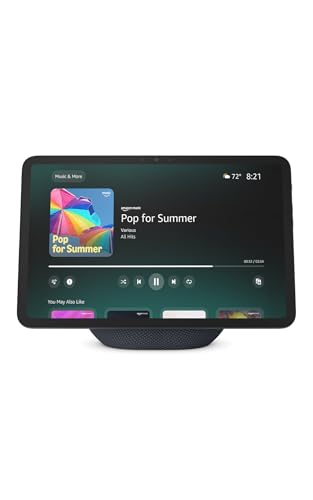
Amazon Echo Show 11 (newest model), Vibrant Full-HD 11" display with more viewing area and spatial audio, Designed for Alexa+, Graphite
Included for 'Best Smart Home Hubs for Every Setup' because the listing specifies Designed for Alexa+ and Graphite, details this guide uses to compare options.
View on Amazon
Home Assistant Green | Smart Home hub with Advanced Automation | Official Home Assistant Hardware
Included for 'Best Smart Home Hubs for Every Setup' because the listing specifies Smart Home hub with Advanced Automation and Official Home Assistant Hardware, details this guide uses to compare options.
View on Amazon
Aqara Smart Home Hub M3 for Advanced Automation, Matter Controller, IR
Included for 'Best Smart Home Hubs for Every Setup' because the listing specifies Matter Controller, details this guide uses to compare options.
View on AmazonThese jobs are separate. A device can be a Matter controller without supporting Zigbee or Z-Wave. A Thread border router can connect Thread devices to your home network, but it does not automatically control every Thread product. Before buying, check four capabilities:
- Controller support: Can it commission and manage Matter devices?
- Radio support: Does it include Zigbee, Z-Wave, Thread, or only Wi-Fi?
- Local processing: Will lights and sensors continue working during an internet outage?
- Platform compatibility: Does it work with Apple Home, Google Home, Alexa, SmartThings, or Home Assistant?
Matter and Thread: useful, but not interchangeable
Matter is an application standard. It defines how compatible devices expose functions such as lights, plugs, thermostats, and locks. Thread is a low-power mesh network that some Matter devices use for communication. Wi-Fi and Ethernet can also carry Matter.
For example, a Matter-over-Thread door sensor needs a Thread border router and a Matter controller. A Matter-over-Wi-Fi plug needs a Matter controller, but not Thread. A hub advertised as “Matter compatible” may support only one of those roles, so read the specifications carefully.
Thread is particularly valuable for battery-powered sensors because it uses less energy than Wi-Fi. It is not a replacement for every wireless standard, though. Zigbee still offers a broad range of inexpensive bulbs and sensors, while Z-Wave remains attractive for locks, switches, and installations where sub-GHz range helps penetrate walls.
Head-to-head: the strongest hub choices
Home Assistant Green: best for maximum flexibility
Home Assistant Green is a small appliance designed to run Home Assistant without requiring you to build a server. It connects to your network over Ethernet and handles integrations, dashboards, scripts, and automations locally. You usually add Zigbee, Z-Wave, or other radio support with a separate USB adapter.
Choose it if you want one dashboard for devices from many brands, detailed presence detection, or automations involving conditions such as time, room occupancy, energy use, and weather. The trade-off is setup complexity. Pairing a Matter device is relatively approachable, but combining several radio networks and third-party integrations can require troubleshooting.
Aeotec Smart Home Hub: best mainstream mixed-brand option
The Aeotec Smart Home Hub uses the SmartThings platform and includes Zigbee and Z-Wave radios, while also supporting Wi-Fi-connected and Matter devices through the platform. It is a good fit when you want broad compatibility without maintaining a separate computer.
It suits medium-sized homes with a mixture of switches, sensors, locks, and appliances. SmartThings automations are easier to approach than a full Home Assistant installation, although advanced behavior may depend on cloud services or platform changes. Confirm current Matter device support for unusual product categories before buying.
Hubitat Elevation C-8 Pro: best for local automation control
Hubitat is aimed at people who want reliable local routines and more control than a basic voice assistant provides. The C-8 Pro supports Zigbee and Z-Wave and can coordinate many devices without sending every automation to a remote server.
It is especially suitable for a larger home with wall switches, motion sensors, contact sensors, and locks. The interface is less polished than Apple Home or Google Home, and Matter support should be checked against the exact device type you plan to use. Hubitat is a controller, not a universal radio: Wi-Fi products still need their own network integration.
Apple TV 4K and HomePod mini: best for Apple households
Apple TV 4K and HomePod mini can serve as Apple Home hubs, while compatible models also provide Thread border-router functionality. They are the easiest choice when the household already uses iPhones, Siri, and the Apple Home app.
Apple’s strength is a clean setup experience and consistent access control. Its limitation is ecosystem dependence: devices must expose the features Apple Home supports, and advanced cross-brand automation may be less configurable than in Home Assistant. Apple TV 4K is the better hub if you also want a wired Ethernet connection and media-center duties.
Amazon Echo: best for Alexa-first homes
The fourth-generation Echo combines a speaker with Zigbee, Matter, and Thread capabilities. That can reduce the number of boxes in a smaller setup. Alexa routines are approachable, and the Echo platform works with a broad range of Wi-Fi products.
Check the exact Echo generation before purchasing. Not every Echo model has the same built-in radios, and some Matter device types or setup flows can vary by firmware and region. An Echo is convenient, but users seeking highly detailed local automation may prefer Hubitat or Home Assistant.
Wireless standards and practical limits
| Standard | Typical role | Approximate indoor range | Power profile |
|---|---|---|---|
| Wi-Fi 4/5/6 | Cameras, speakers, appliances, Matter devices | About 30–50 m in open indoor conditions; less through walls | High; usually mains-powered |
| Thread | Matter sensors, locks, lights, and low-power devices | Roughly 10–30 m per hop indoors | Low; mesh-capable |
| Zigbee | Bulbs, switches, sensors, plugs | About 10–30 m per hop | Low; mesh-capable |
| Z-Wave | Locks, switches, sensors, security devices | Often 30–100 m per hop, depending on region and construction | Low; mesh-capable |
These are planning ranges, not guarantees. Concrete, foil-backed insulation, metal cabinets, and neighboring wireless networks can reduce coverage. Mains-powered Zigbee, Z-Wave, and Thread devices generally act as mesh repeaters; battery sensors usually do not. A long house may therefore need powered devices placed between the hub and the farthest sensor.
How to choose by home size
Small apartment or one-bedroom home
Start with the ecosystem already used by your phones. Ten or fewer devices can often run well with an Apple HomePod mini, Apple TV 4K, Google Nest Hub (2nd gen), or compatible Echo. Prefer Matter-over-Wi-Fi for mains-powered plugs and lights if you want simple pairing, and Thread for battery sensors when a border router is available.
Do not buy a large multi-radio system solely for a few bulbs. The extra complexity may outweigh its benefits.
Medium home with several rooms
Choose a multi-protocol hub when you expect 15–50 devices or plan to use locks, motion sensors, and switches from different manufacturers. Aeotec Smart Home Hub, Hubitat, or a Home Assistant setup are better long-term choices than stacking several brand-specific bridges.
Place the hub in a central, elevated location rather than inside a metal network cabinet. If the house has two floors, install powered mesh devices near stairways or at the boundary of weak coverage.
Large, older, or complex home
For more than 50 devices, multiple buildings, thick walls, or energy-monitoring automations, use Ethernet for the controller where possible and plan the radio networks deliberately. Home Assistant Green is the most adaptable option; Hubitat is simpler if Zigbee and Z-Wave are your primary networks.
Separate concerns when needed: one hub can manage Zigbee, another can provide Apple Home or Alexa voice control, and Matter can bridge selected devices between platforms. Avoid adding duplicate bridges without a reason, because the same light exposed through multiple integrations can create duplicate devices and conflicting automations.
A simple buying process
- List your existing devices. Record whether each uses Wi-Fi, Bluetooth, Zigbee, Z-Wave, Thread, or a proprietary bridge.
- Choose your primary interface. Select Apple Home, Google Home, Alexa, SmartThings, Hubitat, or Home Assistant based on who will operate the system daily.
- Count radios, not just devices. A hub with Matter support may still need a separate Zigbee or Z-Wave adapter.
- Plan the network. Reserve a stable 2.4 GHz Wi-Fi connection for Wi-Fi devices, use Ethernet for a stationary controller when available, and avoid placing radios beside routers or USB 3.0 storage.
- Test one device from each category. Pair a light, sensor, and lock before buying in bulk. This exposes compatibility and range problems early.
- Set a recovery plan. Keep firmware current, export Home Assistant or Hubitat backups, and document which automations must work during an internet outage.
Bottom line
The best smart home hubs depend on what you already own and how much control you want. Choose Apple TV 4K or HomePod mini for a simple Apple setup, an Echo for a compact Alexa system, Aeotec Smart Home Hub for broad mainstream compatibility, Hubitat for local Zigbee and Z-Wave automation, and Home Assistant Green for the deepest customization. Matter and Thread improve interoperability, but they do not eliminate the need to check radios, controller roles, network coverage, and local-operation support before you buy.