Our Top Picks
Film photography is not one hobby but three. Some people want a serious manual-feeling SLR with a real lens, others want a cheap, reusable 35mm point-and-shoot to carry in a coat pocket, and a third group wants the instant gratification of a print dropping out of the camera. The keyword “film photography cameras” covers every one of them, from an inherited-style SLR to a plastic snapshot camera, and the right pick depends on whether you value control, convenience, or the novelty of holding a physical photo seconds after you press the shutter.
This guide is for beginners curious about film, students buying a first camera for an art class, and returning shooters who sold their gear years ago. It judges only what the product titles say: lens, film format, battery type, and whether film is included. Film and batteries are frequently sold separately, and that detail decides your real startup cost in 2026. Two digital cameras styled to look retro were excluded, and a repeated Kodak Ektar listing that only added a roll of film was merged into the standard entry.
Quick Picks

Vintage Canon AE-1 35mm SLR Camera with 50mm 1:1.8 Lens (Renewed)
One of the consumer electronics options compared in this guide.
View on Amazon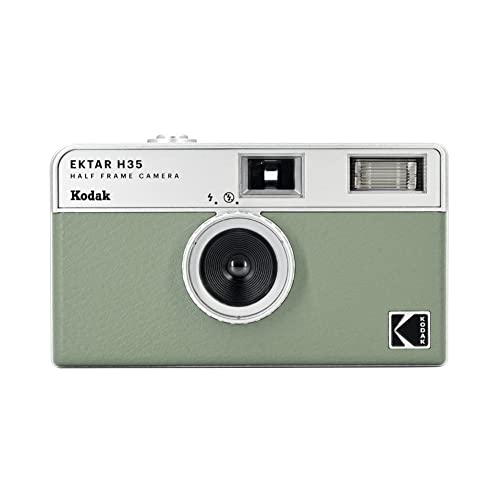
KODAK EKTAR H35 Half Frame Film Camera, 35mm, Reusable, Focus-Free, Lightweight, Easy-to-Use (Sage) (Film & AAA Battery are not Included)
One of the consumer electronics options compared in this guide.
View on Amazon
Canon New EOS Kiss (AKA Rebel G in USA/Canada) SLR AF Film Camera With 35-80mm EF Lens (Renewed)
One of the consumer electronics options compared in this guide.
View on Amazon
Kodak EKTAR H35 Half Frame 35mm Camera, Reusable, Focus-Free, Lightweight, Easy to Use (AAA Battery Not Included) (Sage, Bundle with 24-Exposure Film)
One of the consumer electronics options compared in this guide.
View on Amazon
KODAK EC35 35mm Film Camera 35mm, Reusable, Focus-Free, Built-in Flash, Slide Cover, Beginner Friendly (Film & AA Battery are not Included) (Single, Blush Pink)
One of the consumer electronics options compared in this guide.
View on Amazon
Fujifilm QuickSnap Flash 400 One-Time-Use Camera - 27 Exposures | 35mm disposable camera with 400 speed film and built-in flash for photography, travel and events
One of the consumer electronics options compared in this guide.
View on Amazon
Polaroid Now 3rd Generation I-Type Instant Camera + Film Bundle - Now Black Camera + 16 Color Photos (6560)
One of the consumer electronics options compared in this guide.
View on Amazon| Product | Best for | Key spec from title |
|---|---|---|
| Vintage Canon AE-1 | Learning classic SLR shooting | 35mm SLR, 50mm 1:1.8 lens, renewed |
| Kodak EKTAR H35 | Budget half-frame fun | Half frame 35mm, reusable, focus-free |
| Canon EOS Kiss (Rebel G) | Autofocus film SLR | SLR AF film camera, 35-80mm EF lens, renewed |
| Kodak EC35 | Simple everyday snapshots | 35mm, reusable, built-in flash, slide cover |
| Fujifilm QuickSnap Flash 400 | Parties and trips with no fuss | One-time-use, 27 exposures, 400 speed film, flash |
| Polaroid Now 3rd Generation | Instant prints | I-Type instant camera, 16 color photos |
| Fujifilm instax mini 13 | Gifts and casual instant shots | Instant film camera in Dreamy Purple |
How to Choose
35mm, half frame, or instant
Standard 35mm film typically gives 24 or 36 frames per roll, while half-frame cameras like the Kodak Ektar H35 expose two smaller images per frame, roughly doubling shots per roll. Instant formats print right away but cost more per picture, and the prints are a fixed small size that you cannot enlarge. If you want to scan or enlarge photos, 35mm offers the most flexibility; if you want to hand someone a print, instant wins.
Manual control versus point-and-shoot
The Canon AE-1 and the EOS Kiss both use SLR bodies with interchangeable-lens designs, which let you control focus and framing through the lens. The Kodak EC35 and Ektar H35 are focus-free, meaning there is nothing to adjust, which is fine in daylight and frustrating at close range. Choose control if you want to learn exposure; choose simplicity if you want results with no study. Many people eventually own one of each, using the pocket model for travel and the SLR for planned outings.
Film speed, flash, and light
Film speed of 400, as on the QuickSnap and a good general-purpose choice for the reusable cameras above, handles mixed indoor and outdoor light better than slow 100-speed stock. A built-in flash helps for evening shots but flattens faces. Cameras without flash need daylight or fast film, so plan for the places and hours you shoot. If you often shoot indoors without flash, pick a body with a fast lens like the 50mm f/1.8 on the AE-1.
Hidden startup costs
Titles for the Kodak models say film and batteries are not included, and that matters. Add the cost of film rolls, development, and scanning, which together often exceed the camera for a beginner over the first year. A simple habit helps: log each roll, the camera used, and the light conditions, so you learn from every batch instead of repeating mistakes. Renewed vintage SLRs may need a light-seal check or battery for the meter, so confirm the seller stands behind the camera. For reusable focus-free models, check which battery size is needed so you can buy it with the film.
The 7 Best Options
Vintage Canon AE-1
A renewed 35mm SLR sold with a 50mm 1:1.8 lens. It carries a long reputation as a first manual camera and suits people who want to learn aperture, shutter speed, and focus with a bright standard lens that works well in low light. A student building a portfolio, or an adult picking up a parent’s old hobby, will find the camera rewards patience, since every frame costs money and encourages careful composition.
- Strength: the fast 50mm f/1.8 lens is useful indoors and for portraits.
- Strength: classic SLR handling teaches core photo skills.
- Trade-off: it is a vintage camera with renewed condition, so reliability depends on the seller.
Skip it if you want a camera that works with zero learning, or if a dead light meter battery or a worn light seal would ruin your week.
Kodak EKTAR H35
A reusable, focus-free half-frame 35mm camera in sage. Film and an AAA battery are not included. It aims at newcomers who want a light, inexpensive way to shoot lots of frames and enjoy the film look without managing settings. Because you get roughly twice the pictures per roll, it also softens the sting of film and development costs, which is a real consideration for anyone shooting casually.
- Strength: half-frame format stretches a roll to more pictures.
- Strength: lightweight and easy to carry.
- Trade-off: focus-free design limits close-ups and low light.
Skip it if you want full-size frames, manual exposure, or sharp close-up portraits.
Canon EOS Kiss (Rebel G)
This renewed SLR autofocus film camera comes with a 35-80mm EF lens. Autofocus makes it friendlier than older manual bodies, and the EF mount ties it to a large family of lenses for people who want to expand later. A hobbyist who already owns Canon EF lenses will see the most value, and a beginner gets a path from kit lens to prime lens without changing bodies.
- Strength: autofocus reduces missed shots for beginners.
- Strength: the EF mount opens a wide lens range.
- Trade-off: a plastic-era film SLR is less charming than a metal classic.
Skip it if you want a purely mechanical experience, with a metal body and no electronics to fail.
Kodak EC35
A reusable, focus-free 35mm camera with a built-in flash and a slide cover. Film and AA batteries are sold separately. It is aimed at beginners who want an everyday camera for parties, trips, and daylight snapshots without fuss. The slide cover means it can ride loose in a bag, and the flash makes it suitable for restaurant tables and living-room gatherings.
- Strength: built-in flash covers indoor occasions.
- Strength: slide cover protects the lens in a bag.
- Trade-off: no focus control, and batteries and film are extra.
Skip it if you want to choose settings, since there is no exposure or focus control to learn on.
Fujifilm QuickSnap Flash 400
A one-time-use 35mm camera with 27 exposures, 400-speed film, and a built-in flash. It arrives loaded and ready, which suits wedding tables, beach days, and travel when you do not want to carry a camera you care about. It also doubles as a low-pressure way to test whether you enjoy film at all before spending more on a reusable body.
- Strength: film and flash are included from the start.
- Strength: 27 exposures and 400 speed handle mixed light.
- Trade-off: disposable by design, so it is not reusable.
Skip it if you plan to shoot often and want to save over time, because a reusable body is cheaper after a few rolls.
Polaroid Now 3rd Generation
An I-Type instant camera in black, bundled with 16 color photos worth of film. It is for people who want physical prints to share on the spot, with an iconic look that works as a gift or a party piece. Guests can watch their picture develop, write a note on the border, and take it home, which is the whole appeal of instant film at an event. Keep the film away from heat and bright light while it develops for the best result.
- Strength: film is included in the bundle.
- Strength: prints appear without a lab.
- Trade-off: instant film costs noticeably more per shot than 35mm, so plan on fewer, more deliberate pictures.
Skip it if you want scans, enlargements, or a low cost per picture.
Fujifilm instax mini 13
An instant film camera in Dreamy Purple. The title is brief, with no film count or feature list, but the instax mini line is known for small wallet-size prints and simple point-and-shoot use. It suits casual shooters and younger users, though you will want to confirm the film count and compatible cartridges before ordering.
- Strength: simple operation for quick sharing.
- Strength: the color option makes it a gift-friendly pick.
- Trade-off: the title does not state whether film is included.
Skip it if you need full-size prints or manual control, or if the film count matters and you cannot confirm it.
Which One Fits Your Situation
You want to learn real photography
Take the Vintage Canon AE-1. It teaches exposure and focus, and the 50mm f/1.8 lens is a classic first lens. Pair it with a few rolls of 400-speed film and a notebook for settings, and you will learn quickly from your mistakes.
You want easy autofocus on 35mm
The Canon EOS Kiss (Rebel G) removes focusing worries and keeps the SLR experience, which makes it the gentler on-ramp for someone who has only ever used a phone camera.
You are traveling light or shooting a one-day event
The Fujifilm QuickSnap Flash 400 avoids loading film and carries no worry if it gets lost or splashed. For something reusable, step up to the Kodak EC35, which brings its own flash and a cover for the lens. Budget for a battery and a few rolls of film on top.
You want prints right now
The Polaroid Now 3rd Generation includes film, while the Fujifilm instax mini 13 suits smaller prints and a lighter budget. Whichever you choose, buy a second pack of film early, because the first pack disappears faster than most people expect.
Common Mistakes
- Forgetting that film, batteries, development, and scanning cost extra.
- Buying a focus-free camera and expecting sharp close-ups.
- Choosing a renewed vintage body without checking return terms.
- Loading slow film into a flashless camera and shooting indoors.
- Expecting instant film to cost the same as 35mm per shot.
Related guides
- Business Laptops With Quad Core Processors
- Travel Backpack With Laptop Compartment
- Cheap Gaming Laptops Under 600 Dollars
Frequently Asked Questions
Is film still worth it today?
For many people, yes. The process, the look, and the slower pace are the draw. Just budget for film and processing, and expect to wait days or weeks for results if you mail rolls to a lab.
What is half frame?
A half-frame camera captures two images in the space of one standard 35mm frame, so a roll yields about twice as many photos.
Do I need a lab to develop 35mm film?
Most people send rolls to a lab, which develops and often scans them, usually returning negatives plus digital files you can share online. Home developing is possible but needs chemicals and equipment.
Which is best for kids?
Instant cameras and the one-time-use QuickSnap are easy to use, and their quick results hold a child’s attention. Supervise the film loading and keep spare film on hand.