Key takeaways
- Ergonomic vertical design on Anker’s mice reduces wrist and forearm strain during long sessions.
- Adjustable DPI and multiple buttons add versatility for productivity workflows.
- Great value — Anker prices comfort features well below premium ergonomic brands.
- Wired and wireless options let you choose latency-free or cable-free use.
What's inside
Anker built its name on dependable, sensibly priced accessories, and its computer mice follow that same philosophy. Rather than chasing flashy RGB or extreme sensor specs, Anker focuses on ergonomics and value — most notably its vertical mice, which position your hand in a natural handshake grip to reduce wrist strain during long days at the desk. For anyone who works or games for hours and feels it afterward, that’s a genuinely meaningful design.
To put Anker’s offerings in context, we’ve looked at its ergonomic vertical mice alongside a few well-regarded alternatives from Logitech, Razer, and others. This helps you decide whether Anker’s comfort-first approach is right for you, or whether a different style suits your priorities better.
As an Amazon Associate we earn from qualifying purchases at no extra cost to you. Product prices and availability are accurate as of the date shown and are subject to change.


🎮 Get More From Your Setup — Free
Prime Gaming gives you free PC games every month, in-game loot, and a free Twitch channel sub — plus fast free shipping on all the gear above. New members get a 30-day free trial.
Watch: Anker Computer Mouse: Review & Buyer’s Guide — Video Review
Design & Build
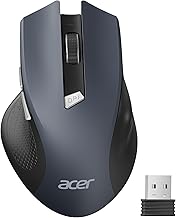
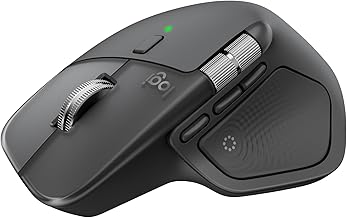
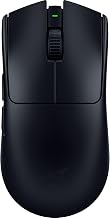
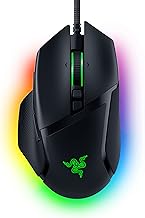
Anker’s signature is the vertical mouse, and both the Anker 2.4G Wireless Vertical Mouse and Anker USB Wired Vertical Mouse tilt your hand into a natural, upright grip with five buttons and adjustable DPI. The build is practical rather than plush, but the ergonomics are the point, and they deliver. Against these, the alternatives take different approaches: the Logitech M185 is a tiny, ambidextrous travel mouse; the Acer Wireless Mouse and HP X3000 G3 are conventional full-size wireless designs with long battery life; and the Razer Basilisk V3 is a full gaming mouse with RGB, 11 programmable buttons, and a high-end sensor. Each build reflects its intended user, from comfort to portability to performance.
Performance
For all-day comfort, Anker’s vertical mice are the clear winners here — the upright grip genuinely reduces forearm and wrist fatigue, and the adjustable DPI (up to 1600) covers everyday productivity with ease. The wireless model adds multi-device flexibility, while the wired version guarantees zero latency and no batteries to manage. For pure gaming, though, the Razer Basilisk V3 is in a different league, with its 26K DPI optical sensor, fast switches, and tilt scroll wheel built for competitive play. The HP X3000 G3 and Acer Wireless are dependable general-purpose options with excellent battery life for office use, and the pocketable Logitech M185 is the go-to for travel and laptop bags. Match the mouse to your main activity and each performs its role well.
Pros & Cons
- Ergonomic vertical design on Anker’s mice reduces wrist and forearm strain during long sessions.
- Adjustable DPI and multiple buttons add versatility for productivity workflows.
- Great value — Anker prices comfort features well below premium ergonomic brands.
- Wired and wireless options let you choose latency-free or cable-free use.
- Vertical mice have a learning curve — the grip feels unusual for the first day or two.
- Not built for gaming — Anker’s mice lack the sensor speed and switches competitive play demands.
- Basic aesthetics with no RGB or premium materials, reflecting the value focus.
Alternatives to Consider
If gaming performance is your priority, a dedicated gaming mouse like the Razer Basilisk V3 offers a level of speed and customization Anker doesn’t target. For maximum portability, a compact travel mouse like the Logitech M185 slips into any bag. But if your main concern is comfortable, affordable everyday use — especially if you experience wrist discomfort — Anker’s vertical mice are hard to beat on value.
Frequently Asked Questions
Are Anker vertical mice good for wrist pain?
The vertical design encourages a natural handshake grip that reduces forearm twist, which many users find eases wrist strain during long days. It’s not a medical device, but the ergonomics genuinely help many people who experience discomfort with flat mice.
Do Anker vertical mice take long to get used to?
Most people adapt within a day or two. The grip feels unfamiliar at first, but the muscle memory transfers quickly, and the comfort payoff makes the short adjustment worthwhile for regular desk users.
Can I game with an Anker mouse?
You can for casual titles, but Anker’s mice aren’t designed for competitive gaming — they lack the high-speed sensors and fast switches of a dedicated gaming mouse like the Razer Basilisk V3. For serious play, choose a gaming-focused model.
Wired or wireless — which Anker mouse should I get?
Choose wired for guaranteed zero latency and no battery worries, ideal for a fixed desk. Pick wireless for a cleaner setup and multi-device switching. Both share the same ergonomic benefits.
Verdict
For comfort-focused everyday use at a fair price, Anker’s vertical mice — the wireless model for flexibility or the wired one for a permanent desk — are excellent choices, especially if wrist fatigue is a concern. If your needs lean toward gaming, the Razer Basilisk V3 is the better fit, and the Logitech M185 wins for travel. Pick based on how you spend your hours at the desk.