Key takeaways
- Micro Handheld Cabinets (Novelty / Desk Scale): Footprint of 3″ W x 3″ D to 4.5″ W x 4.5″ D (7.6 x 7.6 cm to 11.4 x 11.4 cm). These occupy less space than a coffee mug and weigh under 1 pound.
- Mid-Size Desktop Arcades (Portable / Kids Scale): Footprint of 6″ W x 6″ D to 8″ W x 8.5″ D (15.2 x 15.2 cm to 20.3 x 21.6 cm). These take up roughly the same area as a small desk lamp or hardcover book.
- Full Bartop & Tabletop Arcades (Pro / Wood Cabinet Scale): Footprint of 15″ W x 16″ D to 19″ W x 21″ D (38.1 x 40.6 cm to 48.3 x 53.3 cm). These demand dedicated counter space and weigh anywhere from 30 to 70 pounds.
What's inside
Integrating vintage gaming nostalgia into modern living spaces requires a keen eye for proportion, scale, and surface area. If you are decorating a home game room, setting up an executive desk accent, or designing a cozy play nook for children, understanding spatial dynamics is crucial before buying a cabinet. So, how big is a mini arcade console footprint, and how much room do you actually need on your desk, counter, or floating shelf?
The total footprint of a mini arcade console depends entirely on the sub-category you choose. Compact retro units span from novelty desk toys that fit in the palm of your hand to hefty, commercial-grade bartop cabinets that rival standard kitchen appliances in surface consumption. As interior design trends shift toward multi-functional entertainment spaces in 2026, selecting the right machine scale ensures your furniture remains functional, stylish, and clutter-free.
As an Amazon Associate we earn from qualifying purchases at no extra cost to you. Product prices and availability are accurate as of the date shown and are subject to change.



The Short Answer
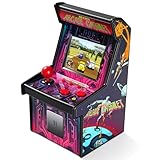
A mini arcade console footprint typically ranges from a tiny 3 inches wide by 3 inches deep (7.6 cm x 7.6 cm) for micro handheld desk models up to 19 inches wide by 21 inches deep (48.3 cm x 53.3 cm) for full-scale arcade-grade bartop cabinets.
To plan your surface layout accurately, group these machines into three distinct size categories:
- Micro Handheld Cabinets (Novelty / Desk Scale): Footprint of 3″ W x 3″ D to 4.5″ W x 4.5″ D (7.6 x 7.6 cm to 11.4 x 11.4 cm). These occupy less space than a coffee mug and weigh under 1 pound.
- Mid-Size Desktop Arcades (Portable / Kids Scale): Footprint of 6″ W x 6″ D to 8″ W x 8.5″ D (15.2 x 15.2 cm to 20.3 x 21.6 cm). These take up roughly the same area as a small desk lamp or hardcover book.
- Full Bartop & Tabletop Arcades (Pro / Wood Cabinet Scale): Footprint of 15″ W x 16″ D to 19″ W x 21″ D (38.1 x 40.6 cm to 48.3 x 53.3 cm). These demand dedicated counter space and weigh anywhere from 30 to 70 pounds.
Standard Sizes
When selecting furniture or dedicating shelf space, you need to account for depth, overall height, unit weight, and electrical needs alongside surface area. The table below outlines the dimensional profiles, screen sizes, weights, and typical price ranges across the four primary styles of mini arcade units available today.
| Arcade Category | Footprint (Width x Depth) | Overall Height | Screen Size | Weight Range | Typical Price Range |
|---|---|---|---|---|---|
| Micro Handheld Mini (e.g., Arcade Classics Pac-Man) |
3.0″ x 3.0″ to 4.0″ x 3.5″ (7.6 x 7.6 cm to 10.2 x 8.9 cm) |
5.5″ – 6.0″ (14.0 – 15.2 cm) |
1.5″ – 2.0″ LCD | 0.4 – 0.8 lbs (0.18 – 0.36 kg) |
$20 – $26 |
| Portable Countertop Mini (e.g., 240-in-1 Retro Arcade) |
3.5″ x 3.8″ to 5.0″ x 4.5″ (8.9 x 9.7 cm to 12.7 x 11.4 cm) |
6.0″ – 8.5″ (15.2 – 21.6 cm) |
2.5″ LCD | 0.6 – 1.2 lbs (0.27 – 0.54 kg) |
$20 – $30 |
| 16-Bit Deluxe Desktop Mini (e.g., 8-Way Joystick Cabinet) |
4.5″ x 4.5″ to 6.0″ x 6.0″ (11.4 x 11.4 cm to 15.2 x 15.2 cm) |
8.5″ – 10.5″ (21.6 – 26.7 cm) |
2.5″ – 3.2″ LCD | 1.0 – 2.5 lbs (0.45 – 1.13 kg) |
$28 – $45 |
| Full Bartop Home Arcade (e.g., Doc and Pies Tabletop) |
15.0″ x 18.0″ to 19.0″ x 21.0″ (38.1 x 45.7 cm to 48.3 x 53.3 cm) |
22.0″ – 28.0″ (55.9 – 71.1 cm) |
15.0″ – 19.0″ LCD | 45.0 – 70.0 lbs (20.4 – 31.8 kg) |
$650 – $800 |
Micro and portable units operate on standard AA/AAA battery power or micro-USB power sources drawing under 5 Watts, keeping power cords out of sight. In contrast, heavy-duty bartop arcades require standard 110V AC wall outlets, drawing between 40W and 90W depending on marquee lighting and screen brightness.
How to Measure Your Space
Measuring for a mini arcade unit involves more than measuring flat tabletop surface area. Joy-sticks extend beyond the front profile, and rear cables require breathing room. Follow this step-by-step process to prepare your furniture surface accurately:
- Measure Flat Surface Depth: Measure your desk or counter depth from the front edge to the back wall or backsplash. Ensure you have at least 2 to 3 inches of extra depth beyond the cabinet’s listed footprint to accommodate power cords and prevent overhang.
- Calculate Control Panel Overhang: On larger bartop cabinets, the control deck often protrudes 1.5 to 3 inches wider and deeper than the cabinet base. Check total upper dimensions to ensure the control deck will not hit adjacent items or block nearby drawers.
- Check Vertical Headroom: Measure the distance between your tabletop and any overhead obstructions, such as floating shelves, wall cabinets, or hanging light fixtures. For bartop consoles standing 24 to 28 inches tall, leave at least 3 inches of upper clearance for proper cabinet ventilation and visual balance.
- Factor in Player Elbow Room: For two-player mini arcade consoles or full bartop machines (15 to 19 inches wide), measure total lateral clearance. Players need roughly 24 to 30 inches of side-to-side elbow room to comfortably operate controls without bumping against side walls or furniture legs.
- Map Out Cable Management: Identify the nearest wall socket or USB port. Subtract 2 inches of depth clearance behind the machine if the power cable plugs directly into the back panel rather than flush-mount side inlets.
By Room or Use Case
Office Desk & Workstation Setup
For executive desks, computer workstations, or standing home office setups, stick to micro and portable mini arcades with footprints under 6×6 inches (15 x 15 cm). Lightweight units weighing under 2 pounds fit seamlessly alongside monitors, keyboard trays, and desk organizers without cluttering writing space. Battery-operated or USB-powered models are ideal here because they eliminate bulky power bricks.
Game Room Bar Tops & Countertops
If you are outfitting a wet bar, home theater counter, or dedicated game room, full-size wooden bartop cabinets deliver an authentic arcade experience. A cabinet with an 18×20 inch (45.7 x 50.8 cm) footprint demands a counter depth of at least 22 inches to sit flush and securely. Ensure your countertop supports 50 to 70 pounds of concentrated weight, and position the unit near a standard 110V outlet.
Kids’ Bedrooms & Playroom Shelving
In playrooms, mid-sized portable mini arcades with a 5×5 inch (12.7 x 12.7 cm) footprint strike the best balance. They are large enough for comfortable grip and joystick movement while remaining light enough (1 to 2 pounds) to sit safely on play tables, activity desks, or low bookcases. Plastic housings are resilient, and battery power prevents tripping hazards from trailing power cables.
Display Bookcases & Floating Shelves
Mini arcade consoles make striking decorative statements when placed on bookshelf units or wall-mounted floating shelves. Micro collectibles (3×3 inch footprint) easily fit on shallow 6-inch deep floating shelves. However, if you plan to display larger 16-bit units or commercial mini cabinets, verify that your shelving offers at least 10 to 12 inches of depth and a weight rating that comfortably handles 5 to 10 pounds per shelf bracket.
Common Sizing Mistakes
Avoid these frequent spatial planning errors when integrating a mini arcade console into your home furniture scheme:
- Ignoring Rear Cord Clearance: Buyers often measure the machine’s base footprint but forget that straight-in power cables add 1.5 to 2.5 inches to the required placement depth. Pushing the machine tight against a wall can bend or damage the power cord.
- Forgetting About Screen Sightlines: Placing a 24-inch tall bartop console on a high 42-inch bar counter forces players to tilt their heads uncomfortably. Always match cabinet height to seating height: standard 30-inch dining or desk height works best for tall bartop arcades.
- Overestimating Floating Shelf Capacity: Mounting heavy wooden bartop arcades (which weigh 45+ pounds) on decorative drywall floating shelves without securing them directly into wall studs is a major safety hazard.
- Neglecting Hand Movement Clearance: Placing a mini cabinet tight between two tall books or speakers restricts hand movement. Joy-sticks require free wrist rotation; maintain at least 2 inches of side clearance even on small micro cabinets.
FAQ
How much clearance do I need around a mini arcade console for comfortable play?
For micro handheld units (under 6 inches wide), keep a 2-inch perimeter clear around the sides so your hands can comfortably grip the sides. For full bartop arcade units (15 to 19 inches wide), leave at least 6 inches of clearance on both sides to allow players comfortable elbow room during head-to-head gaming sessions.
Can a floating shelf hold a bartop arcade cabinet?
Small micro arcades weighing under 3 pounds sit easily on standard floating shelves. However, full-sized wooden bartop arcades weighing 45 to 70 pounds should never be placed on basic decorative floating shelves. They require deep, heavy-duty shelving bolted into solid wood studs or placement on solid furniture, such as sideboards, desks, or reinforced countertops.
What is the difference between a micro arcade, mini bartop, and 3/4 scale cabinet?
Micro arcades are handheld or desk-sized toys with screens under 3 inches and footprints under 6×6 inches. Mini bartop cabinets feature standard arcade controls, 15 to 19-inch screens, weigh 40+ pounds, and sit directly on a table or bar counter. A 3/4-scale cabinet is a floor-standing machine that stands roughly 4 to 5 feet tall with a floor footprint of about 19×23 inches.
How much power does a mini arcade machine draw, and does it affect placement?
Micro mini arcades draw minimal power (2W to 5W) via AA batteries or standard 5V USB cables, giving you total freedom to place them anywhere without worrying about electrical outlets. Full-featured bartop arcades use 110V AC power adapters and draw between 40W and 90W to run integrated LCD displays, audio amplifiers, and marquee lights. These larger units must be positioned within reach of a grounded wall outlet.