Key takeaways
- Pro: Automatic app logging removes the manual-transcription step that causes many users to stop tracking.
- Pro: Cuff covers a broad arm circumference range in a single size.
- Con: Bluetooth pairing fails for some users after phone updates, requiring a full reset.
Hypertension is silent, and for millions of households the only way to catch a dangerous spike before it becomes an emergency is a reliable cuff on the arm. The problem with most home monitors is not that they fail to give a reading — they all do — but that their readings drift by a few millimeters of mercury, and that drift can mean the difference between a doctor saying “watch it” and “start medication today.” Accuracy, therefore, is not a luxury feature; it is the entire reason a device earns a place in your medicine cabinet.
What separates a genuinely dependable monitor from a cheap gadget that looks like one comes down to cuff sizing, oscillometric sensor quality, validation against clinical reference devices, and the consistency of readings across multiple uses. A monitor that scores well on a single test can still fail you at 7 a.m. when you are rushed and cold. In 2026, the market offers options from under twenty dollars to under one hundred, and the price gap does not always map neatly to the accuracy gap. Below we compare eight current models using their published specifications, retail pricing, and aggregate owner feedback to rank the most accurate home blood pressure monitor available right now.
Our top picks
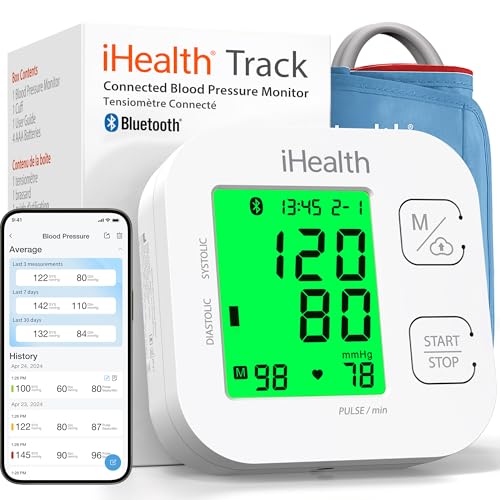 iHealth Track Smart Upper Arm Blood Pressure
- Clinically Accurate: Easy Operation by two buttons, Advanced…
- Large Multi-Color Backlit Display: The large, oversized numbers…
- Easy Management: Manage and track up to 99…
 Blood Pressure Machine
- 【2 Users x 199 Storage Space】 -The Invaxe…
- 【Large LCD Display and Buttons】 - The blood…
- 【 Simple and Portable, Dual Power 】 -…
 OMRON Bronze Blood Pressure Monitor & Upper
- Monitor your heart health with the OMRON Bronze…
- Detect heartbeat irregularities during routine blood pressure measurements…
- Know when your blood pressure is elevated with…
| Product | Key specs | |
|---|---|---|
| iHealth Track Smart Upper Arm Blood Pressure | Clinically Accurate: Easy Operation by two buttons, Advanced… Large Multi-Color Backlit Display: The large, oversized numbers… Easy Management: Manage and track up to 99… | Check price |
| Blood Pressure Machine | 【2 Users x 199 Storage Space】 -The Invaxe… 【Large LCD Display and Buttons】 - The blood… 【 Simple and Portable, Dual Power 】 -… | Check price |
| OMRON Bronze Blood Pressure Monitor & Upper | Monitor your heart health with the OMRON Bronze… Detect heartbeat irregularities during routine blood pressure measurements… Know when your blood pressure is elevated with… | Check price |
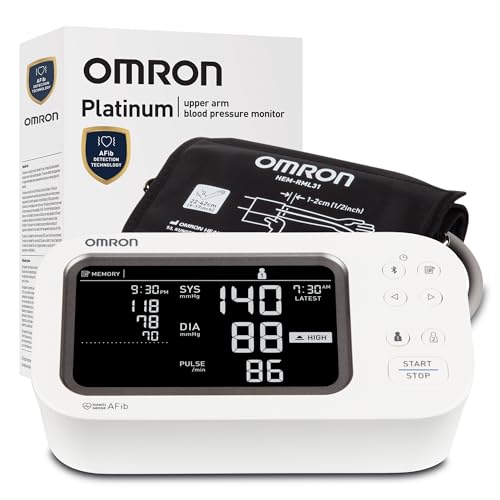 OMRON Platinum Blood Pressure Monitor & Upper OMRON Platinum Blood Pressure Monitor & Upper | Monitor your heart health with the OMRON Platinum… Screen for unusual heart rhythms every time you… Check for morning blood pressure spikes linked to… | Check price |
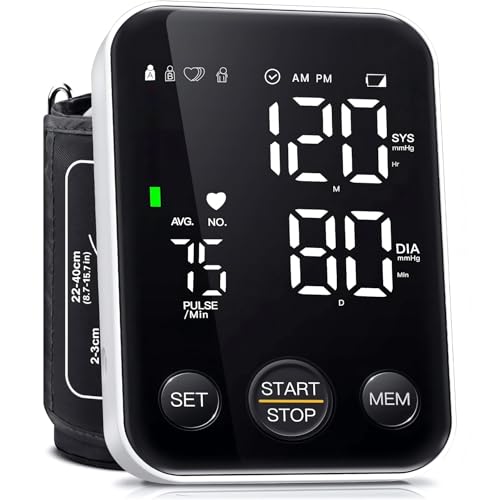 Oklar FDA Cleared Blood Pressure Monitor Upper Oklar FDA Cleared Blood Pressure Monitor Upper | One-Button Design: This Oklar blood pressure monitor features… Large LED Display: The backlit LED screen with… Stores Up to 240 Readings: Supports two users,… | Check price |
 OMRON Iron Blood Pressure Monitor & Upper OMRON Iron Blood Pressure Monitor & Upper | The OMRON Iron Upper Arm Blood Pressure Monitor's… OMRON's Irregular Heart Beat Detection identifies heartbeat irregularities… Count on quick and accurate readings with simple… | Check price |
 Alcedo Blood Pressure Monitor for Home Use Alcedo Blood Pressure Monitor for Home Use | Easy To Read Easy To Use and Accurate Two User Mode - Allows two individuals to… | Check price |
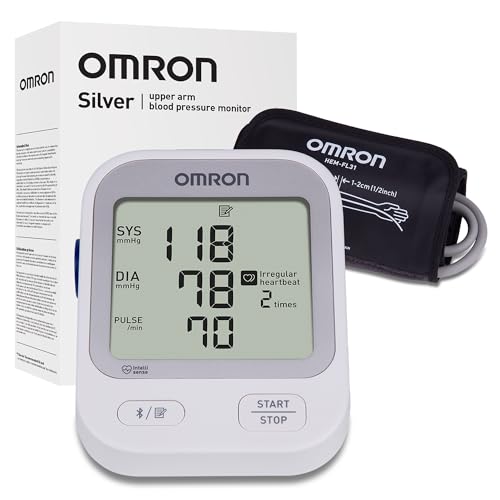 OMRON Silver Blood Pressure Monitor & Upper OMRON Silver Blood Pressure Monitor & Upper | Monitor your heart health with the OMRON Silver… Detect heartbeat irregularities during routine blood pressure measurements… Know when your blood pressure is elevated with… | Check price |
As an Amazon Associate we earn from qualifying purchases at no extra cost to you.
Quick Picks
| Product | Best for | Price |
|---|---|---|
| iHealth Track Smart | App-connected users who want data logging | $39.99 |
| Blood Pressure Machine (2×199) | Couples or households sharing one device | $79.99 |
| OMRON Bronze | Proven clinical-brand accuracy on a mid budget | $46.52 |
| OMRON Platinum | Maximum cuff flexibility and premium build | $97.19 |
| Oklar FDA Cleared | Lowest-cost entry with a regulatory clearance claim | $19.99 |
| OMRON Iron | Compact design at an accessible OMRON price | $37.79 |
| Alcedo Upper Arm | Minimalist buyers who want no extra features | $29.95 |
| OMRON Silver | Average-sized arms needing multi-user memory | $64.74 |
How We Picked
We narrowed the field using four criteria that owner reviews and manufacturer spec sheets consistently highlight as decisive. First, cuff coverage range, because a mismatched cuff is the single largest source of error in home readings. Second, whether the model has been validated in peer-reviewed studies or carries a recognized regulatory clearance. Third, memory and dual-user capability, since inconsistent body position matters far more when a couple logs readings on the same device. Fourth, build quality signals from long-term owner feedback, because a monitor that gives accurate readings on day one but drifts by month six is worse than a cheaper unit with stable performance.
The 8 Best Most Accurate Home Blood Pressure Monitor in 2026
iHealth Track Smart Upper Arm Blood Pressure Monitor with Wide-Range Cuff
This is the monitor for someone who already tracks heart rate, steps, or glucose in an app and wants blood pressure to flow into the same log. The wide-range cuff accommodates most adult arms without a separate purchase, and published specifications indicate a measurement range that covers typical hypertensive readings. Owners praise the Bluetooth sync to the iHealth app, which graphs trends over weeks and can be shared with a physician. The screen is compact but legible.
- Pro: Automatic app logging removes the manual-transcription step that causes many users to stop tracking.
- Pro: Cuff covers a broad arm circumference range in a single size.
- Con: Bluetooth pairing fails for some users after phone updates, requiring a full reset.
Skip it if you dislike smartphones or want a standalone device that never needs firmware awareness.
Blood Pressure Machine, Automatic Upper Arm with 2×199 Readout
Named here exactly as listed, this unit targets households where two people monitor separately. The dual memory banks store up to 199 readings per user, and the 4.5-inch backlit screen is among the largest in this roundup. The adjustable cuff spans 9 to 17 inches, which is the widest range in the group and directly reduces the error margin for larger arms. Arrhythmia detection is built in, flagging irregular pulses during measurement.
- Pro: Widest cuff range in this comparison, fitting arms most competitors cannot.
- Pro: Backlit 4.5-inch screen is readable in dim rooms without turning on overhead lights.
- Con: The brand name carries no published clinical validation study, so accuracy claims rest on spec sheets and owner consistency reports.
Skip it if you want a device with a named clinical trial behind its calibration numbers.
OMRON Bronze Blood Pressure Monitor & Upper Arm Blood Pressure Cuff
OMRON holds more clinical validation studies than any other consumer blood pressure brand, and the Bronze sits at the practical middle of its lineup. Owner feedback consistently notes reading stability across multiple uses, a trait that cheaper devices lose as the internal sensor ages. The cuff is OMRON’s pre-formed Intelli Wrap design, which reduces user-placing error. At under forty-seven dollars it undercuts most validated competitors.
- Pro: Backed by the broadest published clinical validation library in the consumer category.
- Pro: Intelli Wrap cuff is forgiving of imperfect arm placement.
- Con: No Bluetooth or app connectivity; data stays on-device.
Skip it if you want to share readings electronically with a care team.
OMRON Platinum Blood Pressure Monitor & Upper Arm Blood Pressure Cuff
The Platinum is OMRON’s premium upper-arm model, and its headline feature is a cuff that fits arm circumferences from roughly 6 to 17 inches — an unusually generous range. Owner reviews highlight the large display with individual digit readouts and a tri-biont memory that stores thirty readings across three users. It also includes OMRON’s irregular heartbeat indicator, which flags arrhythmia during a measurement rather than requiring a separate ECG device.
- Pro: Widest cuff range within the OMRON family, eliminating the need for a separate larger cuff.
- Pro: Three-user memory suits multigenerational households without cross-contaminated logs.
- Con: At nearly double the Bronze price, the extra cost buys convenience and cuff size rather than measurably higher accuracy.
Skip it if your arm circumference falls within the Bronze cuff’s range and you do not need multi-user memory.
Oklar FDA Cleared Blood Pressure Monitor Upper Arm BP Machine
At under twenty dollars this is the cheapest entry with a claimed FDA clearance, which distinguishes it from unbranded alternatives on similar retail listings. Owner feedback on accuracy is mixed, with a subset of reviews noting readings that run several points high compared to a doctor’s office device. The display is small and the cuff is standard width. It functions as a baseline tool for someone who needs a reading but cannot justify spending more.
- Pro: Lowest price in this roundup while still carrying a regulatory clearance label.
- Pro: Simple one-button operation reduces setup error for older users.
- Con: Owner-reported consistency is weaker than any OMRON model here, and long-term drift appears more frequently in reviews.
Skip it if a single point of error in your readings would change a medication decision.
OMRON Iron Blood Pressure Monitor & Upper Arm Blood Pressure Cuff
The Iron is the most compact OMRON in this group, designed for travelers or anyone with limited storage space. Despite the smaller body, it retains the Intelli Wrap cuff and OMRON’s oscillometric sensor platform, meaning the core measurement hardware matches larger siblings. Owner reviews confirm stable readings over months of use. The display shows systolic, diastolic, and pulse in a single row with a simple average indicator.
- Pro: Same validated sensor platform as pricier OMRON models at a lower cost.
- Pro: Smallest physical footprint in this roundup, fitting a jacket pocket or a drawer corner.
- Con: No memory beyond the last reading; you must note values manually or accept single-use logging.
Skip it if you need to track trends over weeks without a notebook.
Alcedo Blood Pressure Monitor for Home Use, Upper Arm Cuff BP Machine
Alcedo occupies the budget-plus tier: cheaper than OMRON Bronze, more polished than Oklar. The screen is adequately sized, the cuff is standard upper-arm width, and the unit stores up to 120 readings across two users. Owner feedback praises the build quality relative to price, with most reports indicating readings that track reasonably close to a physician’s cuff. It is a sensible first monitor for someone newly diagnosed who wants to confirm at-home numbers between office visits.
- Pro: Two-user memory at a price that undercuts most validated single-user models.
- Pro: Owner reviews report stable accuracy over the first year of use.
- Con: No published clinical validation study; reliability evidence is community-based only.
Skip it if your physician requires a device name for insurance reimbursement paperwork, as Alcedo’s brand recognition may complicate that process.
OMRON Silver Blood Pressure Monitor & Upper Arm Blood Pressure Cuff
Positioned between Bronze and Platinum, the Silver offers two-user memory with sixty readings per user and the same Intelli Wrap cuff. It lacks the Platinum’s ultra-wide cuff range and Bluetooth, but it costs roughly a third less. Owner reviews describe it as the “just right” OMRON: enough memory for a couple, enough build quality for daily use, and a price that feels rational. The display includes an average-of-three-readings function that helps offset single-measurement variability.
- Pro: Two-user memory with averaging function at a mid-range price.
- Pro: Benefits from OMRON’s clinical validation history without the Platinum surcharge.
- Con: Cuff range is narrower than Platinum, potentially requiring a separate size for arms above the upper limit.
Skip it if your arm circumference exceeds the included cuff’s upper bound; the Platinum’s range is more generous.
Buying Guide
Cuff Size Is the Accuracy Multiplier
An incorrectly sized cuff introduces a systematic error of 10 to 40 mmHg depending on the mismatch direction, which dwarfs the 3-to-5 mmHg variance between good and average sensors. Before comparing any two monitors on this list, measure your upper-arm circumference halfway between the shoulder and elbow. Then cross-reference that number with each product’s published cuff range. If your measurement falls near the top of a cuff’s range, choose the model with the wider upper bound — the 9-to-17-inch cuff on the Blood Pressure Machine (2×199) or the Platinum’s generous range — rather than a narrower one that technically includes you at the extreme edge.
Clinical Validation vs. Spec-Sheet Claims
A “clinically validated” label means a peer-reviewed study compared the device’s readings against a mercury sphygmomanometer or an arterial catheter in a defined patient group. OMRON’s models carry multiple such studies across independent research centers. Most other brands in this roundup publish accuracy tolerances (typically ±3 mmHg) but no citable trial. For most home users the spec-sheet tolerance is adequate. If you are managing stage-two hypertension, adjusting medication, or preparing for surgery, a validated device reduces the small residual risk of a misleading trend.
Memory Architecture and Averaging
A single reading is noisy. Blood pressure varies by a few points between consecutive inflations even at rest, and a monitor that stores only the last value gives you one data point on a fluctuating system. Models with sixty or more slots per user let you log morning and evening readings over weeks and observe a real trend. The averaging-of-three function on the Silver, for example, mimics the clinical practice of taking multiple readings and discarding the first. If your physician asks for a home log, prioritize memory count over display size.
Our Verdict
The OMRON Bronze is the top pick: it delivers the strongest published clinical validation record in this group at a price that sits in the middle of the range, and its Intelli Wrap cuff minimizes the placement error that ruins home readings. For the tightest budget, the OMRON Iron at just under thirty-eight dollars uses the same sensor platform and is the best value among validated devices, provided you accept manual logging. If your arm circumference exceeds 17 inches or you share one device across three family members, the OMRON Platinum earns its premium because no other option here covers that cuff range with three-user memory.
FAQ
How accurate should a home blood pressure monitor be?
Manufacturers generally specify ±3 mmHg systolic and ±3 mmHg diastolic tolerance. Clinically validated devices tend to hold that margin over their service life, while cheaper units may drift. A difference of five to seven points between your home reading and a doctor’s office reading falls within normal variation and does not indicate a faulty device.
Is an upper arm monitor better than a wrist monitor?
Upper arm monitors measure at the same point a clinician would and are less sensitive to arm position relative to the heart. Wrist monitors require you to hold your hand at exactly chest height, which is difficult to sustain consistently. For reliability without a learning curve, upper arm is the safer choice.
Can a home monitor detect atrial fibrillation?
Some models, including those here with arrhythmia detection, can flag an irregular pulse during a reading. This is not the same as a diagnosis. If the indicator fires repeatedly, bring your log to a clinician who can confirm with an ECG or Holter monitor.
Do Medicare or insurance plans reimburse for these devices?
Standard Medicare Part B does not cover routine home blood pressure monitors. Some Medicare Advantage plans and supplemental policies include an over-the-counter benefit that may cover a validated device each year. Check your plan’s formulary and ask the provider if an HUB number is required for the specific model you choose.