
Key takeaways
- Pro: Immediate, tangible productivity gains from a second display.
- Pro: Single-cable USB-C setup on most models.
- Pro: Clip-on extenders create an integrated dual-screen laptop.
- Pro: Compatible with phones, tablets, and consoles too.
What's inside
Adding a second monitor to your laptop is one of those upgrades that feels transformative the moment you try it. Suddenly your email, reference docs, and chat all have a home of their own, and you stop losing your place every time you switch tasks. Thanks to portable USB-C displays, that productivity boost now travels with you.
We reviewed the most popular portable second monitors for laptops, weighing image quality, connectivity, portability, and everyday convenience. Here’s our take on what these screens deliver and how to choose the right one for your workflow.
As an Amazon Associate we earn from qualifying purchases at no extra cost to you. Product prices and availability are accurate as of the date shown and are subject to change.




🎮 Get More From Your Setup — Free
Prime Gaming gives you free PC games every month, in-game loot, and a free Twitch channel sub — plus fast free shipping on all the gear above. New members get a 30-day free trial.
Watch: Laptop 2nd Monitor: Review & Buyer’s Guide — Video Review
Design & Build
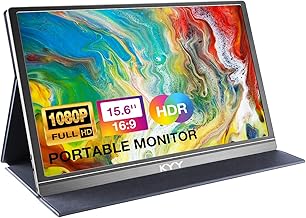
Portable second monitors have settled on a proven design: a slim 15.6-inch FHD IPS panel with a cover that folds into a stand. The MNN 15.6″ and cocopar 15.6″ exemplify this approach, lightweight, travel-ready, and USB-C driven, with the cocopar adding a speaker and VESA mounting. The ForHelp and KYY models include premium smart covers and built-in speakers for a more complete package. For a tighter integration, the KEFEYA and 14″ dual screen extenders clip alongside your laptop lid, creating a true side-by-side dual-monitor setup. All favor slim portability, so a protective case is worth having for travel.
Performance
In daily use these screens excel at their core job, extending your desktop over a single cable for a genuine productivity boost. The 15.6″ IPS panels on the MNN, cocopar, and KYY deliver crisp, wide-angle 1080p visuals ideal for documents, browsing, and media, with several offering 60Hz smoothness and HDR. The single-cable USB-C connection makes setup nearly instant, while HDMI options ensure compatibility with laptops lacking video-capable USB-C. The clip-on extenders like the KEFEYA are standouts for road warriors, offering integrated dual-screen multitasking without a separate stand. Built-in speakers on several models add versatility for calls and casual viewing.
Pros & Cons
- Pro: Immediate, tangible productivity gains from a second display.
- Pro: Single-cable USB-C setup on most models.
- Pro: Clip-on extenders create an integrated dual-screen laptop.
- Pro: Compatible with phones, tablets, and consoles too.
- Con: USB-C-powered screens draw on your laptop’s battery.
- Con: Attach-style extenders add bulk to your laptop lid.
- Con: Built-in speakers are functional but basic.
Alternatives to Consider
If you work in varied locations, a standalone portable monitor like the MNN or KYY gives you flexibility across multiple devices. If you’re always on the move and want the tidiest setup, the KEFEYA clip-on extender turns your laptop into a genuine dual-screen machine. And if you mostly work at one desk, a full-size external monitor delivers more screen real estate for the money.
Frequently Asked Questions
How does a portable second monitor connect to my laptop?
Most connect via a single USB-C cable that carries both video and power, provided your laptop’s port supports video output. Otherwise, use the included HDMI cable plus a USB power connection.
Will a second screen drain my laptop battery?
Yes, USB-C-powered monitors draw from your laptop, shortening battery life. For long unplugged sessions, choose a model with separate power input or keep your laptop charging.
Can I use one with devices other than my laptop?
Absolutely. Most portable monitors work with phones, tablets, and game consoles over USB-C or HDMI, making them versatile beyond laptop productivity.
What’s the difference between a portable monitor and a screen extender?
A portable monitor is a standalone display on a stand, while a screen extender clips onto your laptop lid for an integrated dual-screen setup that travels as one unit.
Verdict
For versatile everyday use, a standalone 15.6″ portable like the MNN or KYY is our top recommendation. Frequent travelers who want a seamless integrated setup should choose the KEFEYA clip-on extender, which turns any laptop into a productive dual-screen workstation.


