Key takeaways
- Pro: Wire-free setup with no boundary wire to bury or maintain
- Pro: Quiet operation suitable for early-morning or evening mowing windows
- Con: Brush-based navigation less precise than LiDAR or RTK on larger or irregular lawns
The phrase “roomba lawn mower” has stuck in buyer search habits as shorthand for robotic mowers that operate autonomously like an indoor robot vacuum—wire-free, app-controlled, and set-and-forget. But lawn terrain is far less forgiving than hardwood floors, and the gap between a machine that quietly handles a small suburban yard and one that leaves patchy strips or drowns in wet grass is enormous.
We compared every major robotic mower on published specs, sticker prices, and recurring owner feedback to identify which units actually deliver on the autonomous promise. The differentiators are navigation method (LiDAR, RTK, vision, or hybrid), cutting-width consistency, slope tolerance, and how well the app handles multi-zone scheduling. A unit that works fine on a quarter-acre lot may flounder on anything with elevation changes or dense obstacles.
Our top picks
 WORX Robot Lawn Mower for 1/4 Acre
- Centimeter-Level RTK Cloud Accuracy: Commercial-grade RTK Cloud technology…
- Auto Mapping for More Complete Coverage: Vision AI…
- AI Obstacle Avoidance with Neural Processing: Vision AI…
 LEBOSBO V3 AI Vision Robotic Lawn Mower
- 【AI Vision Obstacle Sensing】Equipped with intelligent AI vision…
- 【Custom No-Go Zones with 32FT Magnetic Strip】The included…
- 【Smartphone APP Control】Use the mobile APP to control…
 ECOVACS Goat A2000 LiDAR PRO Robot Lawn
- Wire-Free Robotic Lawn Mower with LiDAR Navigation -…
- Built-In Edge Trimming for Clean Borders - Unlike…
- High-Power 32V Platform for Thick Grass - Designed…
| Product | Key specs | |
|---|---|---|
| WORX Robot Lawn Mower for 1/4 Acre | Centimeter-Level RTK Cloud Accuracy: Commercial-grade RTK Cloud technology… Auto Mapping for More Complete Coverage: Vision AI… AI Obstacle Avoidance with Neural Processing: Vision AI… | Check price |
| LEBOSBO V3 AI Vision Robotic Lawn Mower | 【AI Vision Obstacle Sensing】Equipped with intelligent AI vision… 【Custom No-Go Zones with 32FT Magnetic Strip】The included… 【Smartphone APP Control】Use the mobile APP to control… | Check price |
| ECOVACS Goat A2000 LiDAR PRO Robot Lawn | Wire-Free Robotic Lawn Mower with LiDAR Navigation -… Built-In Edge Trimming for Clean Borders - Unlike… High-Power 32V Platform for Thick Grass - Designed… | Check price |
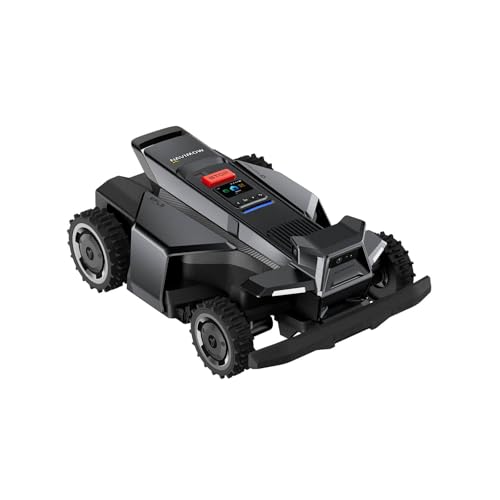 Segway Navimow X430 Robot Lawn Mower Wire Segway Navimow X430 Robot Lawn Mower Wire | Most Advanced All-Wheel Drive: This robot lawnmower features… Turf-Safe Zero-Turn Steering: Unlike conventional systems, this lawn… Ultra-Efficient MowMentum Cutting: Powered by dual 180W motors,… | Check price |
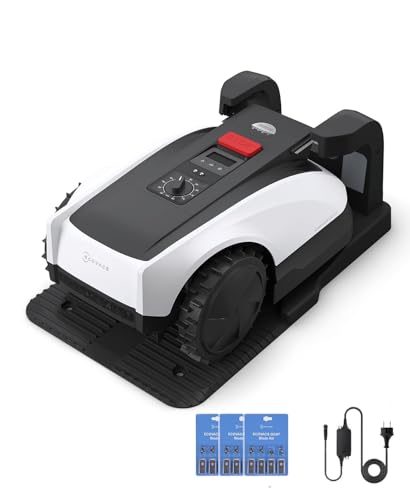 ECOVACS Goat O1000 RTK Care Robot Lawn ECOVACS Goat O1000 RTK Care Robot Lawn | RTK Precision Navigation for Wire-Free, Accurate Mowing CARE Version Upgrade RTK Extension Cable Included | Check price |
 ECOVACS Goat O1000 RTK Robot Lawn Mower ECOVACS Goat O1000 RTK Robot Lawn Mower | No Boundary Wire, Ready in Just 5 Minutes… Precise RTK Navigation for Complete Lawn Coverage -… Smart Obstacle Avoidance Protects Your Yard - Featuring… | Check price |
 Mammotion LUBA 3 AWD 3000H Robot Lawn Mammotion LUBA 3 AWD 3000H Robot Lawn | What's in the Box: 1*LUBA 3 AWD 3000,… Tri-Fusion Navigation Technology: Integrating 360° LiDAR, NetRTK, and… Off-Road Performance: With four independently motors, the Mammotion… | Check price |
 MOVA LiDAX Ultra 1000 Robot Lawn Mower MOVA LiDAX Ultra 1000 Robot Lawn Mower | Wireless, RTK-Free Setup Flawless Edge Precision AI-Vision Powered 300+ Obstacle Avoidance: Powered by 3D… | Check price |
As an Amazon Associate we earn from qualifying purchases at no extra cost to you.
Quick Picks
| Product | Best For | Price |
|---|---|---|
| WORX Robot Lawn Mower 1/4 Acre | Entry-level wire-free mowing | $799.99 |
| LEBOSBO V3 AI Vision | Tight budget under 1,600 sq.ft | $399.99 |
| ECOVACS Goat A2000 LiDAR PRO | LiDAR precision on mid-size lawns | $1,399 |
| Segway Navimow X430 | Large acreage with steep slopes | $2,249 |
| ECOVACS Goat O1000 RTK Care | Lowest-cost RTK navigation | $664 |
| ECOVACS Goat O1000 RTK | Feature-rich quarter-acre mowing | $999.99 |
| Mammotion LUBA 3 AWD 3000H | Premium AWD with LiDAR and AI vision | $2,799 |
| MOVA LiDAX Ultra 1000 | Multi-zone management without RTK | $999 |
How We Picked
Navigation reliability is the first filter: RTK and LiDAR systems map the lawn digitally so the mower follows structured paths, while pure-vision units can lose track in low light or against uniform grass color. Coverage area rating matters second—manufacturers often state optimistic numbers that assume obstacle-free rectangles. Third, we weighed slope tolerance because many yards have grade changes that stall two-wheel-drive bots. Finally, app quality and owner-reported long-term durability rounded out the shortlist.
The 8 Best Roomba Lawn Mower in 2026
WORX Robot Lawn Mower for 1/4 Acre, Wire-Free
WORX enters the wire-free space at a mid-range price, targeting homeowners who want a set-and-forget solution without the complexity of RTK or LiDAR. Its brushed navigation system avoids perimeter wire, which cuts installation time to near zero. Owners praise the quiet operation and simple boundary-setting through the app. The main drawback is limited coverage—owners report the brush-based pathing struggles with large open areas, producing uneven cut patterns over time. On slopes beyond moderate grade, traction can falter.
- Pro: Wire-free setup with no boundary wire to bury or maintain
- Pro: Quiet operation suitable for early-morning or evening mowing windows
- Con: Brush-based navigation less precise than LiDAR or RTK on larger or irregular lawns
Skip it if your lawn exceeds a quarter-acre or has more than a few trees and garden beds creating tight corridors.
LEBOSBO V3 AI Vision Robotic Lawn Mower
At $399.99, the LEBOSBO V3 is the most affordable entry in this roundup and proves that vision-based navigation can work on small, simple lawns. Its 1,600 square-foot coverage rating suits strip-mall backyards or courtyard patches. Owners appreciate the low-commitment price point and the AI camera’s ability to detect obstacles without wiring. The limitation is consistency—vision systems depend heavily on lighting and grass contrast, and owners note missed strips around edges and under tree canopies. It is a lawn-maintenance tool, not a lawn-care replacement.
- Pro: Lowest price among wire-free robotic mowers with obstacle detection
- Pro: Lightweight and easy to move between small zones manually
- Con: Coverage limited to 1,600 sq.ft with reduced accuracy in shade or low-contrast grass
Skip it if you need reliable edge coverage or have any elevation changes beyond a gentle grade.
ECOVACS Goat A2000 LiDAR PRO
The A2000 LiDAR PRO brings dual LiDAR navigation to the $1,399 tier, delivering precise, repeatable mowing paths without RTK signal dependency. This suits owners with irregularly shaped yards, partial tree cover, or regions where sky visibility for RTK is compromised. The dual sensors cross-reference terrain data to maintain a consistent cutting line. Owners highlight the smooth app mapping experience and reliable return-to-dock behavior. The con is value positioning—while excellent technically, it sits above the O1000 RTK models that achieve similar coverage for less money in open-sky scenarios.
- Pro: Dual LiDAR enables accurate navigation without satellite signal
- Pro: Handles irregular lawn shapes and partial shade better than vision-only systems
- Con: Higher price than comparable RTK-based units for lawns with clear sky view
Skip it if your lawn has unobstructed sky access and a simple rectangle—the O1000 RTK variants deliver more value.
Segway Navimow X430
Segway’s Navimow X430 is the most capable slope-handler in this group, with 4WD traction rated for 84% grade and zero-turn steering that protects turf on tight passes. Rated for up to one acre, it uses dual 180W motors with the MowMentum system for momentum-based cutting on thick grass. The 0.75-to-4-inch height range covers everything from scalping to tall-season maintenance. Owners consistently praise its hill performance and build quality. The obvious barrier is the $2,249 price, which places it firmly in premium territory.
- Pro: 4WD handles slopes up to 84% where most competitors cannot go
- Pro: Zero-turn capability minimizes turf damage on tight maneuvers
- Con: $2,249 price tag is difficult to justify on a flat quarter-acre lot
Skip it if your yard is flat and under half an acre—you are paying for capability you will not use.
ECOVACS Goat O1000 RTK Care
At $664, the O1000 RTK Care delivers RTK navigation at a price that previously required $1,000-plus budgets. The “Care” variant appears to be a value-tier trim of the O1000 line, offering RTK positioning for a quarter-acre with fewer frills than its sibling. Owners cite excellent cutting precision and easy initial mapping as standout qualities. The trade-off is the reduced feature set compared to the standard O1000—no vision-assisted obstacle avoidance and likely fewer scheduling options. It remains a strong pick for budget-conscious buyers with open-sky yards.
- Pro: RTK navigation at the lowest price point in this roundup
- Pro: Reliable path accuracy for straightforward lawn shapes
- Con: Trimmed feature set relative to the standard O1000 RTK model
Skip it if you need vision-based obstacle detection or plan to mow under dense tree cover where RTK signal weakens.
ECOVACS Goat O1000 RTK
The full-featured O1000 RTK at $999.99 combines RTK positioning with AIVI 3D vision, auto mapping, TruEdge cutting, and full app control. This hybrid approach gives it redundancy—when satellite lock is solid, it runs on RTK; when signal degrades near structures, the vision system fills gaps. Owners consistently rate edge-cutting quality as among the best in the segment. The quarter-acre rating keeps expectations realistic for a single unit. It sits in a competitive price pocket where you are paying for genuine versatility.
- Pro: RTK plus AIVI 3D vision provides navigation redundancy in variable signal conditions
- Pro: TruEdge system cuts noticeably cleaner borders than most competitors
- Con: Quarter-acre ceiling means larger lawns require multiple units or a higher-tier model
Skip it if your lawn exceeds a quarter-acre—look to the Segway X430 or Mammotion LUBA 3 instead.
Mammotion LUBA 3 AWD 3000H
The LUBA 3 AWD 3000H is the specification heavyweight of this list: 360-degree LiDAR, NetRTK, AI vision, AWD rated for 80% slopes, and a throughput of 5,400 square feet per hour. Cutting height spans 2.2 to 4.0 inches, and the included cleaning stand addresses the most common long-term maintenance issue with robotic mowers—grass buildup. At $2,799 it commands a premium, but for properties with acreage, elevation changes, and mixed terrain, it consolidates features that would otherwise require multiple machines or a commercial service.
- Pro: Triple navigation (LiDAR, NetRTK, AI vision) ensures mapping consistency in any condition
- Pro: 5,400 sq.ft/h throughput with AWD makes it suitable for large, varied terrain
- Con: $2,799 price and separate shipping for the cleaning stand add to total cost
Skip it if your lawn is flat, small, and free of obstacles—the ECOVACS O1000 RTK handles that scenario at half the price.
MOVA LiDAX Ultra 1000
MOVA’s LiDAX Ultra 1000 achieves something unusual: full navigation and multi-zone management without RTK or a boundary wire, relying instead on 360-degree 3D LiDAR and AI vision. The system supports up to 150 managed zones across dual maps, making it viable for properties split by driveways, patios, or garden areas. Cutting height ranges from 1.2 to 3.9 inches, and slope rating reaches 45%. At $999, it matches the ECOVACS O1000 RTK in price while offering broader zone flexibility for complex layouts.
- Pro: Up to 150 managed zones with dual maps handles fragmented or multi-area properties
- Pro: 3D LiDAR enables navigation without satellite dependency or boundary wire
- Con: Slope rating of 45% is lower than AWD competitors like the Segway or Mammotion
Skip it if your primary challenge is steep hills rather than complex geometry—the Segway Navimow X430 is purpose-built for grade.
Buying Guide
Navigation Method Determines Everything
Robotic mowers either follow a wire, use satellite positioning (RTK or NetRTK), build a digital map with LiDAR, or rely on camera-based vision. RTK gives centimeter-level accuracy on open lawns but loses signal under heavy tree canopy or near tall walls. LiDAR works in any environment but is costlier. Vision systems are cheapest but degrade in low contrast or uniform grass. Hybrid approaches (RTK plus vision, or LiDAR plus AI) offer the most reliability but raise the price. Match the navigation method to your lawn’s specific challenges rather than defaulting to the most expensive option.
Coverage Rating vs. Real-World Output
Manufacturers rate coverage assuming a clear rectangle with no obstacles. Add trees, garden beds, a shed, and a curved driveway, and your effective coverage drops noticeably. A quarter-acre-rated unit will struggle on a 5,000-square-foot lot with dense landscaping. When comparing units, prioritize the one rated at least 50 percent above your measured lawn area. Throughput metrics (like the LUBA 3’s 5,400 sq.ft/h) also matter—low-throughput units on large lawns must run multiple cycles per day to keep up with grass growth.
Slope and Cutting Height Flexibility
Two-wheel-drive mowers typically manage grades up to 30-40 percent. Beyond that, you need AWD or 4WD. The Segway X430 at 84 percent and the Mammotion at 80 percent are outliers that solve genuine hillside problems. Cutting height range matters for lawn health: a fixed low-cut mower scalps in cool seasons, while a wide adjustable range (0.75 to 4 inches) lets you raise the blade during drought stress or fall overgrowth. If your region has distinct growth seasons, prioritize a wider adjustment window.
Our Verdict
The ECOVACS Goat O1000 RTK at $999.99 is the top pick for most homeowners—it combines RTK and vision navigation, TruEdge cutting, and app-based scheduling at a price that undercuts most competitors offering comparable features. For strict budgets, the LEBOSBO V3 at $399.99 is the entry point for a small, flat lawn where missed strips are tolerable. If your yard has steep elevation changes, the Segway Navimow X430 wins outright despite its premium cost, because no other unit here matches its 84-percent slope handling and zero-turn turf protection.
FAQ
Is “Roomba lawn mower” a real product category?
No—Roomba is iRobot’s indoor vacuum brand and does not make robotic lawn mowers. The term has become a colloquial search phrase for wire-free robotic mowers that operate autonomously like a home robot. The products in this roundup are purpose-built outdoor robotic mowers from brands like ECOVACS, Segway, Mammotion, WORX, LEBOSBO, and MOVA.
Do robotic mowers need perimeter wire like older models?
The units in this roundup are all wire-free, using RTK satellites, LiDAR mapping, AI vision, or a combination to define boundaries digitally. Older robotic mowers required burying a boundary wire around the lawn, which added installation labor and risk of accidental cuts during garden work. Modern navigation has largely eliminated that requirement.
What happens if the mower gets stuck or lost signal?
Most current units pause and send an app notification if they encounter an obstacle they cannot navigate around or lose positional signal. RTK-based models typically resume automatically when signal returns. LiDAR and hybrid units can often relocalize without human intervention. The WORX and LEBOSBO brush/vision models are more likely to require manual retrieval in complex situations.
Can one unit handle multiple disconnected lawn areas?
Generally no, unless the mower supports multiple maps and you manually move it between zones. The MOVA LiDAX Ultra 1000’s 150-zone dual-map system simplifies this for fragmented properties, but most units are designed to operate autonomously within a single mapped area from their charging dock.