Key takeaways
- Pro: No batteries, no firmware update dependency, and keys never touch a computer or phone via USB.
- Pro: The companion app supports a wide range of chains and includes a built-in swap feature that keeps private keys on-card during signing.
- Con: NFC-only interaction can be unreliable with some Android devices that throttle background NFC reads.
Choosing the right wallet crypto hardware device is one of the few decisions that directly determines whether your digital assets survive a breach, a lost seed phrase, or a compromised laptop. The market has matured considerably, and buyers in 2026 face a wide spread of form factors, connection methods, and price points that can obscure what actually matters: how well a device keeps private keys isolated from networked threats while remaining practical for daily portfolio management.
What separates a strong hardware wallet from a mediocre one is not flashy design or brand recognition. It is whether the device enforces genuine air-gapped or secure-element protection, how transparently it handles firmware updates, whether the companion software supports the chains you actually hold, and how the manufacturer responds to vulnerability disclosures. The eight products below represent distinct approaches to that problem, and their published specs and owner feedback reveal clear trade-offs that should guide your purchase.
Our top picks
 TANGEM Crypto Wallet Pack of 2
- Seedless by design, nothing to steal: Your private…
- Tap once to manage your entire crypto wallet…
- Backup without a seed phrase: Your wallet is…
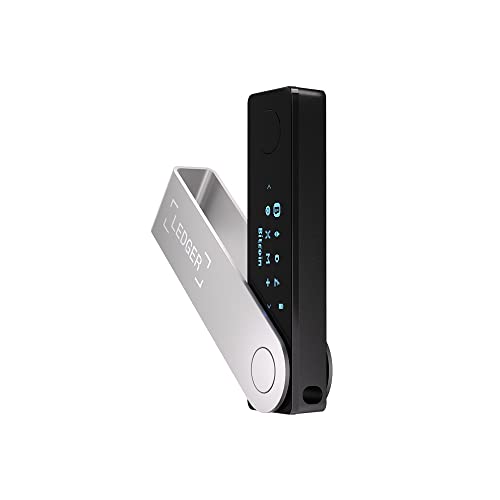 Ledger Nano X
- Effortlessly build your crypto portfolio via the all…
- Enjoy Bluetooth connectivity, iOS access, and hours of…
- Genuine Check: confirm your signer is authentic during…
 TANGEM Crypto Wallet Pack of 3
- Seedless by design, nothing to steal: Your private…
- Tap once to manage your entire crypto wallet…
- Backup without a seed phrase: Your wallet is…
| Product | Key specs | |
|---|---|---|
| TANGEM Crypto Wallet Pack of 2 | Seedless by design, nothing to steal: Your private… Tap once to manage your entire crypto wallet… Backup without a seed phrase: Your wallet is… | Check price |
| Ledger Nano X | Effortlessly build your crypto portfolio via the all… Enjoy Bluetooth connectivity, iOS access, and hours of… Genuine Check: confirm your signer is authentic during… | Check price |
| TANGEM Crypto Wallet Pack of 3 | Seedless by design, nothing to steal: Your private… Tap once to manage your entire crypto wallet… Backup without a seed phrase: Your wallet is… | Check price |
 ELLIPAL Titan 2.0 Air-Gapped Crypto Wallet ELLIPAL Titan 2.0 Air-Gapped Crypto Wallet | 100% Offline Crypto Wallet with Air-Gapped Tech: The… Clear Signing Transparency with Your Hardware Wallet: Take… Multi-Asset Crypto Cold Wallet: Manage all your portfolio… | Check price |
 Trezor Safe 3 Trezor Safe 3 | Unparalleled Security: Protect your assets NDA-free EAL 6+… Simple & Secure Interface: Manage your digital assets… Supports 1000s of Coins & Tokens: Securely handle… | Check price |
 Trezor Safe 5 Trezor Safe 5 | Protect your assets with Trezor Safe 5's NDA-free… Experience seamless crypto management with the vibrant color… Enjoy tactile confirmation with Trezor Touch Haptic Engine,… | Check price |
 Trezor Safe 5 Trezor Safe 5 | Protect your assets with Trezor Safe 5's NDA-free… Experience seamless crypto management with the vibrant color… Enjoy tactile confirmation with Trezor Touch Haptic Engine,… | Check price |
 Trezor Safe 3 Trezor Safe 3 | Unparalleled Security: Protect your assets with EAL 6+… Simple & Secure Interface: Manage your digital assets… Supports 1000s of Coins & Tokens: Securely handle… | Check price |
As an Amazon Associate we earn from qualifying purchases at no extra cost to you.
Quick Picks
| Product | Best for | Price |
|---|---|---|
| Tangem Pack of 2 | Casual holders who want backup redundancy without subscription | $50.7 |
| Ledger Nano X | Multi-chain traders who need Bluetooth and a broad coin list | $99 |
| Tangem Pack of 3 | Long-term holders prioritizing offline key distribution across locations | $66.4 |
| Ellipal Titan 2.0 | Security-focused users who demand full air-gap with no wireless or USB | $141.54 |
| Trezor Safe 3 (Cosmic Black) | Open-source advocates who want a secure element at a low entry price | $59 |
| Trezor Safe 5 (Charcoal Black) | Users who want a color touchscreen with haptic confirmation | $129 |
| Trezor Safe 5 (Green Berry) | Same feature set with a more visible, travel-friendly color | $129 |
| Trezor Safe 3 (Solar Gold) | Buyers seeking the same open-source protection in a distinctive finish | $59 |
How We Picked
We evaluated these devices on four criteria drawn from published specifications and aggregated owner reports: isolation architecture (whether keys stay offline during signing), supported blockchain breadth, firmware transparency and update track record, and long-term usability including companion app quality and physical durability. Products with closed firmware or a history of slow vulnerability patching were penalized relative to open-source equivalents. Price was weighed against the protection level offered, not simply as a standalone figure.
The 8 Best Wallet Crypto in 2026
Tangem Pack of 2
The Tangem Pack of 2 suits holders who want genuine cold storage without carrying a cable-connected device. Each card contains a secure element, and the pair provides an immediate backup so losing one card does not mean losing your keys.
- Pro: No batteries, no firmware update dependency, and keys never touch a computer or phone via USB.
- Pro: The companion app supports a wide range of chains and includes a built-in swap feature that keeps private keys on-card during signing.
- Con: NFC-only interaction can be unreliable with some Android devices that throttle background NFC reads.
Skip this if you hold assets on obscure altcoins that lack Tangem app support, or if you prefer a physical screen on the device itself to verify addresses independently.
Ledger Nano X
The Ledger Nano X remains the most recognized wallet crypto option for active traders who manage positions across many exchanges and DeFi protocols. Bluetooth connectivity lets you sign transactions from a phone without a cable.
- Pro: Extremely broad coin and token support, with frequent firmware updates that add new chains quickly.
- Pro: The Secure Element chip keeps keys in a dedicated enclave, and the companion app integrates with major wallet software.
- Con: The Bluetooth radio is an additional attack surface, and Ledger’s closed firmware model limits third-party audit of the device itself.
Consider skipping this if wireless signing bothers your threat model, or if you want fully reproducible open-source firmware you can inspect.
Tangem Pack of 3
The three-card Tangem set extends the same secure-element architecture into a distributed backup strategy, placing cards in separate physical locations. This is the wallet crypto play for holders planning to leave assets untouched for years.
- Pro: Three independent cards mean no single point of failure for key recovery, with no seed phrase written on paper.
- Pro: Identical card size to the pack of two, making travel storage trivial.
- Con: The pack of three costs more per card than buying single Tangem cards in some regional stores, reducing the price advantage slightly.
Skip this if two-card redundancy already covers your risk tolerance, or if you want a larger screen for transaction verification.
Ellipal Titan 2.0
The Ellipal Titan 2.0 is a fully air-gapped wallet crypto device that signs transactions by scanning QR codes, with no USB, Bluetooth, or NFC connectivity at any point. For users whose threat model includes compromised host machines, this eliminates entire categories of attack.
- Pro: Absolute physical isolation during signing, plus a metal anti-tamper enclosure that is difficult to open without evidence.
- Pro: Supports over ten thousand coins and tokens through its companion app, with NFT display included.
- Con: The device is noticeably bulkier than card-based alternatives, and the touchscreen can lag when scrolling long token lists.
Skip this if you trade frequently and value speed over maximum isolation, or if the QR-code workflow feels cumbersome compared to cable or NFC signing.
Trezor Safe 3 (Cosmic Black)
The Trezor Safe 3 brings a secure element into Trezor’s traditionally open-source firmware ecosystem at a sub-sixty-dollar entry point. It is the wallet crypto choice for developers and privacy-minded users who want auditable code on-device.
- Pro: Fully open-source firmware allows independent verification and community-driven security audits.
- Pro: The small OLED screen provides independent address confirmation, so you never blindly trust a computer display.
- Con: The monochrome screen and minimal button navigation make managing many tokens slower than touchscreen alternatives.
Skip this if you want a color interface or haptic feedback, or if you hold NFTs that require more intuitive on-device browsing.
Trezor Safe 5 (Charcoal Black)
The Trezor Safe 5 upgrades the hardware wallet experience with a color touchscreen, haptic feedback for confirmation, and the same secure element and open firmware foundation. It targets users who want verification on-device without sacrificing speed.
- Pro: The color touchscreen makes token browsing, NFT review, and address verification genuinely faster than button-based navigation.
- Pro: Haptic feedback confirms actions physically, reducing the chance of a misread confirmation prompt.
- Con: At double the price of the Safe 3, the added screen and haptics must meaningfully improve your signing workflow to justify the premium.
Skip this if your primary use is long-term holding with rare signing, where the Safe 3’s lower cost and identical security model deliver the same protection.
Trezor Safe 5 (Green Berry)
Functionally identical to the Charcoal Black edition, the Green Berry Trezor Safe 5 offers the same wallet crypto feature set in a color that is easier to spot in a bag or on a desk. For frequent travelers who carry a hardware device daily, visibility matters.
- Pro: Same open-source firmware, secure element, touchscreen, and haptic feedback as the Charcoal model.
- Pro: The distinctive finish reduces the chance of misplacing the device among cables or other electronics.
- Con: The price is identical to the Charcoal edition, so the choice is purely aesthetic and availability may vary by region.
Skip this only if you already own a Safe 5 in another color and are not seeking a secondary unit or gift.
Trezor Safe 3 (Solar Gold)
The Solar Gold edition delivers the same open-source, secure-element architecture as the Cosmic Black Trezor Safe 3 at the same price point. It exists for buyers who want a distinctive look without paying a premium or changing devices.
- Pro: Identical security model, firmware transparency, and coin support as the Cosmic Black, at the same cost.
- Pro: The warm finish resists visible fingerprint smudging better than matte black variants in owner reports.
- Con: Like the Cosmic Black, it lacks a color screen and is slower for users managing many assets or NFTs.
Skip this if you prefer the darker aesthetic, or if you want the Safe 5’s touchscreen for daily interaction.
Buying Guide
Connection Method Determines Your Attack Surface
Every wire or radio on a hardware wallet is a potential entry point. A USB-connected device is only as safe as the host machine running the companion software. Bluetooth adds a wireless vector that has historically been targeted in research. NFC sits in between, requiring proximity but still touching your phone’s operating system. A fully air-gapped QR-code device eliminates all three vectors during signing. Match the connection method to the value of your holdings and the security posture of the machines you routinely use.
Firmware Transparency and Update History
Open-source firmware allows the community to review code and flag risks before they affect a wide user base. Closed firmware relies entirely on the manufacturer’s internal audit process. Beyond the license itself, examine how quickly a vendor patches disclosed vulnerabilities and whether the update process is verifiable on-device. A device with excellent initial security but a slow or opaque patching cadence introduces long-term risk that compounds over years of holding.
Coin and Token Support Beyond the Headline Number
Manufacturers advertise support for thousands of coins, but practical utility depends on the wallet interfaces you actually use. If you stake, interact with DeFi protocols, or hold NFTs, confirm that your specific chains and dApps have working integrations with the companion app. Owner forums and release notes reveal gaps that spec sheets omit, such as missing multisig support on a given chain or broken smart-contract verification for newer token standards.
Our Verdict
The Ellipal Titan 2.0 is the top pick for buyers whose primary concern is keeping keys isolated from compromised networks, and its published support for over ten thousand tokens covers the broadest real-world portfolio. For a budget pick, the Tangem Pack of 2 at $50.7 offers secure-element cold storage with built-in backup redundancy that most single-device alternatives cannot match at any price point. However, if you hold a substantial position on obscure altcoins or DeFi tokens and need fast daily interaction, the Ledger Nano X’s Bluetooth workflow and chain coverage win on usability despite its closed firmware trade-off.
FAQ
Is a hardware wallet necessary if I only hold on a trusted exchange?
No device is strictly necessary for small balances, but any amount you cannot afford to lose should sit on a hardware wallet because exchange risk (insolvency, regulatory seizure, account lockout) is outside your control. A wallet crypto hardware device converts custody from trust in a third party to trust in your own key management.
Can I use two different hardware wallets for the same portfolio?
You can hold the same seed phrase on two devices, but that doubles your key-material exposure and requires both devices to support the identical derivation path and chain. It is simpler and safer to designate one device as primary and use the second only for a backup seed kept offline in a separate location.
What happens if the manufacturer goes out of business?
For open-source devices like Trezor, the community can maintain firmware and companion apps independently, so your assets remain accessible. For closed-ecosystem devices, you depend on the vendor continuing to provide software updates and possibly server-backed services, which is a real long-term consideration when comparing options.
Do I need a screen on the device itself?
A screen lets you verify the destination address and amount independently of your computer or phone display. Without one, you must trust the host software to show the correct transaction details, which reintroduces a malware attack vector. For any balance above a few hundred dollars, a device with its own display or a companion card that requires physical tap confirmation is strongly preferred.