Our Top Picks
A magnetic loop antenna earns its place on a shortwave listener’s desk for one reason: it is small, it can sit indoors, and it reacts mostly to the magnetic component of a radio wave, which often makes it quieter than a long wire in a city full of electrical noise. The loops in this guide are receiving antennas for hobbyists with a shortwave radio or an SDR dongle. They are not transmit antennas, and nothing in the listings suggests they should be used with a transmitter beyond the small power figures stated.
That limit shapes the decision. You are choosing between active loops with a built-in amplifier, passive loops with none, and the frequency range each one claims to cover. This guide compares seven options by band coverage, connector type, amplification, and portability, so you can pick one that matches the radio you own and the bands you want to hear, whether that is AM broadcast, utility stations, or air traffic. Throughout, the comments rely on the stated listing details and not on performance measurements.
Quick Picks
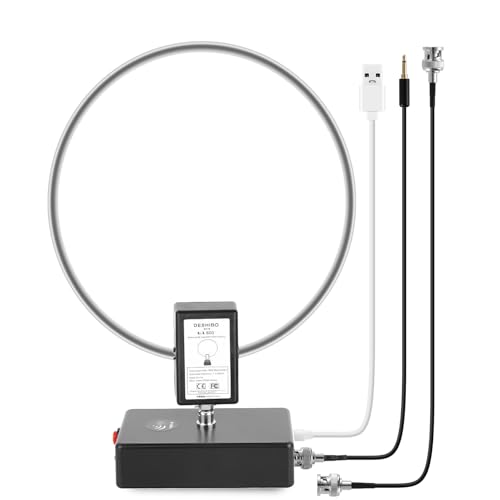
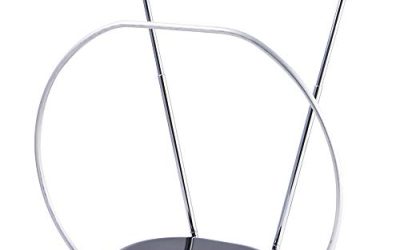
GA800 Loop Antenna, GOOZEEZOO Active Shortwave Radio Antenna with BNC Cable 10KHz-159MHz HF LW MW SW FM Air V Band Portable Receiving Antenna for Ham Radio(Free of Tuning)
One of the consumer electronics options compared in this guide.
View on Amazon
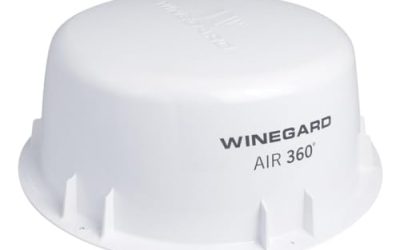
Upgrade Version Loop Antenna MLA-30+ Plus 0.5-30MHz Rainproof Ring Active Receive Antenna Low Noise Medium Short Wave
One of the consumer electronics options compared in this guide.
View on Amazon
GOOZEEZOO HFDY Active Magnetic Loop Antenna, 50KHz-500MHz HF AM FM VHF UHF | Low-noise Amplifier, 17dB Gain Magnetic Loop Receiving Antenna for Ham Radio (with Improved Amplifier)
One of the consumer electronics options compared in this guide.
View on Amazon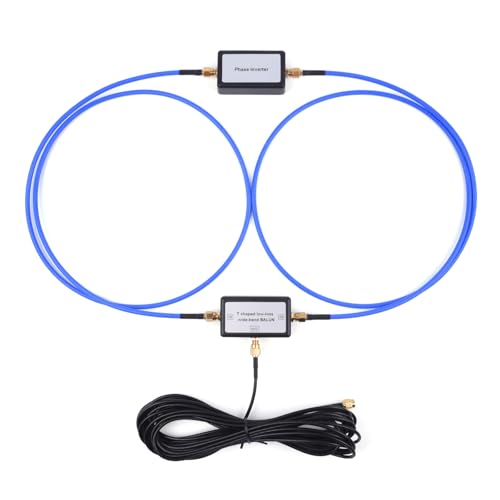
WSOLDMA YouLoop Passive Magnetic Antenna with SMA Male Jack | Portable Loop Antenna for HF and VHF
One of the consumer electronics options compared in this guide.
View on Amazon
K-480WLA Portable Active Loop Antenna 0.5MHz-500MHz 30dBi Broadband Receiving Antenna | Built-in Filter | LW/MW/SW/FM/VHF/HF/Air 6 Meters SDR Ham Radio Antenna with 1800mAh Battery (10m)
One of the consumer electronics options compared in this guide.
View on Amazon
Magnetic Loop Antenna, HF VHF Wideband, 10khz-30mhz & Up to 300Mhz SMA Male | Portable; Max 250mW; Low Loss Broadband
One of the consumer electronics options compared in this guide.
View on Amazon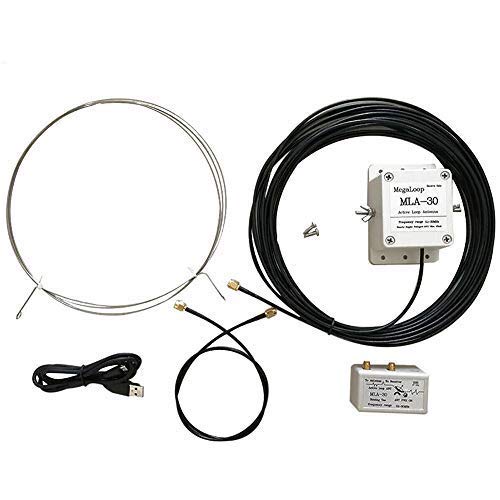
MLA-30 Loop Antenna Active Receiving Antenna 100kHz - 30MHz for Short Wave Radio
One of the consumer electronics options compared in this guide.
View on Amazon| Product | Best for | Key spec from the listing |
|---|---|---|
| GOOZEEZOO GA800 | Wide coverage with a BNC cable | 10kHz to 159MHz, active, BNC |
| MLA-30+ Plus | Outdoor-capable shortwave listening | 0.5 to 30MHz, rainproof ring, low noise |
| GOOZEEZOO HFDY | Broad HF through UHF listening | 50kHz to 500MHz, 17dB gain |
| WSOLDMA YouLoop (SMA) | Simple, no-power portable loop | Passive, SMA male, HF and VHF |
| K-480WLA | SDR users who want built-in filtering | 0.5 to 500MHz, built-in filter |
| Wideband HF/VHF Loop (SMA) | Low-loss broadband reception | 10kHz to 30MHz and up to 300MHz |
| MLA-30 | Plain shortwave listening | 100kHz to 30MHz, active |
How to Choose
Active versus passive
An active loop includes a small amplifier powered through a bias tee, a USB cable, or a battery, and it can lift weak signals above the receiver’s noise floor. A passive loop has no electronics, so it never overloads and needs no power, but its output is weaker. If your receiver already has good sensitivity, such as many SDR dongles, passive can be enough. For older portable radios, an active design usually makes a bigger audible difference. Either way, remember that an amplifier raises noise along with the signal, so more gain is not automatically better.
Frequency range and the bands you want
Read the stated range against your goals. Coverage from about 0.5 to 30MHz handles AM broadcast and the shortwave bands. Anything extending to 159MHz, 300MHz, or 500MHz adds FM, aircraft, and VHF or UHF listening, but wide coverage rarely means equal performance everywhere. A loop tuned for HF can be a compromise on VHF, so match the range to your priority band instead of chasing the highest number. Think about which three or four stations you actually want to hear and check that they fall inside the range.
Connectors, cables, and receiver compatibility
Connector type decides whether the antenna plugs straight into your radio. Look for SMA, BNC, or a 3.5mm audio jack, and confirm what your receiver or SDR dongle accepts, because adapters add loss. A longer feed cable lets you place the loop away from computers and chargers that generate noise. Consider the power source too; some active loops draw power through the coax, which requires a receiver or bias tee that provides it.
Placement, noise, and what to ignore
Placement beats price. A loop kept away from monitors, LED lights, and power supplies will usually outperform a better loop sitting next to them. Ignore gain figures such as 17dB or 30dBi as a ranking tool, since they are not comparable across designs. Cheap loops can cut corners on shielding and amplifier noise, and in 2026 the noisier the household, the more it pays to choose a model with a built-in filter and a longer cable. A modest tier loop in a quiet spot beats a premium one next to a router.
The 7 Best Options
GOOZEEZOO GA800 Active Loop Antenna
A portable active shortwave antenna that lists a frequency range of 10kHz to 159MHz and a BNC cable, covering long wave, medium wave, shortwave, FM, and the air band. It suits listeners who want one antenna for a wide span of stations, from distant AM broadcasters to aircraft chatter, and who already own a receiver that takes a BNC connection. The portable form means it can move from a desk to a window as conditions change.
- Very wide range covers LW, MW, SW, FM, and air band.
- BNC cable is a common and sturdy connector choice.
- Wide coverage can mean compromises on any single band.
Skip it if your radio uses SMA only and you do not want to add an adapter, or if you care about one band above all. In that case a focused loop for that band is the better match.
MLA-30+ Plus Rainproof Active Loop
An upgraded 0.5 to 30MHz ring antenna described as rainproof and low noise, aimed at medium and shortwave. The weather resistance matters for anyone who wants to mount it on a balcony or outside a window instead of keeping it on a desk, where indoor electrical noise is usually at its worst. The ring shape and the focus on HF make it a purpose-built shortwave listening tool and not an all-rounder.
- Rainproof ring allows outdoor placement away from household noise.
- Low-noise design focuses on medium and shortwave listening.
- Coverage stops at 30MHz, so there is no FM or air band.
Skip it if you want VHF or aircraft reception from the same loop, or if you only plan to use it indoors. Indoor-only listeners can save money with the plain MLA-30.
GOOZEEZOO HFDY Active Magnetic Loop
This active loop lists 50kHz to 500MHz, a low-noise amplifier, and 17dB of gain, covering HF, AM, FM, VHF, and UHF. It fits hobbyists who want a single loop for broadcast, utility, and VHF monitoring and who are comfortable powering an active antenna. The stated amplifier gain gives weak signals a lift, which can help a basic receiver pull in stations it would otherwise miss.
- Extremely broad range from 50kHz up to 500MHz.
- Low-noise amplifier helps with weak stations.
- Broad coverage often means uneven performance across the span.
Skip it if you only care about a single shortwave band and would prefer a simpler, cheaper model.
WSOLDMA YouLoop Passive Magnetic Antenna (SMA)
A passive loop with an SMA male jack, described as portable and aimed at HF and VHF reception. It has no amplifier to overload, which makes it appealing for SDR users who want a clean, low-noise start without extra power or bias tees. Because it is passive, it also removes one more thing that can fail, and it packs flat for travel, camping, or a quick test from a hotel window.
- Passive design needs no power and cannot overload.
- SMA connector suits many SDR dongles directly.
- No amplifier means weaker output on very faint signals.
Skip it if you use an older portable radio that needs a stronger signal to produce audible stations.
K-480WLA Portable Active Loop Antenna
A portable active loop covering 0.5MHz to 500MHz with a built-in filter and a stated 30dBi gain, aimed at LW, MW, SW, FM, VHF, HF, and air band reception for SDR and ham use. The built-in filter is its main selling point, since filtering can tame strong broadcast stations that overload sensitive receivers. It is a step up in features from the plain active loops, and the title explicitly names SDR and ham radio use.
- Built-in filter helps manage strong nearby stations.
- Wide range from 0.5MHz to 500MHz.
- The 30dBi figure should be treated cautiously as a marketing number.
Skip it if you want a bare-bones antenna with no extra electronics to power or troubleshoot. Beginners may find a passive loop easier to learn on.
Wideband HF/VHF Magnetic Loop (SMA)
A portable loop with an SMA male connector, listed for 10kHz to 30MHz and up to 300MHz, with a maximum power of 250mW and a low-loss broadband design. The power note is a reminder that this is a receive-focused antenna, and the broadband description suggests a general-purpose tool for experimenting across long wave, shortwave, and some VHF stations.
- Wideband range spans long wave through VHF.
- Low-loss design aims to preserve weak signals.
- Generic naming makes it harder to compare against the branded models.
Skip it if you want a branded model with a clear support history or documented amplifier gain.
MLA-30 Active Receiving Loop Antenna
The simpler sibling in the MLA line, listing 100kHz to 30MHz for shortwave listening. It does one job: pull in HF stations with an active amplifier at a modest tier, without chasing FM or UHF coverage. For someone who just wants to hear international broadcasters in the evening, that narrow focus is a feature, not a limitation, because it keeps the design simple.
- Focused HF coverage for shortwave listeners.
- Active design boosts weak stations.
- No coverage above 30MHz.
Skip it if you need rainproof construction, which the Plus version emphasizes, or if you want air band reception.
Which One Fits Your Situation
You listen to shortwave from an apartment
The MLA-30 or MLA-30+ Plus keep the focus on 0.5 to 30MHz, and the Plus version can sit outside on a balcony. Both skip FM and air band, which keeps the design simple for evening listening to international broadcasters.
You use an SDR dongle
The WSOLDMA YouLoop with its SMA jack is the cleanest start, while the K-480WLA adds filtering if strong stations overload your dongle.
You want one antenna for many bands
The GOOZEEZOO HFDY and GA800 cover from long wave up through VHF or UHF, trading depth for breadth. Expect to experiment with placement, since a very wide range rarely peaks everywhere.
You want low loss across HF and VHF
The wideband SMA loop lists a low-loss broadband design with coverage out to 300MHz. It also suits experimenters who like to compare several bands without swapping antennas.
Common Mistakes
- Treating a receive-only loop as a transmit antenna.
- Placing the loop beside a monitor, charger, or router, which adds noise.
- Choosing the widest frequency range when you only need a single band.
- Forgetting that active loops need a power source through a bias tee or USB.
- Buying a connector that does not match the receiver and relying on lossy adapters.
Related guides
- Retro Game Storage Cases And Displays
- Solar Chargers For Camping And Hiking
- Wireless Chargers For Samsung Galaxy
Frequently Asked Questions
Can I transmit with these loops?
The listings describe receiving antennas, and one lists a maximum of 250mW. They are not designed for transmitting at normal amateur power levels.
Is an amplifier always better?
No. Amplifiers can overload with strong stations and add noise. Passive loops are cleaner, but they deliver weaker signals. Many listeners start passive with an SDR and add an active loop only if signals are too faint.
What do I need to power an active loop?
Some use USB power, others a bias tee or battery. Check the listing and your receiver before purchase. If the receiver cannot supply bias power, a small USB injector may be needed.
Where should I place the loop?
Keep it away from computers, LED lighting, and chargers, and as high and as near a window as practical. Rotating it slightly can reduce local noise. If reception is still poor, try a different room before you blame the antenna.