Our Top Picks
Most FPV pilots spend hundreds on goggles and a camera, then fly with the two stock rubber duck antennas that shipped in the box. That is the quickest upgrade left on the table. The antenna on your goggles decides how much of the 5.8GHz video signal actually reaches the receiver, and the difference shows up as snow, break-up and the dreaded moment when the picture fades behind a tree line. The decision this keyword implies is simple to state and surprisingly tricky to execute: do you want a small omnidirectional antenna that works from any angle, or a directional panel or patch that reaches farther but demands that you face it?
This guide is for racing pilots, freestyle flyers, long-range hobbyists and anyone moving up from stock antennas on Fatshark-style or other SMA-equipped goggles. Every product here uses the 5.8GHz band and an SMA connector, and most are right-hand circularly polarized, or RHCP, which matches the polarization on most modern video transmitters. Listings are judged only on what their titles state, so claims about range are treated carefully and gain figures are read as what they are: a measure of how the antenna focuses its signal, not a promise of distance.
Quick Picks

2pcs FOXEER FPV Antenna Lollipop 4 Updated Version 5.8GHz RHCP 2.5Dbi SMA for FPV Racing Drone Fatshark Goggles TX RX
One of the consumer electronics options compared in this guide.
View on Amazon
RUSHFPV FPV Goggles Antenna RHCP Long Range 5.8g Dual-Unit Patch Antenna SMA 11dBi for FPV Drone Goggles
One of the consumer electronics options compared in this guide.
View on Amazon
SKYZONE FPV Goggles Antenna 5.8G Flat Panel and Mushroom SMA FPV Antenna for FPV Goggles Receiver RC Drone Monitor
One of the consumer electronics options compared in this guide.
View on Amazon
HGLRC RHCP SMA Long Range Antenna FPV Hammer Mini 2.5dBi Super Mini 5.8G for RC Drone (2pcs)
One of the consumer electronics options compared in this guide.
View on Amazon
2pcs FOXEER FPV Antenna Lollipop 5.8GHz RHCP 2.5Dbi Stubby Antenna SMA for FPV Racing Drone Fatshark Goggles TX RX
One of the consumer electronics options compared in this guide.
View on Amazon
2pcs FOXEER FPV Antenna Lollipop 4 5.8GHz RHCP 2.6Dbi Stubby Antenna SMA for FPV Drone Racing Quadcopeter Multicopter Fatshark Goggles TX RX(White-SMA)
One of the consumer electronics options compared in this guide.
View on Amazon
Foxeer FPV Antenna 5.8GHz Pagoda RHCP Omnidirectional for FPV Quadcopeter TX/RX SMA
One of the consumer electronics options compared in this guide.
View on Amazon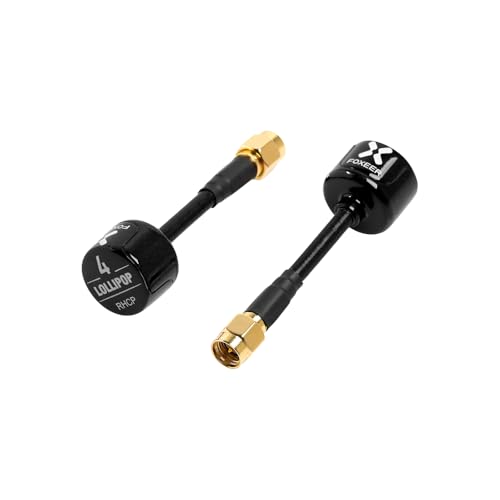
2pcs FOXEER FPV Antenna Lollipop 4 Updated Version 5.8GHz RHCP 2.6Dbi SMA for FPV Racing Drone Fatshark Goggles TX/RX
One of the consumer electronics options compared in this guide.
View on Amazon| Product | Best for | Key spec from the title |
|---|---|---|
| Foxeer Lollipop 4 Updated (2.5dBi) | Everyday racing and freestyle | 2-pack, 5.8GHz RHCP, 2.5dBi, SMA |
| RUSHFPV Dual-Unit Patch | Long-range cruising | RHCP patch, 11dBi, SMA, dual-unit |
| Skyzone Flat Panel and Mushroom | Diversity setups with mixed coverage | Flat panel plus mushroom, 5.8G, SMA |
| HGLRC Hammer Mini | Compact goggle builds | 2-pack, RHCP, 2.5dBi, super mini |
| Foxeer Lollipop Stubby (2.5dBi) | Short, low-profile antennas | 2-pack, 5.8GHz RHCP, 2.5dBi, stubby |
| Foxeer Lollipop 4 Stubby (2.6dBi, White) | Pilots wanting a lighter color | 2-pack, RHCP, 2.6dBi, white SMA |
| Foxeer Pagoda | Wide omnidirectional coverage | 5.8GHz RHCP, omnidirectional, SMA |
| Foxeer Lollipop 4 Updated (2.6dBi) | Racing and TX or RX duty | 2-pack, 5.8GHz RHCP, 2.6dBi, SMA |
How to Choose
Polarization and frequency must match your system
Circular polarization comes in right-hand and left-hand versions, and a mismatch costs a large chunk of signal. Most analog and many digital video transmitters ship with an RHCP antenna, so your goggle antennas should be RHCP as well. Confirm the 5.8GHz band, which covers the common video channels. Using the wrong polarization is the single most common reason a pricey antenna performs worse than the stock one.
Omnidirectional versus directional
Omnidirectional antennas such as lollipop, pagoda and mushroom designs receive from all around, so they stay forgiving when you turn your head or fly circles around the field. Directional patch or flat panel antennas concentrate signal in a cone, which gives extra reach but requires aiming. A common approach in diversity goggles is one of each: an omni for close, wide coverage and a patch for distance. Avoid a directional antenna alone if you fly erratic freestyle lines.
Gain, size and connectors
Gain in dBi is quoted on nearly every listing. Figures near 2.5dBi to 2.6dBi are typical for compact omni antennas, while an 11dBi patch trades width of coverage for focus. Higher gain is not simply better; it narrows the pattern. Check connector type carefully. The listings here say SMA, but some goggle modules use RP-SMA, which has a reversed center pin and will not mate correctly. Look at your goggle port before ordering.
Form factor, weight and what to ignore
Stubby designs sit closer to the goggle body and survive transport better than long antennas that poke out. Pagoda and mushroom shapes are sturdy but bulkier. Ignore dramatic range claims in listing titles, since real range depends on transmitter power, terrain and line of sight. Budget antennas tend to cut corners on soldering quality, cable shielding and radome durability, so inspect new units for a loose base before your first flight in 2026.
It also pays to buy in pairs. Most diversity receivers use two antennas, and running a mismatched pair can make the receiver switch back and forth between a strong and weak signal, which looks like flicker in the feed. Several of the options below come as 2-packs for that reason, which makes matching simple.
Finally, think about the whole signal path before you spend. A strong goggle antenna cannot recover information the aircraft never radiated, so a weak or damaged transmitter antenna will cap results no matter what you attach to your head. Treat the listings below as the receiving half of a two-part system, and plan to check the other half too.
The 8 Best Options
Foxeer Lollipop 4 Updated Version (2.5dBi)
This pair is the straightforward upgrade for pilots still using stock rubber ducks. The listing describes a 5.8GHz RHCP antenna with 2.5dBi gain and an SMA connector, and it names Fatshark goggles and TX or RX use directly.
- Strength: Sold as a 2-pack, so both goggle ports get a matched antenna.
- Strength: RHCP polarization and an omnidirectional pattern keep the signal steady while you turn your head.
- Trade-off: Modest gain means it will not extend distance like a directional patch.
Skip it if your main goal is cruising long distances at altitude, where a patch will help more. It is a solid first purchase because it asks nothing of you beyond screwing it on and flying as usual, and its familiar lollipop shape makes it easy to find compatible spares and advice from other pilots.
RUSHFPV Dual-Unit Patch Antenna
Built for long range, this listing pairs RHCP polarization with a patch design listed at 11dBi on an SMA connector. It is described as a dual-unit set.
- Strength: The highest listed gain in this group focuses signal toward the aircraft.
- Strength: Patch construction suits wide-open fields where line of sight is clear.
- Trade-off: Directional coverage means you must face the drone, and sharp head turns can drop the picture.
Skip it if you fly tight racing lines around obstacles or among trees. Pilots who choose it usually keep an omnidirectional antenna on the second port as a safety net, so the picture survives the moments when the patch loses its aim at the aircraft.
Skyzone Flat Panel and Mushroom Antenna
This one reflects a mixed-coverage mindset, combining a flat panel with a mushroom antenna for goggles and receivers. The listing specifies the 5.8G band and an SMA connector, and it mentions goggles, receivers and monitors.
- Strength: Pairing two antenna types gives both reach and wide-angle coverage.
- Strength: The flat panel and mushroom approach is a known pattern for diversity receivers.
- Trade-off: The title does not state gain figures, so it is harder to compare directly.
Skip it if you want a matched pair of identical antennas or need exact gain numbers.
HGLRC Hammer Mini
The Hammer Mini is a super mini RHCP antenna aimed at pilots who care about a compact footprint. It is sold as a pair, lists 2.5dBi gain, and is labeled for long-range use on 5.8GHz.
- Strength: The tiny size reduces bulk and the chance of snapping an antenna in a bag.
- Strength: RHCP and SMA keep it compatible with common video systems.
- Trade-off: Compact size usually means less reach than larger patch designs.
Skip it if you want maximum distance or need a large, high-gain panel.
Foxeer Lollipop 5.8GHz Stubby (2.5dBi)
This is the shorter, stubby take on the lollipop design. It lists RHCP polarization, 2.5dBi gain, an SMA connector and a 2-pack, along with Fatshark goggles and TX or RX compatibility.
- Strength: The stubby profile sits low on the goggle body.
- Strength: A pair in the box makes diversity matching simple.
- Trade-off: The title lacks the “4” generation marker, so check whether you want the newer revision.
Skip it if you want the updated Lollipop 4 generation instead.
Foxeer Lollipop 4 Stubby (2.6dBi, White)
Here the Lollipop 4 name returns with a stubby form, 2.6dBi gain and a white SMA option. It is again sold as a 2-pack and is labeled for racing quadcopters, multicopters and Fatshark goggles.
- Strength: A slightly higher listed gain of 2.6dBi than the 2.5dBi version.
- Strength: The white finish makes the antennas easy to spot and tell apart from other gear.
- Trade-off: The 0.1dBi gain difference is too small to matter in practice, so color may be the main draw.
Skip it if you prefer black antennas or need longer reach.
Foxeer Pagoda
The pagoda shape is a classic circularly polarized omni design, and this listing states 5.8GHz RHCP with an omnidirectional pattern and SMA. It is positioned for quadcopter TX or RX duty.
- Strength: Omnidirectional coverage is forgiving when you move around while flying.
- Strength: The sturdy pagoda shape holds up well to handling.
- Trade-off: The title does not mention a multi-pack, so buy two if you need a diversity pair.
Skip it if you want a short, minimalist antenna or a high-gain directional option.
Foxeer Lollipop 4 Updated Version (2.6dBi)
The last entry is another updated Lollipop 4, listed at 2.6dBi, RHCP, 5.8GHz and SMA, in a 2-pack for TX or RX use with Fatshark goggles.
- Strength: A matched pair in the package keeps your receiver diversity consistent.
- Strength: Updated design and slightly higher listed gain than the 2.5dBi sibling.
- Trade-off: It looks almost identical to other Lollipop 4 listings, so read the gain and connector details carefully.
Skip it if you already own two Lollipop 4 antennas and only need distance.
Which One Fits Your Situation
You race or fly tight freestyle lines
The Foxeer Lollipop 4 Updated (2.6dBi) pair is a dependable omni choice. The omnidirectional pattern holds the picture when your head is turning constantly.
You cruise long distances in open fields
The RUSHFPV Dual-Unit Patch is the natural option, with the highest listed gain of the group. Pair it with an omni on the other receiver port if your goggles support diversity.
You want to keep your goggles compact
Go with the HGLRC Hammer Mini or a stubby Foxeer Lollipop. Both keep the profile low, which helps when goggles ride in a backpack.
You want broad coverage and sturdy build
The Foxeer Pagoda, an omnidirectional RHCP antenna, covers a wide area. Buy two if your goggles use a diversity receiver.
A practical beginner setup is two matching Foxeer Lollipop antennas first. Once you learn how your local flying spots behave, you can swap one port to a patch and see whether the extra reach justifies the narrower coverage.
Common Mistakes
- Buying left-hand circularly polarized antennas for a right-hand system.
- Choosing the highest gain number and then flying in a way that moves out of the narrow beam.
- Ignoring SMA versus RP-SMA and finding the connector will not mate.
- Mixing very different antennas on a diversity receiver without a plan for which covers what.
- Expecting an antenna swap to fix a weak transmitter or a poor line of sight.
Related guides
- Retro Game Storage Cases And Displays
- Solar Chargers For Camping And Hiking
- How To Clean Retro Game Cartridges Safely
Frequently Asked Questions
What does RHCP mean on an FPV antenna?
It stands for right-hand circular polarization. It helps reduce signal loss from reflections, and it should match the polarization of your video transmitter antenna.
Is a higher dBi always better?
No. Higher gain narrows the area an antenna covers, so a high-gain patch works well when it points at the drone and poorly when it does not. Compact omni antennas around 2.5dBi are more forgiving.
Can I use one patch and one omni?
Yes, and many pilots do. The patch handles distance while the omni covers close range and sudden turns, giving your diversity receiver the best of both.
Will new antennas improve range on their own?
They can improve reception, but total range also depends on transmitter output, camera antenna quality and clear line of sight. Treat the goggle antennas as one part of the signal chain.