
Key takeaways
- Graphics reality check: At this price, most machines rely on integrated graphics rather than a discrete GPU. Radeon RX Vega 8 and similar solutions handle esports titles like Valorant, CS2, League of Legends, and Rocket League at 1080p comfortably, but expect to lower settings substantially for modern AAA releases.
- RAM capacity and generation: 16GB is the practical minimum for gaming in 2026, and 24GB of DDR5 is a meaningful upgrade. Integrated graphics borrow system memory, so faster DDR5 directly improves frame rates in a way it wouldn’t on a discrete-GPU machine.
- Processor cores over clock speed alone: An 8-core/16-thread chip like the Ryzen 7 H255 handles background tasks, streaming, and modern game engines far better than a dual or quad-core part advertising a similar peak frequency. Watch for vague “Core processor” descriptions that omit the actual model.
- Storage headroom: 512GB NVMe is standard here and fills quickly — a few large installs will consume most of it. Confirm the machine has a free M.2 slot or accessible drive bay before you commit, since adding storage later is far cheaper than buying a larger configuration upfront.
- Display and thermals: A 1920×1080 IPS panel is the right target; TN panels at this price wash out badly off-angle. Also consider chassis size — 16-inch machines generally offer more room for cooling than thin 15.6-inch designs, which matters during extended sessions.
What's inside
Shopping for a gaming laptop under $800 in 2026 means walking a narrow line between marketing language and actual gaming performance. Listings routinely advertise “gaming laptop” alongside integrated graphics, vague processor descriptions, and spec sheets that emphasize storage capacity while staying quiet about GPU capability. The result is a market where two machines at identical prices can deliver wildly different frame rates, and where the deciding factor is often a component the product title never mentions.
This guide cuts through that noise. We’ve assessed the most compelling budget options available right now, focusing on what actually determines playable performance: CPU core count and sustained clock speeds, integrated graphics capability, RAM capacity and generation, and display quality. Every pick below sits comfortably within the $800 ceiling, and we’ve been explicit about what each machine can and cannot handle so you can match your purchase to your library rather than to a spec sheet.
As an Amazon Associate we earn from qualifying purchases at no extra cost to you. Product prices and availability are accurate as of the date shown and are subject to change.





⚡ Save on Your Next PC — Amazon Prime
Prime members get fast free shipping on the systems above, plus early access to Prime Day & Black Friday PC deals. New members get a 30-day free trial.
Watch: Best Gaming Laptop Under $800 — Video Review
How to Choose Gaming Laptop Under $800
- Graphics reality check: At this price, most machines rely on integrated graphics rather than a discrete GPU. Radeon RX Vega 8 and similar solutions handle esports titles like Valorant, CS2, League of Legends, and Rocket League at 1080p comfortably, but expect to lower settings substantially for modern AAA releases.
- RAM capacity and generation: 16GB is the practical minimum for gaming in 2026, and 24GB of DDR5 is a meaningful upgrade. Integrated graphics borrow system memory, so faster DDR5 directly improves frame rates in a way it wouldn’t on a discrete-GPU machine.
- Processor cores over clock speed alone: An 8-core/16-thread chip like the Ryzen 7 H255 handles background tasks, streaming, and modern game engines far better than a dual or quad-core part advertising a similar peak frequency. Watch for vague “Core processor” descriptions that omit the actual model.
- Storage headroom: 512GB NVMe is standard here and fills quickly — a few large installs will consume most of it. Confirm the machine has a free M.2 slot or accessible drive bay before you commit, since adding storage later is far cheaper than buying a larger configuration upfront.
- Display and thermals: A 1920×1080 IPS panel is the right target; TN panels at this price wash out badly off-angle. Also consider chassis size — 16-inch machines generally offer more room for cooling than thin 15.6-inch designs, which matters during extended sessions.
The Best Picks Reviewed
KAIGERR 2026 Gaming Laptop (Ryzen 7 H255, 24GB DDR5)
This is the strongest overall value in the category: an 8-core/16-thread Ryzen 7 H255 boosting to 4.9GHz, paired with 24GB of DDR5 and Radeon RX Vega 8 graphics on a 16-inch panel. The extra memory bandwidth and larger chassis give it a real thermal and performance advantage over thinner 15.6-inch rivals at similar money.
Gaming Laptop with Ryzen 7 H255 (24GB DDR5, 512GB NVMe)
Essentially the same core silicon as our top pick — 8 cores, 4.9GHz boost, 24GB DDR5, 512GB NVMe — in an alternative chassis, making it a strong fallback if the KAIGERR is out of stock or priced higher. Performance in esports titles and general multitasking is effectively identical.
NIMO 15.6″ IPS FHD Light Gaming Laptop (Ryzen 5 6600H)
The Ryzen 5 6600H is a genuine H-series mobile part rather than a low-power U-series chip, which means higher sustained power limits and better frame consistency under load. The IPS FHD panel is the standout here — noticeably better colour and viewing angles than the TN displays common at this price.
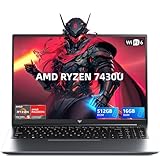
Light Gaming Laptop (Ryzen 7 7430U, 16GB RAM)
The Ryzen 7 7430U is an efficiency-focused eight-core chip, so this is best understood as a lightweight, long-battery-life machine that handles esports titles rather than a true gaming rig. Choose it if portability and all-day use matter more to you than maximum frame rates.
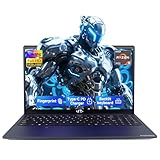
Tunhail 15.6″ Laptop (16GB RAM, 512GB, Win 11 Pro)
A capable everyday machine with 16GB RAM, a 1080p display, and Windows 11 Pro included, which adds genuine value for anyone needing BitLocker or Remote Desktop. The unspecified “Core processor” limits its gaming credentials, so treat it as a study-and-work laptop that plays lighter titles rather than a gaming-first purchase.
Frequently Asked Questions
Can a laptop under $800 run modern AAA games?
With significant compromises, yes. Machines with Radeon RX Vega 8 integrated graphics can run many recent titles at 1080p on low settings, often with resolution scaling enabled. Esports and indie games run well; expect 30fps or below in demanding open-world releases.
Is 16GB of RAM enough, or should I pay for 24GB?
16GB is workable, but on integrated-graphics laptops the GPU shares system memory, so 24GB of DDR5 leaves more headroom for the game itself and improves consistency. If the price difference is modest, the upgrade is worth taking.
Does a Ryzen H-series chip really matter versus a U-series?
Yes. H-series processors like the 6600H and H255 run at higher sustained power limits, delivering better sustained clock speeds under gaming load. U-series parts such as the 7430U prioritise battery life and will throttle sooner during long sessions.
Can I upgrade these laptops later?
Storage is usually the easiest upgrade, with many models offering a spare M.2 slot or a replaceable NVMe drive. RAM is less predictable — some budget machines solder memory to the board — so verify upgradeability with the seller before purchase if that matters to you.
Final Thoughts
For most buyers, the KAIGERR 2026 Gaming Laptop is the clear winner under $800, combining an 8-core Ryzen 7 H255, 24GB of DDR5, and a roomier 16-inch chassis that handles heat better than its thinner competitors. If it’s unavailable, the alternative Ryzen 7 H255 configuration delivers near-identical performance, while the NIMO 15.6″ with its Ryzen 5 6600H and IPS display is the smarter choice for anyone who values screen quality and a proven H-series chip over raw core count.


