Key takeaways
- Layout: 75% and 96% layouts keep F-row, arrows, and navigation keys while saving 4 to 7 inches of desk space versus full-size; choose full-size only if you use the number pad constantly for data entry.
- Switch Type: Tactile Browns and similar are ideal for programming — quiet enough for calls, with a bump for accuracy — while linear reds are faster for gaming but increase typos; avoid clicky blues in shared spaces.
- Connectivity: Look for Bluetooth 5.1 or better with at least 3-device pairing plus wired USB-C for low-latency work; 2.4GHz wireless is useful, but a detachable wired mode ensures zero dropouts during long compiles or gaming.
- Ergonomics & Build: Low-profile designs around 17 to 22mm reduce wrist strain, and gasket-mounted or aluminum frames cut vibration over 10,000+ keystrokes per day; PBT keycaps and adjustable feet at 6 to 9 degrees help maintain neutral wrist angle.
- Programmability: QMK/VIA or on-board macro support lets you remap layers, create shortcuts for debugging, and store profiles on the keyboard itself so your layout travels between Windows, macOS, and Linux.
What's inside
In 2026, the best keyboard for programming is still a mechanical board with stable connectivity, a layout that keeps function keys and arrows within reach, and switches you can type on for 6 to 8 hours without fatigue. For coders who also game, that means prioritizing N-key rollover, anti-ghosting, and firmware that lets you remap without bloatware getting in the way.
We focused on keyboards that balance coding comfort with gaming-grade responsiveness — from low-profile wireless options to full-size workhorses and programmable companions. Below are our top picks for developers in 2026, based on layout efficiency, switch feel, connectivity, and long-session ergonomics.
As an Amazon Associate we earn from qualifying purchases at no extra cost to you.




⚡ Save on Your Next PC — Amazon Prime
Prime members get fast free shipping on the systems above, plus early access to Prime Day & Black Friday PC deals. New members get a 30-day free trial.
Watch: Best Keyboard for Programming — Video Review
How to Choose
- Layout: 75% and 96% layouts keep F-row, arrows, and navigation keys while saving 4 to 7 inches of desk space versus full-size; choose full-size only if you use the number pad constantly for data entry.
- Switch Type: Tactile Browns and similar are ideal for programming — quiet enough for calls, with a bump for accuracy — while linear reds are faster for gaming but increase typos; avoid clicky blues in shared spaces.
- Connectivity: Look for Bluetooth 5.1 or better with at least 3-device pairing plus wired USB-C for low-latency work; 2.4GHz wireless is useful, but a detachable wired mode ensures zero dropouts during long compiles or gaming.
- Ergonomics & Build: Low-profile designs around 17 to 22mm reduce wrist strain, and gasket-mounted or aluminum frames cut vibration over 10,000+ keystrokes per day; PBT keycaps and adjustable feet at 6 to 9 degrees help maintain neutral wrist angle.
- Programmability: QMK/VIA or on-board macro support lets you remap layers, create shortcuts for debugging, and store profiles on the keyboard itself so your layout travels between Windows, macOS, and Linux.
The Best Picks Reviewed
Keychron K3 Version 2 QMK
Our top pick for most programmers, the Keychron K3 Version 2 QMK packs a 75% layout into a 22mm low-profile frame without sacrificing function keys or arrows. With QMK/VIA support, hot-swappable low-profile switches, and Bluetooth 5.1 plus wired USB-C for up to 3 devices, it is built for custom layers for IDEs like VS Code and JetBrains. White LED backlighting, N-key rollover, and Mac/Windows toggle make it a reliable daily driver for coding marathons and light gaming after hours.
Keychron K4 Version 2
Best for coders who need a number pad, the Keychron K4 offers a compact 96% layout with 100 keys in a footprint much smaller than traditional full-size boards. This Version 2 model pairs Bluetooth 5.1 and wired modes with Keychron Super Brown tactile switches, giving feedback for accurate typing without excessive noise. You keep dedicated arrows, F-row, and numpad for spreadsheets and data work, while still saving desk space, and the wireless design easily switches between desktop and laptop.
Logitech G413 SE
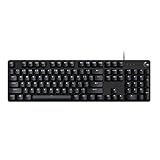
The Logitech G413 SE is the most durable full-size option for programmers who prefer a classic layout. Its brushed 5052 aluminum top plate, mechanical tactile switches, and matte PBT-feel keycaps are built for over 50 million keystrokes with minimal flex. Full-size spacing, dedicated media controls, and 1ms USB reporting keep it precise for both typing and gaming, while the integrated palm rest channel and understated black design fit office setups that do not need loud RGB.
AULA S99 Wireless Keyboard
The AULA S99 is a standout 99-key wireless keyboard that delivers a near-full-size experience in a more compact chassis. It retains the number pad, F-row, and navigation cluster — essential for programming shortcuts and data navigation — while adding 2.4GHz wireless, Bluetooth, and wired connectivity for flexible multi-device workflows. With its low-noise switches and included number pad, it is an efficient choice for students and developers who want wireless freedom without losing productivity keys.
VSDINSIDE K1 Pro Macro Keyboard
Not a replacement for your main board, the VSDINSIDE K1 Pro is the best programmable companion for coders and streamers. This wired-only, full-key programmable pad features an on-board screen, control knob, and gasket-mounted RGB-backlit mechanical keys with hot-swappable switches. Store macros and shortcuts directly on-board, trigger complex IDE commands, OBS scenes, or build scripts with one press, and use the knob for volume, scrolling, or scrubbing timelines — ideal alongside a 75% or 96% main keyboard.
Frequently Asked Questions
What is the best keyboard size for programming?
For most developers, 75% is the sweet spot: you keep the F-row, arrows, and navigation keys while reclaiming desk space for your mouse. Choose 96% or 99-key if you frequently use the number pad, and full-size only if you need a dedicated numpad plus extra spacing for long data-entry sessions.
Are tactile or linear switches better for coding?
Tactile switches like Browns are generally better for coding because the bump confirms actuation around 2mm, reducing typos during long typing sessions. Linear switches are slightly faster for gaming but offer less feedback, which can lead to more errors when coding for hours.
Is wireless reliable enough for programming and gaming in 2026?
Yes. Modern Bluetooth 5.1 and 2.4GHz keyboards offer stable connections with polling rates that match wired for everyday use, and all our wireless picks include a wired USB-C fallback for charging and zero-latency gaming or critical work.
Do I need QMK or programmable keys as a programmer?
You do not need it to start, but it helps a lot. QMK/VIA lets you remap Caps Lock to Esc or Ctrl, create layers for debugging shortcuts, and save everything on-board so your layout works on any machine without installing software.
Final Thoughts
For most programmers in 2026, the Keychron K3 Version 2 QMK is the most versatile foundation thanks to its low-profile 75% design and deep QMK programmability. Pair it with the Keychron K4 if you need a number pad, or add the VSDINSIDE K1 Pro as a dedicated macro pad for one-touch build, debug, and streaming commands. If you want a simple, tank-like full-size board, the Logitech G413 SE remains a dependable anchor for years of daily coding.