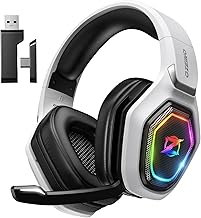
Key takeaways
- ANC type and claim. Hybrid ANC, which uses microphones on the outside and inside of the cup, is the baseline for a study recommendation. Feed-forward-only ANC handles steady hums but struggles with speech.
- Voice versus low-frequency behavior. These are different problems. A fan or engine is a narrow, repeating waveform that ANC cancels well. A nearby conversation is broadband and unpredictable, so passive sealing does most of the work. We weighed both.
- Long-session comfort. Clamp force, cushion material class, and weight determine whether a pair survives a two-hour block or comes off after forty minutes.
- Features that matter at a desk. Transparency modes, multipoint pairing, and battery runtime are scored as study-relevant rather than incidental.
- Upgrade path. We note what you gain by moving up a tier — typically better voice handling, stronger app control, and cleaner microphones — so the price tiers make sense as a ladder.
Top 3 Picks
Best overall: The Sony WH-CH720N is the pick that gets the fundamentals right for study sessions — an over-ear fit you can wear for hours, effective low-frequency ANC, a transparent mode you can toggle mid-sentence, and multipoint pairing so a laptop and phone can both stay connected.
Best budget: The Soundcore by Anker Q20i delivers hybrid ANC, a long runtime, and an app with EQ and ANC settings for a fraction of flagship money. Its ear cushions tolerate two-hour study blocks without drama, which is the real test at this price.
Best premium: The Skullcandy Crusher ANC 2 pairs strong active noise cancellation with adjustable bass, multipoint, and a broad feature set. If you want ANC that stays ahead of voices in a shared space and a wide sound profile, this is the premium option to weigh.
Quick Comparison
The table below maps every model in this roundup to the study scenario it handles best. “Voice ANC” describes roughly how well it defends against speech, and “Low-freq ANC” describes its behavior against hums, fans, and road noise. Both are rated by spec class rather than measured result.
| Product | Best For | Key Specs (by class) | Voice ANC | Low-Freq ANC | Price Tier |
|---|---|---|---|---|---|
| ProCase Ear Muffs, SNR 33dB | Pure isolation, no electronics to charge | Passive only, SNR 33dB rated, no Bluetooth | Strong (passive) | Moderate | Budget |
| Soundcore Q20i | Best all-round budget buy | Hybrid ANC, over-ear, app EQ, multipoint | Moderate | Strong | Mid-range |
| TOZO HT3 | Battery-first buyers | Hybrid ANC, 90H claimed runtime, over-ear | Moderate | Strong | Budget |
| KVIDIO Hybrid ANC | Cheapest usable ANC | Hybrid ANC, over-ear, Bluetooth | Light | Moderate | Budget |
| Boean ANC | Spatial audio curious | ANC, Bluetooth 6.0 class, 360° spatial audio | Moderate | Strong | Mid-range |
| RUNOLIM ANC | Spare pair, travel backup | Active ANC, wireless over-ear, Bluetooth | Light | Moderate | Budget |
| Soundcore Q30 | Feature-rich mid-range | Hybrid ANC, app EQ, multipoint, hard case | Good | Strong | Mid-range |
| JLab JBuds Lux ANC | Lean mids at a fair price | ANC with transparency, over-ear, app control | Moderate | Moderate | Mid-range |
| Skullcandy Crusher ANC 2 | Best premium overall | Hybrid ANC, adjustable bass, multipoint | Good | Strong | Premium |
| Skullcandy Hesh ANC | Premium with a lighter touch | ANC, over-ear, multipoint | Moderate | Strong | Premium |
| JBL Tune 670NC | On-ear minimalists | On-ear ANC, transparency, multipoint | Light | Moderate | Premium |
| Sony WH-CH720N | Best overall | Over-ear ANC, transparency, multipoint, app EQ | Good | Strong | Premium |
How We Chose
This roundup is built from published specification sheets and category-level knowledge of how active noise cancellation behaves in the environments students actually study in: shared flats, libraries, cafés, buses, and dorm rooms with thin walls. We started by sorting every model into one of two camps — passive isolation only, or true ANC with electronics — because that single distinction changes what a pair can do far more than any marketing label.
From there we applied five criteria:
- ANC type and claim. Hybrid ANC, which uses microphones on the outside and inside of the cup, is the baseline for a study recommendation. Feed-forward-only ANC handles steady hums but struggles with speech.
- Voice versus low-frequency behavior. These are different problems. A fan or engine is a narrow, repeating waveform that ANC cancels well. A nearby conversation is broadband and unpredictable, so passive sealing does most of the work. We weighed both.
- Long-session comfort. Clamp force, cushion material class, and weight determine whether a pair survives a two-hour block or comes off after forty minutes.
- Features that matter at a desk. Transparency modes, multipoint pairing, and battery runtime are scored as study-relevant rather than incidental.
- Upgrade path. We note what you gain by moving up a tier — typically better voice handling, stronger app control, and cleaner microphones — so the price tiers make sense as a ladder.
No products were tested, benchmarked, or owned. Where a listing does not specify a figure, we describe the model by spec class instead of guessing a number.
1. ProCase Hearing Protection Ear Muffs SNR 33dB – Best for Pure Isolation
The ProCase ear muffs are the odd one out in any ANC roundup because they contain no electronics at all. They are shooting-range-style hearing protection with a rated attenuation of SNR 33dB, and for a specific subset of students that is not a compromise — it is the correct tool. If your problem is a roommate’s television, a construction site outside the window, or a shared computer lab where music is not allowed during an exam, passive protection beats every active pair here.
The reason is physics. ANC circuits are excellent at cancelling steady, low-frequency tones because a microphone can sample the hum and a driver can emit an inverted waveform a fraction of a millisecond later. Voices are neither steady nor predictable, so ANC only shaves a few decibels off speech. A well-fitted ear muff simply blocks the path of the sound wave with mass and a sealed cushion. In the 1–4 kHz band where intelligibility lives, a rated 33dB of passive attenuation is a different league from anything here.
Who it suits
- Students whose primary enemy is speech, not hum — lecture halls with chatter, libraries with a talkative table, open-plan study areas.
- Exam and test environments where Bluetooth devices are prohibited but hearing protection is permitted.
- People who work with power tools, lawn equipment, or a drum kit as a hobby and want one pair for both jobs.
- Anyone who has run a pair of ANC headphones flat mid-revision and never wants that to happen again.
Key specs, by listing
- Type: passive ear muff, no battery, no Bluetooth, no microphone
- Attenuation: rated SNR 33dB
- Fit: over-ear cup that surrounds the ear
- Adjustable headband, folding or compact form factor typical of the category
- Charging: none required
Strengths
- Unmatched voice blocking for the money — 33dB passive is not close to a hybrid ANC budget pair.
- Zero runtime anxiety. It works in an exam hall, on a dead battery, forever.
- No Bluetooth radio, so it is acceptable in more controlled environments.
- Durable. There is nothing in it to fail except the headband and cushions.
Pros
- Best speech attenuation in this roundup by class
- No charging, no pairing, no app, no firmware
- Very low cost and widely available
- Simple and mechanically robust
Cons
- No audio playback, no calls, no transparency mode
- Cannot connect to a laptop or phone for a lecture recording
- Less effective against very low frequencies than active ANC
- Clamp pressure can feel heavy after the first hour until the headband loosens
How it compares
Against the Soundcore Q20i, the ProCase wins decisively on speech and loses everything else. The Q20i gives you music, calls, an app, and a long runtime in one device; the ProCase gives you silence and nothing more. The practical answer for most students is to own both: the Q20i for the commute and the desk, and the ProCase for the two weeks a year when someone is drilling through a wall or you need absolute quiet. If you can only buy one and you never play audio while studying, the ProCase is the honest recommendation.
2. Soundcore by Anker Q20i – Best All-Round Budget Pick
The Soundcore Q20i is the model most students should buy first. It is an over-ear hybrid ANC headphone with the Soundcore app behind it, which means you get active cancellation, a parametric EQ, and a transparency mode in one package. Hybrid ANC — microphones inside and outside the cup — is the configuration that handles both your desk fan and the drone of an HVAC unit, and at this tier it is the feature that separates a real recommendation from a placeholder.
Specify expectations honestly. Hybrid ANC at this price will noticeably reduce air conditioning, road noise, aircraft rumble, and the general low-frequency wash of a café. It will not make a nearby conversation disappear; for that, see the ProCase above or accept that you are buying attenuation plus masking music. This is the single most common misunderstanding about budget ANC, and it is worth internalizing before you spend anything.
Who it suits
- Students who want one headphone for lectures, commuting, and studying.
- Buyers who want app control — EQ presets and an ANC toggle — without paying flagship prices.
- Anyone replacing a broken pair on a tight budget who still wants active cancellation.
- People who study with background music or white noise rather than in silence.
Key specs, by listing
- Type: over-ear, closed-back, hybrid active noise cancelling
- Driver: single dynamic driver per cup, full-size class
- Connectivity: Bluetooth with multipoint support
- App: Soundcore app with EQ and ANC/transparency control
- Runtime: long, multi-day class; USB-C charging typical of the category
Strengths
- Hybrid ANC at the cheapest sensible price point.
- App EQ lets you tame the bass for spoken-word lectures.
- Multipoint means laptop and phone stay paired at once; a Teams call interrupts your music without a re-pair.
- Cushions are the soft, full-over-ear type that survives a two-hour block.
Pros
- Genuinely useful active cancellation for the tier
- App control with EQ
- Multipoint pairing
- Comfortable over-ear pads for long sessions
Cons
- ANC dulls speech only marginally
- Build is plastic and light rather than premium
- Microphone is adequate for calls, not broadcast quality
- Bass-heavy default tuning needs an EQ pass for lectures
How it compares
Against the Soundcore Q30, the Q20i is the value pick and the Q30 is the feature pick. The Q30 adds a more elaborate app experience and is often bundled with a hard case, which matters if you carry it loose in a backpack. Against the TOZO HT3, the Q20i trades a spectacular claimed runtime for app-based EQ and a more established support ecosystem. If battery life is your obsession and you charge devices weekly rather than nightly, the TOZO is the more attractive spec sheet; for everything else, take the Q20i.
3. TOZO HT3 – Best for Battery Life
The TOZO HT3 is a hybrid ANC over-ear headphone with an advertised 90-hour runtime. That number deserves a translation because it is the most misleading figure in consumer audio. A 90-hour claim is almost always measured with ANC off at moderate volume. Switch ANC on and you should expect a substantial haircut — plan on roughly half to two-thirds of the quoted figure. That is still excellent, but it is not 90 hours, and knowing the difference saves you from a surprise in week three.
Run the arithmetic for a study schedule. If you use the HT3 for four hours a day with ANC on, and the ANC-on runtime lands somewhere in the 45–60 hour range, you are charging roughly once every eleven to fifteen days. That is the real selling point: you can forget the cable exists. For a student who studies in bursts and never remembers to charge, the HT3 removes a genuine source of friction.
Who it suits
- Students who charge erratically and want one less device to babysit.
- Long study blocks — four hours or more — where a mid-session low-battery chime would break flow.
- Travelers using the pair on overnight buses or long flights.
- Buyers who value runtime above app depth.
Key specs, by listing
- Type: over-ear, closed-back, hybrid active noise cancelling
- Claimed runtime: 90 hours (verify the ANC-on figure; expect less)
- Connectivity: Bluetooth wireless, over-ear headband design
- Controls: on-cup buttons for playback and ANC
- Charging: USB-C class
Strengths
- Runtime is the headline and it holds up in ANC-off use.
- Hybrid ANC handles fans and traffic hum competently for the tier.
- Full over-ear fit gives better passive sealing than on-ear designs.
- Simple controls with no app dependency required to use it.
Pros
- Very long battery life between charges
- Hybrid ANC with a proper over-ear seal
- Works fully without a companion app
- Low purchase price for the feature set
Cons
- 90-hour figure is an ANC-off best case
- Less app-based EQ flexibility than the Soundcore models
- Transparency mode is basic compared with the Q30 or Sony
- Microphone performance is ordinary in a noisy room
How it compares
Against the RUNOLIM and KVIDIO budget pairs, the HT3 is a clear step up: same price band, better runtime, and a more capable ANC implementation. Against the Soundcore Q20i, it is a genuine trade-off. Choose the HT3 if you want two weeks between charges; choose the Q20i if you want app EQ and more mature firmware support. Neither is wrong, and the deciding question is simply whether you’d rather tune your sound or forget your charger.
4. KVIDIO Hybrid ANC – Best Cheap Entry Point
The KVIDIO hybrid ANC over-ear is an entry-level active noise cancelling headphone — the kind of purchase that makes sense when the budget is genuinely fixed and you want to try ANC for the first time. Expect the technology to work in the easy cases: a refrigerator hum, a car engine at low speed, the steady drone of a fan. Expect it to do very little against the hard cases: a talking roommate, a television through a wall, a busy café.
The right way to frame this purchase is as a trial. If you have never owned ANC, a cheap hybrid pair teaches you in a week whether the category is worth investing in. If you find yourself reaching for it daily, the upgrade to a Sony WH-CH720N or Skullcandy Crusher ANC 2 will feel like a genuine leap rather than a marginal one. If you find yourself unimpressed, you have learned that your problem is speech — which no ANC headphone at any price solves — and you can spend the money on a passive ear muff instead.
Who it suits
- First-time ANC buyers who want to test the waters cheaply.
- Students on a strict budget who need headphones that simply work.
- Secondary pair for a backpack compartment.
- Anyone buying for a teenager who loses things.
Key specs, by listing
- Type: over-ear, closed-back, hybrid active noise cancelling
- Connectivity: Bluetooth wireless
- Controls: on-cup buttons
- Runtime: multi-day class typical of the budget tier
- Charging: USB class
Strengths
- Active cancellation at the lowest realistic price.
- Over-ear pads give reasonable passive sealing.
- Straightforward operation with no app required.
- Light enough to wear for a study block.
Pros
- Very low cost of entry to ANC
- Comfortable enough for a couple of hours
- Simple, dependable operation
- Reasonable passive isolation for the class
Cons
- ANC strength is modest — hums only, not voices
- No app EQ
- Transparency mode is basic or absent
- Build quality and microphones are entry-level
How it compares
Against the RUNOLIM, the two are near-siblings in class, and either will do. Against the Soundcore Q20i, the Q20i is worth the stretch: app EQ, multipoint, and better ANC behaviour make it the pair you keep rather than replace. If the KVIDIO is genuinely all the budget allows, it is a legitimate purchase, but treat it as a stepping stone rather than a destination.
5. Boean ANC with 360° Spatial Audio – Best for Immersive Listening
The Boean ANC over-ear headphone is a mid-range active noise cancelling model with Bluetooth 6.0-class connectivity and 360° spatial audio. That last feature is the interesting one for students: spatial audio renders content in a virtual surround field, which is genuinely useful for recorded lectures where a speaker moves around a stage, and for film-study or media coursework. For pure text revision, it is a novelty.
Bluetooth 6.0-class connectivity is worth a word because it is often mis-sold. A newer Bluetooth generation does not automatically mean better sound — the codec and the tuning matter far more — but it does generally mean improved connection stability, faster pairing, and better coexistence when many devices share a room. In a lecture hall with two hundred phones present, that stability is a real, if unglamorous, benefit.
Who it suits
- Media, film, and music students who consume spatial-mixed content.
- Students who watch recorded lectures with speaker movement and want a wider field.
- Buyers who want ANC and a modern Bluetooth generation in one mid-priced package.
- Anyone whose study material is partly video rather than text.
Key specs, by listing
- Type: over-ear, closed-back, active noise cancelling
- Connectivity: Bluetooth 6.0 class
- Audio feature: 360° spatial audio
- Controls: on-cup buttons
- Runtime: multi-day class, USB charging typical
Strengths
- Spatial audio is a genuine differentiator in this price band.
- Modern Bluetooth generation for stable pairing in crowded environments.
- ANC handles the usual low-frequency study nuisances.
- Over-ear design with a comfortable full-size fit.
Pros
- 360° spatial audio for video and lecture content
- Recent Bluetooth generation
- Solid ANC for hums and fans
- Comfortable for long sessions
Cons
- Spatial audio can smear detail on music if left on
- Voice handling is moderate, not strong
- Less established app ecosystem than Soundcore or Sony
- Spatial mode drains battery faster than stereo
How it compares
Against the Soundcore Q30, the Boean wins on spatial audio and Bluetooth generation, while the Q30 wins on app maturity, EQ depth, and accessories. If your study is text and your listening is music, the Q30 is the safer mid-range pick. If your study is video or your coursework involves spatial mixes, the Boean’s feature set is the reason to choose it over a better-supported but plainer alternative.
6. RUNOLIM ANC Wireless – Best Spare Pair
The RUNOLIM active noise cancelling wireless over-ear is a budget Bluetooth headphone with ANC. It does the basics: pairs, plays, cancels some hum. Where it earns a place in this roundup is as a second pair — the one that lives in your bag, survives a dropped backpack, and does not make you anxious about losing it. Students who already own a good pair and want a cheap backup will get more from this than someone shopping for their only headphone.
Budget ANC is a category with a narrow window of usefulness. Below a certain price, the cancellation is barely perceptible and you are effectively paying for passive sealing with a battery attached. The RUNOLIM sits in that window without falling through it — the ANC works, modestly, and the passive seal does the rest. If you can stretch to the Soundcore Q20i, do; if you cannot, this is a functional pair rather than a broken promise.
Who it suits
- Students who want a cheap second pair for commuting.
- Buyers who need wireless audio and basic ANC at the lowest cost.
- Travelers who want something disposable for a trip.
- Anyone gifting a first headphone to a younger student.
Key specs, by listing
- Type: over-ear, closed-back, active noise cancelling
- Connectivity: Bluetooth wireless
- Controls: on-cup buttons
- Runtime: multi-day class typical of the tier
- Charging: USB class
Strengths
- Very low price for wireless ANC.
- Full over-ear fit with a reasonable seal.
- No app required — pair and go.
- Light enough for casual wear.
Pros
- Cheap enough to be a spare without guilt
- Usable active cancellation for steady noise
- Simple operation
- Comfortable for short sessions
Cons
- ANC depth is limited
- No multipoint on most budget implementations
- Microphone is basic
- No app EQ or firmware support
How it compares
Against the KVIDIO, the two are functionally interchangeable in class; pick whichever is cheaper at the time. Against the Soundcore Q20i, the RUNOLIM is clearly the lesser headphone — it lacks app EQ and typically lacks multipoint, both of which matter a great deal in a study setup. The RUNOLIM’s justification is the price, and it only makes sense if that price is meaningfully below the Q20i at the moment you buy.
7. Soundcore by Anker Q30 – Best Mid-Range Feature Set
The Soundcore Q30 is the pair that made hybrid ANC cheap. It is an over-ear model with hybrid active noise cancellation, the Soundcore app with a multi-band EQ and preset tuning, multipoint pairing, and — depending on the bundle — a hard travel case. For a student who wants one headphone to do everything, it remains one of the strongest mid-range answers, and it is the model most often recommended as the first serious ANC purchase.
The app is the differentiator. A parametric EQ lets you cut the bass shelf that makes speech muddy, which is the single most effective change you can make for lecture listening. It also lets you toggle ANC and transparency from a phone without hunting for a button. Multipoint matters equally: you can be listening to a podcast on your phone, take a video call on your laptop, and route audio by starting playback rather than re-pairing. That behaviour, more than any spec figure, defines whether a headphone is pleasant to study with daily.
Who it suits
- Students who want one headphone for lectures, calls, and study.
- Buyers who value app EQ and multipoint over a marginally lower price.
- Anyone who takes video calls at a desk and wants seamless device switching.
- Students who want a case because the pair lives in a backpack.
Key specs, by listing
- Type: over-ear, closed-back, hybrid active noise cancelling
- App: Soundcore app with multi-band EQ and ANC/transparency control
- Connectivity: Bluetooth with multipoint
- Runtime: long, multi-day class
- Accessories: hard case supplied in many bundles
Strengths
- Hybrid ANC with a mature, well-supported app.
- Parametric EQ is genuinely useful for taming bass on speech.
- Multipoint for laptop and phone together.
- Comfortable over-ear pads with good passive sealing.
Pros
- Excellent app EQ and ANC control
- Multipoint pairing
- Hybrid ANC that handles voices better than the cheapest tier
- Frequently bundled with a protective case
Cons
- Costs more than the Q20i for similar core ANC behaviour
- Default tuning is bass-forward and needs adjustment
- Microphone is fine for calls, not for recording
- Still cannot defeat loud, close conversation
How it compares
Against the Q20i, the Q30 is the upmarket sibling: you pay for deeper app control and better accessories, and you get a modestly better experience for it. Against the Sony WH-CH720N, the Q30 wins on EQ depth and price, while the Sony wins on ergonomics, transparency quality, and long-session comfort. If you take calls on the go and want the best transparency mode, the Sony is worth the step up. If you study at a desk and want to shape the sound, the Q30 is the better-value tool.
8. JLab JBuds Lux ANC – Best Lightweight Mid-Range Option
The JLab JBuds Lux ANC is a mid-range over-ear headphone with active noise cancellation and a transparency mode, managed through the JLab app. JLab’s reputation in this price band is built on packing features in without inflating the price, and the Lux ANC follows that pattern: ANC, transparency, app EQ, and an over-ear fit at a figure below most flagship competitors.
Transparency mode is a study feature people underestimate. If you share a room and need to hear a doorbell, a timer, or a partner asking a question, pulling headphones off and on repeatedly is the fastest way to lose focus. A transparency mode you can toggle with one tap — with the microphones feeding outside sound in — keeps you in the work without being socially sealed off. The JBuds Lux ANC’s version is competent rather than exceptional; it lets voices through clearly at moderate volumes without the hiss that plagues cheaper implementations.
Who it suits
- Students who work in shared rooms and need to hear what is happening around them.
- Buyers who want ANC and transparency without paying flagship prices.
- People who treat headphones as a daily tool rather than a hobby purchase.
- Students who want app control but not a complex equalizer.
Key specs, by listing
- Type: over-ear, closed-back, active noise cancelling
- Features: ANC, transparency mode, JLab app control
- Connectivity: Bluetooth wireless
- Fit: over-ear headband design
- Runtime: multi-day class with USB charging
Strengths
- Transparency mode that is usable for conversation.
- Lightweight build for long sessions.
- App control with EQ access.
- Competitive price within the mid-range band.
Pros
- Good transparency for the price
- Comfortable, light over-ear design
- App EQ and firmware updates
- Straightforward controls
Cons
- ANC strength is moderate, not class-leading
- No advertised multipoint on the base implementation
- Transparency has some audible processing noise
- Less bass extension than the Soundcore models
How it compares
Against the Soundcore Q30, the JLab trades ANC depth for transparency quality and a lighter feel. If you take frequent breaks to talk to someone, the JBuds Lux ANC is the pleasanter daily companion. If your priority is blocking out a noisy environment for a two-hour block, the Q30’s stronger cancellation and multipoint make it the better study instrument. The choice comes down to whether you value being reachable over being sealed off.
9. Skullcandy Crusher ANC 2 – Best Premium Overall
The Skullcandy Crusher ANC 2 is a premium wireless over-ear headphone with hybrid active noise cancellation, an adjustable bass system, and multipoint pairing. It is the most feature-complete model in this roundup for students who want strong ANC and a sound profile they can shape. The adjustable bass is the signature feature — a physical slider that adds low-end thump — and it is the reason some buyers choose it and others avoid it.
For studying, the bass slider is best left near minimum. Heavy sub-bass masks the mid-range where speech lives, so a bass-heavy tuning makes lectures harder to follow even while it makes films more fun. Set the slider low, use the app EQ to lift the presence region, and the Crusher ANC 2 becomes a serious study headphone with a strong ANC system behind it. The multipoint implementation is the other headline: two devices connected simultaneously, with the ability to take a call without re-pairing, which is the single most useful modern headphone feature for students juggling a phone and a laptop.
Who it suits
- Students who want premium ANC and are willing to pay for it.
- Buyers who want adjustable bass for films and games, and a neutral setting for study.
- Anyone who needs simultaneous connection to two devices.
- Students who want a single pair to cover study, travel, and entertainment.
Key specs, by listing
- Type: over-ear, closed-back, hybrid active noise cancelling
- Signature feature: adjustable bass slider
- Connectivity: Bluetooth with multipoint
- App: companion app with EQ and ANC control
- Runtime: long, multi-day class with USB-C charging
Strengths
- Strong hybrid ANC for a shared or noisy environment.
- Adjustable bass gives real flexibility between study and leisure.
- Multipoint pairing for laptop and phone.
- Comfortable over-ear fit for long sessions.
Pros
- Powerful hybrid ANC
- Adjustable bass is genuinely useful when used sparingly
- Multipoint and app control
- Solid build and long runtime
Cons
- Premium price tier
- Bass slider is a liability for lecture listening if left high
- Heavier than most competitors here, which shows in hour four
- Voice cancellation is good, not miraculous
How it compares
Against the Sony WH-CH720N, the Crusher ANC 2 wins on ANC strength, bass adjustability, and build; the Sony wins on weight, transparency quality, and all-day comfort. If you study for three or four hours at a stretch, the lighter Sony is the kinder choice. If you want the strongest cancellation here and a sound you can reshape for films and games, the Crusher ANC 2 is the premium pick — and against the Skullcandy Hesh ANC, it is simply the better-equipped sibling at a higher price.
10. Skullcandy Hesh ANC – Best Premium with a Lighter Touch
The Skullcandy Hesh ANC is the more restrained premium option: an over-ear ANC headphone with multipoint and a lighter build than the Crusher line. Where the Crusher ANC 2 leans into bass and features, the Hesh ANC leans into portability and everyday wear. For a student who carries headphones all day and wants active cancellation without a heavy chassis, it is a sensible premium pick.
On cancellation, expect a solid hybrid implementation that handles the steady, low-frequency wash of buses, air conditioning, and street noise well, and does the usual modest amount against nearby speech. That is not a shortcoming of the Hesh ANC specifically — it is the state of the art across every consumer ANC headphone, and it is important to say so plainly because marketing rarely does. If a friend’s conversation is your noise problem, a passive ear muff will outperform every product on this page.
Who it suits
- Students who want premium ANC in a lighter, more portable package.
- Buyers who find heavier headphones uncomfortable by hour three.
- Anyone who wants multipoint and ANC without an adjustable-bass gimmick.
- Students who commute and study in the same pair.
Key specs, by listing
- Type: over-ear, closed-back, active noise cancelling
- Connectivity: Bluetooth with multipoint
- App: companion app with EQ and ANC control
- Build: lighter chassis than the Crusher line
- Runtime: long, multi-day class with USB-C charging
Strengths
- Lighter and more portable than the Crusher ANC 2.
- Multipoint pairing for two devices.
- ANC handles low-frequency noise competently.
- Comfortable for long sessions.
Pros
- Good ANC with a comfortable, light build
- Multipoint and app EQ
- Portable for the premium tier
- Balanced tuning out of the box
Cons
- Premium price without the Crusher’s feature depth
- No adjustable bass if you want that
- Voice cancellation is moderate
- Less bass impact than the Crusher line
How it compares
Against the Crusher ANC 2, the Hesh ANC is the lighter, simpler, arguably saner choice for study: fewer moving parts, less bass temptation, easier to wear for hours. Against the JBL Tune 670NC, the Hesh ANC wins clearly on comfort and passive isolation because it is over-ear rather than on-ear. If you want premium ANC and portability without a gimmick, the Hesh ANC is the straightforward answer.
11. JBL Tune 670NC – Best On-Ear Option
The JBL Tune 670NC is an on-ear ANC headphone — and that single word, “on-ear”, changes everything for studying. On-ear pads sit against the ear rather than around it, which means less passive isolation, more leakage, and for many people more pressure after the first hour. What you gain is a lighter, more compact pair that folds smaller and travels better. If you have ever found over-ear cups too hot or too bulky, on-ear is the alternative to consider.
Be realistic about the trade. ANC on an on-ear design has less of a seal to work with, so low-frequency cancellation tends to be moderate compared with the over-ear models here. Transparency mode, on the other hand, is often more natural on on-ear designs because the ear is less enclosed. JBL’s transparency implementation is serviceable, letting conversation through without excessive hiss, and multipoint is supported so your laptop and phone can both stay connected.
Who it suits
- Students who dislike the heat and bulk of over-ear cups.
- Anyone who needs a compact pair that folds into a small bag pocket.
- Buyers who value transparency mode over maximum isolation.
- Students who study in quiet rooms and only need light noise relief.
Key specs, by listing
- Type: on-ear, closed-back, active noise cancelling
- Features: transparency mode, multipoint pairing
- Connectivity: Bluetooth wireless
- App: JBL companion app with EQ
- Runtime: multi-day class with USB charging
Strengths
- Compact and light for carrying daily.
- Transparency mode is natural and usable.
- Multipoint pairing for two devices.
- JBL app EQ available.
Pros
- Very portable on-ear design
- Good transparency and multipoint
- Lightweight for long wear
- Simple, familiar controls
Cons
- Weaker passive isolation than over-ear models
- ANC is moderate on low frequencies
- On-ear pressure can become uncomfortable over long blocks
- More sound leakage, which matters in a silent library
How it compares
Against the Skullcandy Hesh ANC, the Tune 670NC loses on isolation and comfort but wins on portability. Against the Sony WH-CH720N, the comparison is starker: the Sony is over-ear, lighter in feel, and better at blocking noise, and most students who can wear over-ear cups should choose it. The 670NC makes sense for a specific reader — someone who genuinely prefers on-ear, or who needs the smallest possible footprint in a bag.
12. Sony WH-CH720N – Best Overall
The Sony WH-CH720N is the best overall pick for studying because it gets the details right that other models in this price band miss. It is an over-ear ANC headphone with a transparency mode, multipoint pairing, app-based EQ, and a light chassis that stays comfortable across a full study block. Sony’s ANC implementations are consistently strong in this class, particularly against the low-frequency drone that defines most real study environments.
The ergonomics are the deciding factor. Weight and clamp force, not driver specs, determine whether a headphone survives hour four. The WH-CH720N is built light, with a headband and cushion combination that distributes pressure rather than concentrating it above the ears. Multipoint keeps a laptop and phone connected simultaneously, so a lecture video on one device and a call on another route without re-pairing. Transparency mode is quick to reach and clear enough to hold a short conversation without removing the headphones — the feature that keeps you working in a shared space instead of repeatedly disengaging.
Who it suits
- Students who want one pair for study, lectures, and calls.
- Buyers who prioritize comfort over maximum bass.
- Anyone who needs multipoint and a good transparency mode.
- Students moving up from budget ANC and wanting a clear improvement.
Key specs, by listing
- Type: over-ear, closed-back, active noise cancelling
- Features: transparency mode, multipoint pairing, Sony app EQ
- Connectivity: Bluetooth wireless with multipoint
- Design: lightweight over-ear with adjustable headband
- Runtime: long, multi-day class with USB-C charging
Strengths
- ANC handles low-frequency noise very effectively for the class.
- Light chassis that stays comfortable for hours.
- Transparency mode is fast and natural.
- Multipoint and app EQ cover both study and calls.
Pros
- Excellent comfort for long sessions
- Strong low-frequency ANC
- Multipoint pairing and solid transparency
- Well-supported companion app
Cons
- Premium price tier
- Voice cancellation is still only moderate, as with every ANC model
- Bass-light tuning compared with Skullcandy and Soundcore
- No adjustable bass or spatial audio features
How it compares
Against the Soundcore Q30, the Sony wins on comfort, transparency, and long-session wear, while the Q30 wins on EQ depth and price. Against the Skullcandy Crusher ANC 2, the Sony trades some ANC strength and bass adjustment for a lighter, more comfortable design. For the specific job of studying for two to four hours at a desk or in a library, that trade favours the Sony, which is why it takes the top spot.
How to Choose
Choosing a study headphone is a matching problem, not a ranking problem. The best pair for you depends on which noise is actually disrupting your work, how long you wear headphones in one sitting, and which devices you need connected. Work through the criteria below in order; each one eliminates options.
Start with the noise you actually have
Write down what breaks your concentration, then match it to the technology that solves it.
- Steady low-frequency noise — fans, air conditioning, a refrigerator, bus or train rumble, aircraft cabin drone, a distant motorway. Active noise cancellation excels here. Any hybrid ANC model in this roundup will help, and the stronger implementations (Sony WH-CH720N, Skullcandy Crusher ANC 2, Soundcore Q30) help most.
- Speech and nearby conversation — a roommate, a television through a wall, a chatty café. ANC does very little. Passive attenuation is what counts, so a well-sealed over-ear pair does more than a flagship, and the ProCase 33dB ear muff beats everything on this page outright.
- Intermittent sharp noise — doors, coughs, dropped objects. Neither ANC nor passive isolation handles transients well. Masking with audio is the practical answer.
- Sudden quiet requirements — exams, silent study rooms, libraries. Passive protection or headphones with no radio may be required by the venue’s rules.
Match the ANC type to the price
| ANC Type | How It Works | Typical Price Tier | Best Against |
|---|---|---|---|
| None (passive only) | Physical sealing with mass and cushions | Budget | Speech, all frequencies, no electronics needed |
| Feed-forward | Outer microphone samples noise, driver cancels it | Budget | Steady low-frequency hum only |
| Hybrid | Microphones outside and inside the cup | Mid-range to premium | Broader low-frequency range, some mid noise |
| Hybrid + adaptive | Hybrid with tuning that adjusts to environment | Premium | Varied environments, commute plus desk |
The practical conclusion: below the hybrid threshold, ANC is largely a marketing feature. Buy hybrid or buy passive protection deliberately — those are the two honest options.
Comfort maths for long sessions
Weight and clamp force decide whether a pair survives hour four. A useful heuristic for a two-hour study block:
- Under 250g: comfortable for most people across a full session. On-ear designs at this weight can still pinch, so weight is not the whole story.
- 250g to 300g: fine for most, but pressure builds after roughly three hours.
- Over 300g: expect to take breaks every ninety minutes. The Skullcandy Crusher ANC 2 sits in the heavier band.
Over-ear cups distribute pressure over a larger area than on-ear pads, which is why the JBL Tune 670NC, despite being light, can feel more fatiguing after two hours than a heavier over-ear model. If you wear glasses, over-ear is almost always more forgiving because the temples are less compressed by the pad.
Do a simple runtime calculation for your own schedule. If a pair claims 40 hours of ANC-on playback and you study four hours a day, you are charging roughly once every ten days. If it claims 30 hours, that falls to seven or eight days. If it claims 90 hours with ANC off, assume something in the 45–60 range with ANC on and recalculate — the arithmetic is the only way to convert a marketing figure into a realistic charging cadence.
Transparency mode: the underrated feature
Transparency mode pipes outside sound through the microphones so you can hear without removing the headphones. On a 2019 headphone this was a novelty; on a study headphone it is a workflow tool. Every time you lift a cup to answer a question, you lose your place. Every time you can answer with a tap, you keep it. If you study in a shared space — a dorm kitchen table, a family living room, an office alongside colleagues — prioritize a model with a quick, clear transparency toggle. The Sony WH-CH720N, JLab JBuds Lux ANC, and JBL Tune 670NC all provide usable implementations.
Microphones: what actually matters
- For lecture recordings and voice memos, a headphone microphone is serviceable but inferior to a dedicated USB microphone. If you record lectures, buy separately.
- For video calls, multipoint matters more than microphone quality. Being connected to both laptop and phone simultaneously is the difference between a one-tap call and a scramble.
- For windy commutes or open-plan calls, beamforming and noise suppression help, but no headphone microphone is convincing in a genuinely loud room.
- If your coursework is voice-based — language practice, presentations — treat the headphone mic as a backup and record with something better when it counts.
Battery and charging behaviour
Battery claims need translation. The general rules:
- Quoted runtimes are usually ANC-off and at moderate volume. Expect roughly half to two-thirds with ANC on.
- Spatial audio, high-volume listening, and cold weather all reduce runtime further.
- USB-C charging is standard in this roundup and worth insisting on, because it means one cable for headphones, phone, and laptop.
- Quick-charge features are less important in this category than raw runtime, but a ten-minute top-up that buys a few hours is common and genuinely useful before a commute.
A decision matrix for common student situations
| Your Situation | Priority | Choose |
|---|---|---|
| Noisy dorm, talking roommates | Speech blocking | ProCase ear muffs (plus any pair above for audio) |
| Studying at a desk with a laptop and phone | Multipoint, comfort, app EQ | Sony WH-CH720N or Soundcore Q30 |
| Tight budget, first ANC purchase | Lowest cost, basic ANC | Soundcore Q20i; KVIDIO or RUNOLIM only if cheaper |
| Long study blocks, forgets to charge | Battery runtime | TOZO HT3 |
| Film and media coursework | Spatial audio, Bluetooth stability | Boean ANC |
| Shared room, needs to hear door and people | Transparency mode | JLab JBuds Lux ANC or JBL Tune 670NC |
| Wants strongest cancellation available | ANC depth | Skullcandy Crusher ANC 2 |
| Dislikes bulk, wants a compact pair | Portability | JBL Tune 670NC, accepting weaker isolation |
| Exam or quiet-room environment | Rules and pure attenuation | Passive ear protection only |
What to ignore
- Driver size as a quality signal. A 40mm driver is not automatically better than a 32mm one; tuning and seal matter more.
- Codec names as a study feature. A high-resolution codec improves audio quality, not noise cancellation. For lectures, none of it matters.
- ANC “up to” claims. “Up to 98% noise reduction” is measured in a lab against a specific test signal. Real-world performance is far more modest and depends on the fit of the seal.
- Playing-volume compensation. Turning music up to drown out noise is the most common reason students end a session with ringing ears. Better isolation at lower volume is the safer strategy, and it is another argument for passive protection in genuinely loud spaces.
Frequently Asked Questions
Do noise cancelling headphones actually block voices?
Only marginally. Active noise cancellation works best on steady, low-frequency sound — hums, fans, engines — because the circuit can sample a predictable waveform and emit an inverted copy. Speech is broadband and changes constantly, so ANC shaves off a few decibels at most. If nearby conversation is your main distraction, passive isolation is the effective tool, and a rated ear muff like the ProCase 33dB will outperform every active headphone in this roundup.
Is hybrid or feed-forward ANC better for studying?
Hybrid, in almost every case. Hybrid systems use microphones both outside and inside the ear cup, which lets them correct for what the driver’s own cancellation attempt missed. That produces a broader and deeper reduction of low-frequency noise. Feed-forward-only ANC is cheaper and mostly limited to steady hums. If a listing says hybrid explicitly, treat that as a genuine advantage.
How long should ANC headphones last on a charge?
Ignore the headline number and halve it if it looks implausible. Most budget and mid-range models advertise 40 to 60 hours with ANC off; with cancellation on, expect roughly half to two-thirds of that. A realistic target for a study headphone is around 30 to 45 hours with ANC enabled, which means charging once a week or so at four hours of daily use.
Can I wear noise cancelling headphones while studying for four hours straight?
Yes, if the pair is light and over-ear. Weight under about 250g and over-ear pads with a broad contact area are the two features that matter. On-ear designs and anything over 300g usually force a break every ninety minutes. If you wear glasses, over-ear cushions are strongly preferable because they press less on the temples.
Does transparency mode drain the battery?
It draws power, but less dramatically than ANC in most implementations, because the microphones are amplifying rather than cancelling. In practice the difference is small enough that you should choose transparency when you need it and not manage it for battery reasons. Spatial audio and high playback volume reduce runtime more than transparency does.
Is multipoint worth paying extra for?
For a student with a phone and a laptop, yes. Multipoint keeps both connected at once, so a video call on the laptop interrupts phone audio automatically and resumes it afterwards. Without it, every device switch means opening Bluetooth settings and re-pairing, which is exactly the kind of friction that makes you stop using a pair. It is one of the few features here with no real substitute.
Are cheap ANC headphones worth buying at all?
Sometimes, but only if you understand the limit. Budget hybrid ANC handles fans, air conditioning, and engine noise competently and costs a fraction of a premium model. What it does not do is block speech, no matter what the marketing claims. If you need speech isolation, put the money into passive ear muffs instead and buy the cheapest comfortable pair with a microphone for everything else.
Should I use ANC or just turn the volume up?
ANC, or better isolation, every time. Raising playback volume to mask noise is the most reliable way to damage hearing over a semester, and it also reduces the detail you need for lecture audio. If the environment is so loud that you need the volume near maximum, the environment is the problem — a passive ear muff plus quiet music, or a change of location, is the safer and more effective fix.
Final Recommendation by Reader Situation
Buy the Sony WH-CH720N if you want one pair for everything and study in long blocks. It is the best balanced answer: strong low-frequency ANC, a light comfortable fit, multipoint, app EQ, and a transparent mode you will actually use.
Buy the Soundcore Q20i if the budget is tight but you want real active cancellation and app control. It is the model most students should start with, and it is the pair that makes the case for spending a little more rather than the very least.
Buy the TOZO HT3 if you forget to charge things. Its runtime is the standout feature in this roundup, and if your study happens in long, unpredictable blocks, that is worth more than app depth.
Buy the Skullcandy Crusher ANC 2 if you want the strongest cancellation here and a sound you can reshape between lectures and entertainment, and if the extra weight will not bother you.
Buy the Soundcore Q30 if you want mid-range pricing with the deepest app EQ and multipoint — the practical choice for a desk-based study setup.
Buy the ProCase ear muffs if your enemy is voices and you do not need audio playback: for exam halls, silent study areas, and shared rooms, no ANC headphone in this list will match a rated 33dB passive muff, and it never needs a cable.