
Key takeaways
- Instant second or third screen that travels with your laptop
- Sharp FHD IPS panels with wide viewing angles
- Lightweight options under 2 lbs for frequent travelers
- Detachable and rotating designs add real flexibility
What's inside
A laptop separate screen, more commonly known as a screen extender, attaches to your laptop lid and slides out to give you a second display without carrying a full monitor. For anyone who feels boxed in by a single 14- or 15-inch panel, these detachable extenders instantly double or triple your workspace, then fold flat against the laptop when you’re done. They’ve become an essential tool for mobile professionals, students, and multitaskers who need room to spread out.
We tested a range of laptop screen extenders, from lightweight single-panel add-ons to detachable dual and triple configurations, to see which deliver the best blend of workspace, portability, and easy setup. Here’s how the leading options perform.
As an Amazon Associate we earn from qualifying purchases at no extra cost to you. Product prices and availability are accurate as of the date shown and are subject to change.




🎮 Get More From Your Setup — Free
Prime Gaming gives you free PC games every month, in-game loot, and a free Twitch channel sub — plus fast free shipping on all the gear above. New members get a 30-day free trial.
Watch: Laptop Separate Screen: Review & Buyer’s Guide — Video Review
Design & Build
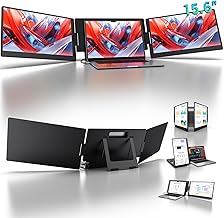
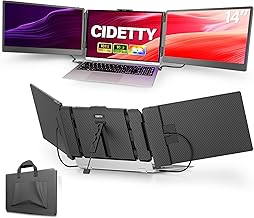
The category spans several form factors. The KEFEYA 14″ Dual Screen is a clean, single-extender panel that’s easy to attach and light to carry. The ultra-portable 1.87 lb 14.2″ extender is among the lightest available, ideal for travelers who count every gram. Detachable models like the 15.6″ 235° rotation extender and the CIDETTY 14″ dual/triple add flexibility, letting you angle or remove panels as needed. Larger triple options like the 15.6″ FHD triple and KYY X90D maximize workspace at the cost of added lid weight. Build quality is generally solid, with magnetic or clamp mounts gripping laptops from 12″ to 17.3″.
Performance
Image quality is consistently good across these 1080p IPS panels, with sharp text and wide viewing angles. The differentiator is setup and connectivity. Plug-and-play models like the KEFEYA and the lightweight 14.2″ extender work over USB-C or HDMI without drivers, which is the smoothest experience. The KYY X90D requires a driver install and can be finicky on managed or newer macOS systems. Detachable designs like the 235° rotation model and CIDETTY add versatility, with built-in speakers on the CIDETTY a nice bonus. Powering extra panels draws from your laptop battery, so plan to stay plugged in for long sessions. For most users, a no-driver USB-C model is the path of least resistance.
Pros & Cons
- Instant second or third screen that travels with your laptop
- Sharp FHD IPS panels with wide viewing angles
- Lightweight options under 2 lbs for frequent travelers
- Detachable and rotating designs add real flexibility
- Added lid weight stresses the hinge on larger models
- Driver-based units can struggle on locked or new-macOS machines
- Battery drain from powering extra panels over USB-C
Alternatives to Consider
Travelers who prize minimal weight should focus on the ultra-light 1.87 lb 14.2″ extender or the KEFEYA 14″. Those wanting maximum workspace can opt for a 15.6″ triple extender, accepting the extra heft. Users who want flexibility to detach or rotate panels should look at the 235° rotation or CIDETTY models. If you rarely move your setup, standalone monitors offer more size for the money.
Frequently Asked Questions
What is a laptop screen extender?
It’s a portable display that attaches to your laptop lid and slides or folds out to act as a second screen. It gives you extra workspace on the go and folds flat against the laptop for transport.
Do screen extenders need drivers?
Some are plug-and-play over USB-C or HDMI, while others like the KYY X90D require driver software. Plug-and-play models are easier, especially on work-managed PCs or the latest macOS versions.
Will an extender fit my laptop?
Most fit laptops from 12″ to 17.3″. Match the extender size roughly to your laptop, since a large panel on a small laptop overhangs and worsens balance. Check the compatibility range before buying.
Does it drain battery quickly?
Yes, powering extra panels pulls from your laptop battery. For extended use away from an outlet, keep a charger or power bank handy to avoid running low.
Verdict
A laptop separate screen is one of the best productivity upgrades a mobile worker can make. The KEFEYA 14″ dual screen is our pick for easy plug-and-play use, while the ultra-light 14.2″ extender wins for travelers counting weight. Favor no-driver USB-C models, match the size to your laptop, and you’ll gain workspace anywhere you go.


