Key takeaways
- Pick the RTX 5060 Ti if: your primary monitor is 1080p, your budget caps around $1,300-$1,400, or you want maximum value per dollar today.
- Pick the RTX 5070 if: you game at 1440p, want 12GB of VRAM for longevity, or plan to keep the PC for three-plus years without upgrading.
- Prioritize the CPU pairing: a 7800X3D or 9700X extracts more from either GPU than a lower-tier chip, so weigh the whole build, not just the graphics card.
- Consider future titles: if you play VRAM-heavy modern releases with high textures, the 5070’s larger buffer ages more gracefully.
- Watch total price: a well-configured 5060 Ti build near $1,700 can outvalue a barebones 5070 system if the CPU and cooling are better.
What's inside
Choosing between an RTX 5070 and an RTX 5060 Ti prebuilt in 2026 comes down to one honest question: how much resolution and frame rate do you actually need? Both GPUs anchor NVIDIA’s mainstream Blackwell lineup, both support DLSS 4 with multi-frame generation, and both land in prebuilts that ship ready to game out of the box. The gap between them, however, is wider than the model numbers suggest once you start pushing past 1080p.
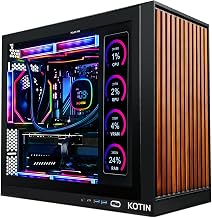
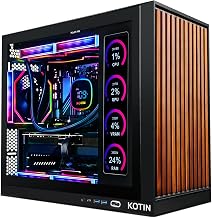
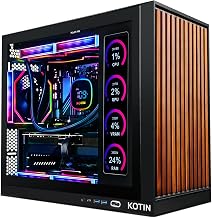
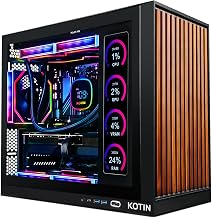
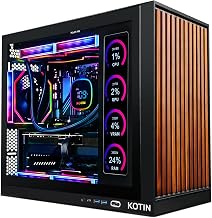
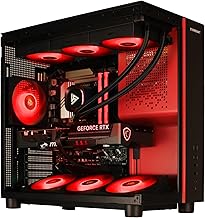
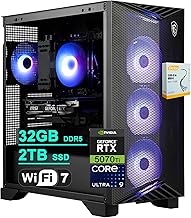
The RTX 5060 Ti is the value-focused 1080p and entry-1440p card, typically paired with Ryzen 5, Ryzen 7 8700F, or 9600X-class chips in sub-$1,400 towers like the KOTIN Ryzen 7 9700X build. The RTX 5070 steps up to 12GB of VRAM and noticeably stronger raster performance, showing up in $1,600-plus machines such as the STORMCRAFT Falcon with a Ryzen 7 7800X3D. This guide breaks down where each one wins so you can match the right tier to your monitor and budget.
As an Amazon Associate we earn from qualifying purchases at no extra cost to you. Product prices and availability are accurate as of the date shown and are subject to change.


🎮 Get More From Your Setup — Free
Prime Gaming gives you free PC games every month, in-game loot, and a free Twitch sub — plus fast free shipping on the rigs above. New members get a 30-day free trial.
Watch: RTX 5070 vs RTX 5060 Ti Prebuilt Gaming PC — Video Review
Quick Verdict
If you game at 1080p or want the lowest entry price into 50-series performance, the RTX 5060 Ti is the smarter buy and leaves cash for a better CPU or more storage. If you own a 1440p monitor, plan to keep the system three-plus years, or care about ray tracing headroom, the RTX 5070 is worth the roughly $300-$500 premium thanks to its extra VRAM and stronger raw throughput.
RTX 5060 Ti Prebuilts
The 5060 Ti class is built around affordability without feeling stripped down. Configurations like the KOTIN Ryzen 7 9700X with 16GB DDR5 and a 1TB SSD, or the cheaper KOTIN Ryzen 5 9600X build, deliver comfortable high-FPS 1080p gaming and playable 1440p in most titles once DLSS 4 is enabled. The included 650W 80+ Gold PSUs and WiFi 7 are genuinely nice touches at this price.
Where the 5060 Ti shows its limits is the 8GB frame buffer. In a handful of 2026 releases with aggressive texture streaming, you may need to drop texture quality a notch at 1440p to avoid stutter. For esports, competitive shooters, and the vast majority of AAA games at 1080p, that ceiling rarely gets in the way.
The standout value pick here is the KOTIN Ryzen 7 7800X3D build at $1,699.99, which pairs the best gaming CPU in its class with the 5060 Ti and 32GB of DDR5. That combination punches above the GPU’s weight in CPU-bound titles and gives you a smoother upgrade path later.
RTX 5070 Prebuilts
The RTX 5070 is where 1440p becomes the comfortable default rather than a stretch goal. The STORMCRAFT Falcon at $1,899.99 pairs it with a Ryzen 7 7800X3D, 32GB DDR5, and a 360mm AIO, making it a legitimately capable 1440p and light 4K machine. The 12GB of VRAM removes most of the texture headaches that occasionally surface on 8GB cards.
Prebuilders often stock 5070 and 5070 Ti systems side by side, so it is worth noting the step-up options like the Skytech Azure 3 and ZOTAC MEK with RTX 5070 Ti if your budget flexes toward $2,500. Those add another meaningful chunk of performance for high-refresh 1440p, but the vanilla 5070 already handles that target well.
Which Should You Buy?
- Pick the RTX 5060 Ti if: your primary monitor is 1080p, your budget caps around $1,300-$1,400, or you want maximum value per dollar today.
- Pick the RTX 5070 if: you game at 1440p, want 12GB of VRAM for longevity, or plan to keep the PC for three-plus years without upgrading.
- Prioritize the CPU pairing: a 7800X3D or 9700X extracts more from either GPU than a lower-tier chip, so weigh the whole build, not just the graphics card.
- Consider future titles: if you play VRAM-heavy modern releases with high textures, the 5070’s larger buffer ages more gracefully.
- Watch total price: a well-configured 5060 Ti build near $1,700 can outvalue a barebones 5070 system if the CPU and cooling are better.
Frequently Asked Questions
Is the RTX 5070 worth the extra money over the 5060 Ti?
For 1440p gamers and anyone keeping their system several years, yes. The 12GB VRAM and stronger raster performance justify the premium. At strict 1080p, the 5060 Ti delivers nearly the same experience for less.
Can the RTX 5060 Ti handle 1440p gaming?
It can, especially with DLSS 4 enabled. Expect solid 60-plus FPS in most 2026 titles at 1440p, though you may lower textures a step in a few VRAM-hungry games because of the 8GB buffer.
Do both GPUs support DLSS 4 and frame generation?
Yes. Both the RTX 5070 and RTX 5060 Ti are Blackwell cards with full DLSS 4 and multi-frame generation support, which meaningfully boosts frame rates in supported games on either tier.
Does the CPU matter more than the GPU choice here?
At 1080p the CPU has real influence, which is why 7800X3D and 9700X pairings shine. At 1440p and above the GPU becomes the limiting factor, so the 5070 pulls ahead regardless of CPU.
Final Verdict
Both cards are excellent 2026 choices, and the right pick is dictated by your monitor. Buy the RTX 5060 Ti for the best value at 1080p and a stronger CPU or SSD for the same money. Step up to the RTX 5070 if you play at 1440p, want VRAM headroom, or intend to keep the machine for years. Match the GPU tier to your resolution first, then optimize the CPU and cooling within your budget.