
Key takeaways
- Memory over flash: 8GB of RAM is the comfortable minimum for smooth multitasking; 4GB models work only for the lightest single-task use.
- Storage strategy: Look at how much is real SSD versus docking-station or expandable storage, since UFS and dock capacity behave differently than an internal drive.
- Screen size and weight: 14-inch notebooks favor portability, while 15.6-inch panels give you more room to work at the cost of a bit more heft.
- Battery and chip type: Snapdragon X and efficient AMD Ryzen chips often deliver longer runtimes than older Intel parts.
- Ecosystem fit: Decide whether you want bundled Office 365, Copilot+ features, or a specific brand’s warranty and support.
What's inside
Asking “which is the best notebook laptop” is a bit like asking which car is best. The honest answer depends on what you carry it for. A student needs long battery and light weight, a remote worker wants a comfortable keyboard and enough memory for a dozen tabs, and a bargain hunter just wants something that runs Windows 11 without lag. The good news is that 2026’s crop of notebooks covers all of those buyers well.
To cut through the noise, we rounded up a mix of thin-and-light Windows machines, from AI Copilot models to durable ASUS and Lenovo options and a Samsung Galaxy Book. Below is how to shop smart, followed by our picks and the reasoning behind each one.
As an Amazon Associate we earn from qualifying purchases at no extra cost to you. Product prices and availability are accurate as of the date shown and are subject to change.




🎮 Get More From Your Setup — Free
Prime Gaming gives you free PC games every month, in-game loot, and a free Twitch channel sub — plus fast free shipping on all the gear above. New members get a 30-day free trial.
Watch: Best Which Is The Best Notebook Laptop — Video Review
How to Choose the Best Notebook Laptop
- Memory over flash: 8GB of RAM is the comfortable minimum for smooth multitasking; 4GB models work only for the lightest single-task use.
- Storage strategy: Look at how much is real SSD versus docking-station or expandable storage, since UFS and dock capacity behave differently than an internal drive.
- Screen size and weight: 14-inch notebooks favor portability, while 15.6-inch panels give you more room to work at the cost of a bit more heft.
- Battery and chip type: Snapdragon X and efficient AMD Ryzen chips often deliver longer runtimes than older Intel parts.
- Ecosystem fit: Decide whether you want bundled Office 365, Copilot+ features, or a specific brand’s warranty and support.
The Best Notebook Laptops Reviewed
Lenovo IdeaPad Slim 3X (Copilot+ PC)
Built around a Snapdragon X chip with 16GB of memory and a 512GB SSD, the IdeaPad Slim 3X is the most future-ready pick here. The 15.3-inch WUXGA display and Luna Grey finish look far more expensive than the price suggests, and battery life from the ARM-based silicon is excellent.
Samsung Galaxy Book4
The Galaxy Book4 pairs a 10-core Intel chip with 16GB of LPDDR4 and a 512GB SSD in a slim 15.6-inch body. A backlit keyboard, fingerprint reader, and Wi-Fi 6 make it a well-rounded business notebook, and it’s a natural companion for anyone already using a Galaxy phone.
ASUS Vivobook Go 15.6″
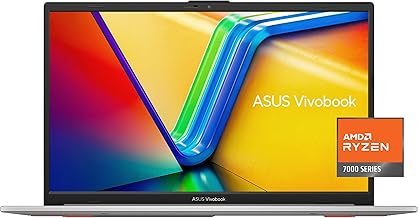
With an AMD Ryzen 5 7520U, 8GB of RAM, and military-grade durability testing, the Vivobook Go is the value durability champ. Fast charging and a webcam shield add practical polish, making it a smart everyday laptop that won’t flinch at a busy commute.
HP 15.6″ FHD Copilot Laptop
This mainstream HP hits a nice balance: 8GB RAM, a 256GB SSD, a lightweight 3.64-pound chassis, and a bundled 5-in-1 hub. It’s aimed squarely at students and home offices that want Windows 11, Copilot, and Microsoft 365 without overspending.
HP Flagship 14″ Copilot Laptop
The 14-inch HP Flagship leans on a 13th Gen Intel quad-core, 16GB of RAM, and a large combined storage setup that includes a docking station. It’s the pick for someone who wants a compact screen but plenty of memory for juggling work apps.
Frequently Asked Questions
Is a 14-inch or 15.6-inch notebook better?
A 14-inch model is lighter and easier to carry, ideal for frequent travelers. A 15.6-inch screen gives more workspace and is more comfortable for long sessions at a desk. Choose based on where you’ll use it most.
Are Snapdragon X (ARM) laptops worth it?
Yes, for most people. They deliver long battery life and quiet, cool operation. Just confirm any niche apps you rely on run well on ARM Windows, as a few older programs still favor Intel or AMD.
How much storage is enough?
A 512GB SSD is comfortable for most users, while 256GB works if you lean on cloud storage. Watch for models that list large totals combining small internal UFS with an external dock, since those behave differently.
Do I need 16GB of RAM?
If you keep many tabs, apps, and background tasks open, 16GB keeps everything snappy. For basic browsing and Office work, 8GB is adequate, but 16GB adds meaningful longevity.
Final Thoughts
The best notebook laptop is the one that matches your daily routine. For longevity and battery life, the Lenovo IdeaPad Slim 3X leads; for balanced business use, the Samsung Galaxy Book4 shines; and value seekers will love the ASUS Vivobook Go. Decide what matters most to you, and one of these will feel like it was built for the job.


