Key takeaways
- Frequency (MHz) is raw speed; higher clocks mean more bandwidth per second.
- Timings (CL, tRCD, tRP) are latency; lower numbers mean the RAM responds faster.
- A 6000MHz CL30 kit can beat a 6400MHz CL40 kit in games because latency often matters more than peak bandwidth.
What's inside
Your RAM almost certainly runs slower than it is rated for. Plug a 6000MHz DDR5 kit into a fresh build and the motherboard defaults it to a sleepy 4800MHz until you tell it otherwise. Overclocking RAM, whether through a one-click profile or manual tuning, is one of the highest-return, lowest-cost performance gains you can unlock, especially for CPU-bound games and editing.
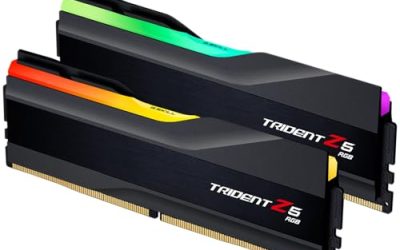
This guide walks through doing it safely, from enabling the rated profile to nudging timings and voltage while watching temperatures. A kit like the CORSAIR Vengeance DDR5 6000MHz already ships with a profile that does most of the work, and a RAM heatsink such as the JEYI cooler helps if you push voltage on an airflow-starved case.
As an Amazon Associate we earn from qualifying purchases at no extra cost to you.


⚡ Save on Your Next PC — Amazon Prime
Prime members get fast free shipping on the systems above, plus early access to Prime Day & Black Friday PC deals. New members get a 30-day free trial.
Watch: How to Overclock Your RAM Safely — Video Review
Start With the Rated Profile (XMP/EXPO)
Before any manual tuning, enter BIOS and enable your kit’s XMP (Intel) or EXPO (AMD) profile. This single toggle applies the frequency, timings, and voltage the manufacturer validated, taking a 4800MHz default up to its rated 6000MHz. For most people this is the entire overclock and it is completely safe.
Understand Frequency vs Timings
- Frequency (MHz) is raw speed; higher clocks mean more bandwidth per second.
- Timings (CL, tRCD, tRP) are latency; lower numbers mean the RAM responds faster.
- A 6000MHz CL30 kit can beat a 6400MHz CL40 kit in games because latency often matters more than peak bandwidth.
Push Beyond the Profile Carefully
If you want more, raise frequency one step at a time, boot, and test. If it fails to POST, clear CMOS and drop back. On DDR5, keep VDD/VDDQ voltage sensible (around 1.35-1.45V for daily use) and watch that your CPU’s memory controller stays stable, since it is often the real limit rather than the sticks.
Test for Stability
An unstable overclock corrupts data silently, so never skip testing. Run TestMem5 or Karhu RAM Test for at least an hour, or MemTest86 from a USB stick overnight. Zero errors is the only passing grade; a single error means you back off frequency or loosen a timing.
Tips
- Overclock only one variable at a time so you know what caused an instability.
- Note your baseline BIOS settings before changing anything so you can revert instantly.
- Keep DDR5 daily voltage under about 1.45V unless you are actively cooling the sticks.
- Add a RAM heatsink or better case airflow if temperatures climb above 50C under load.
Frequently Asked Questions
Is overclocking RAM safe?
Enabling XMP or EXPO is safe and manufacturer-supported. Manual overclocking is also safe if you stay within sensible voltages and test thoroughly; the main risk is instability, not hardware damage.
Will overclocking RAM void my warranty?
RAM rated for a certain speed is meant to run there, so XMP/EXPO does not void anything. Extreme manual voltage could in theory, but daily-use overclocks are well within safe bounds.
How much performance will I actually gain?
In CPU-bound games you can see 5-15% higher minimum frame rates going from default to rated speed with tight timings. Editing and productivity see smaller but real gains.
Why won’t my PC boot after overclocking?
You pushed too far. Clear CMOS using the motherboard jumper or by pulling the battery, then reboot at safe settings and try a smaller step.
Conclusion
For most gamers, simply enabling XMP or EXPO delivers the bulk of the benefit with zero risk, so start there. If you enjoy tuning, nudge frequency and timings one step at a time, keep voltage reasonable, and test every change for at least an hour. Done patiently, a RAM overclock is free performance your kit was built to deliver.