Our Top Picks
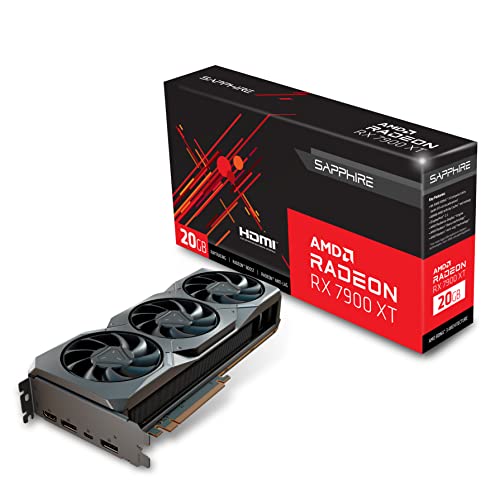
 ASUS Prime Radeon RX 9070 EVO 16GB GDDR6RX9070|OC|16GB|EVO|Black12 x 5 x 0.1 inches2.4 poundsCheck on Amazon
The RX 9070 is the better card for nearly everyone: it is faster than the RTX 3080 in rasterized games, at least as capable in typical ray tracing, has 16 GB of VRAM instead of 10 GB, supports FSR 4, and draws about 100 W less power. A used RTX 3080 only makes sense if it costs well under a new RX 9070, or if you specifically need Nvidia features like DLSS in a library of DLSS-only games or CUDA for creative work.
The Five-Year Gap in One Paragraph
The RTX 3080 was the high-end value favorite of 2020, a $699 card that offered near-flagship performance. The RX 9070 is AMD’s 2025 RDNA 4 upper-midrange card at $549. Four and a half years of architectural progress let the newer card beat the old high-end part while using a narrower memory bus, fewer shaders on paper, and much less power. For current RTX 3080 owners, the question is whether the RX 9070 is a meaningful upgrade; for new buyers, whether a cheap used 3080 is a smart shortcut.

ASUS TUF Gaming NVIDIA GeForce RTX 3080 V2 OC Edition Graphics Card (PCIe 4.0, 10GB GDDR6X, LHR, HDMI 2.1, DisplayPort 1.4a, Dual Ball Fan Bearings, Military-Grade Certification, GPU Tweak II)
Chosen because it specifies 10GB GDDR6X and LHR.
View on Amazon
ASUS TUF Gaming NVIDIA GeForce RTX 3080 Graphics Card (PCIe 4.0, 10GB GDDR6X, HDMI 2.1, DisplayPort 1.4a, Dual Ball Fan Bearings, Military-Grade Certification, GPU Tweak II) (Renewed)
Chosen because it specifies 10GB GDDR6X and HDMI 2.1.
View on Amazon
ASRock Radeon RX 9070 Challenger 16GB OC Graphics Card, RDNA 4, 2520MHz Boost, 16GB GDDR6 256-bit, PCIe 5.0, Triple Fans, 0dB Silent, LED Indicator
Chosen because it specifies RDNA 4 and 2520MHz Boost.
View on AmazonASUS Prime Radeon RX 9070 EVO 16GB GDDR6 OC Edition Gaming Graphics Card | PCIe 5.0, HDMI/DP 2.1, 2.5-slot, Axial-tech Fans, Dual-ball Fan Bearings, Dual BIOS, ASUS GPU Guard
Chosen because it specifies PCIe 5.0 and HDMI/DP 2.1.
View on AmazonSpec Table
| Specification | GeForce RTX 3080 | Radeon RX 9070 |
|---|---|---|
| Architecture | Ampere | RDNA 4.0 |
| Release date | 1 September 2020 | 6 March 2025 |
| Launch MSRP | $699 | $549 |
| Shader / CUDA cores | 8704 | 3584 |
| Boost clock | 1710 MHz | 2520 MHz |
| Process | 8 nm | 5 nm |
| Board power (TDP) | 320 W | 220 W |
| VRAM | 10 GB GDDR6X | 16 GB GDDR6 |
| Memory bus | 320-bit | 256-bit |
| Bandwidth | 760.3 GB/s | 644.6 GB/s |
| Cache | 5 MB L2 | 8 MB L2 + 64 MB L3 |
| Interface | PCIe 4.0 x16 | PCIe 5.0 x16 |
| Power connectors | 1x 12-pin | 2x 8-pin |
| Length / width | 285 mm / 2-slot | 267 mm / 2-slot |
| Outputs | 1x HDMI, 3x DisplayPort | 1x HDMI 2.1b, 3x DP 2.1a |
The CUDA core count looks enormous next to the RX 9070’s 3584 shaders, but Ampere counts its dual-issue FP32 units differently, so the numbers aren’t comparable. The RTX 3080 does have more raw memory bandwidth, yet the RX 9070’s 64 MB Infinity Cache more than makes up for it in games.
Rasterized Performance
Most published data puts the RX 9070 ahead of the RTX 3080, though sources disagree on how far. Review charts from outlets such as TechPowerUp and TechSpot, which include both cards, place the RX 9070 in a higher tier, and aggregated game averages put it anywhere from a few percent to roughly 25 percent ahead at 1440p, depending on game selection and test date. A reasonable middle reading is that the RX 9070 is roughly 10 to 20 percent faster at 1440p on average, with its advantage growing in newer and VRAM-heavy games.
- 1080p: smaller gap; both cards are often CPU-limited.
- 1440p: the RX 9070 leads by roughly 10 to 20 percent in most data sets.
- 4K: the RTX 3080’s high bandwidth keeps it competitive in some older titles, but its 10 GB buffer becomes a liability in newer ones.
Both cards handle high-refresh 1440p well in most modern games, typically around 80 to 140 FPS at high settings depending on the title, and 4K with upscaling. Those ranges move with settings, CPU, and game patches.
Ray Tracing: No Longer an Automatic Nvidia Win
RDNA 4 roughly doubled AMD’s ray-tracing throughput per compute unit compared with earlier Radeon generations, which changes this matchup. In typical ray-traced games, the RX 9070 matches or beats the RTX 3080, and PC Guide’s Doom Eternal figures showed even larger RT gains for the step-up RX 9070 XT. In the heaviest path-traced games, TechSpot’s RX 9070 review showed the card struggling in titles like Black Myth: Wukong, but the Ampere-based RTX 3080 also struggles there, since second-generation RT cores have aged too. Neither card is a path-tracing machine.
Upscaling and Frame Generation
- RTX 3080: DLSS Super Resolution including DLSS 4’s transformer model, Ray Reconstruction, and Reflex. RTX 30 cards do not support DLSS Frame Generation; they can use FSR frame generation in games that offer it.
- RX 9070: FSR 4, AMD’s machine-learning upscaler designed for RDNA 4, plus FSR frame generation, driver-level AFMF, and Anti-Lag 2.
This is closer than it once was. DLSS still has wider game support, especially in older releases, and the transformer model gave RTX 30 owners a real image-quality boost. FSR 4 brought Radeon upscaling much closer to DLSS quality and supports more games over time, and the RX 9070 gets a first-party frame generation path that the RTX 3080 lacks.
VRAM: The RTX 3080’s Weak Spot
Ten gigabytes was generous in 2020 and is now the card’s main limitation. At 1440p, a number of recent games with high textures and ray tracing exceed 10 GB, producing stutter or forcing lower texture settings. At 4K the problem gets more frequent. The RX 9070’s 16 GB avoids those situations and leaves room for frame generation, which itself consumes additional memory.
| Resolution | Comfortable VRAM for high settings | RTX 3080 (10 GB) | RX 9070 (16 GB) |
|---|---|---|---|
| 1080p | 8 to 10 GB | Fine | Plenty |
| 1440p | 10 to 12 GB | Borderline in new games | Comfortable |
| 4K | 12 to 16 GB | Often limiting | Comfortable |
Power, PSU, and Connectors
The efficiency gap is large: 320 W for the RTX 3080 against 220 W for the RX 9070. Using GPU power plus CPU power plus about 150 W of headroom:
- RTX 3080 with a 125 W CPU: 320 + 125 + 150 = 595 W, so a quality 750 W unit, which also covers Ampere’s notable transient spikes.
- RX 9070 with a 125 W CPU: 220 + 125 + 150 = 495 W, so a quality 650 W unit.
The 12-pin connector listed for the RTX 3080 refers to Nvidia’s Founders Edition, which ships with an adapter for two 8-pin cables; most partner RTX 3080 cards use two or three standard 8-pin connectors instead. The RX 9070 uses two 8-pin connectors. At 3 hours of gaming per day, the 100 W difference works out to roughly 110 kWh per year, about $16 at $0.15 per kWh.
For case fit, the RX 9070’s 267 mm listed length is a little shorter than the RTX 3080’s 285 mm, and both are 2-slot reference designs. Many partner cards of both models are larger, so check clearance.
Is the Upgrade or Used Purchase Worth It?
Using launch MSRPs and setting the RTX 3080 at 100 and the RX 9070 at 115 for 1440p raster:
- RTX 3080: $699 / 100 = $6.99 per performance point.
- RX 9070: $549 / 115 = about $4.77 per performance point.
On the used market, the RTX 3080 10GB usually sells for roughly $300 to $380. At $340 it costs about $3.40 per point, which looks attractive on paper. Subtract the no-warranty risk, the 10 GB VRAM ceiling, and the higher power draw, and the used 3080 is a good deal only toward the bottom of that range.
For current RTX 3080 owners, a 10 to 20 percent raster improvement plus 6 GB of extra VRAM is a moderate rather than dramatic upgrade. If VRAM limits are already causing stutter in your games, the RX 9070 fixes that. If not, an RX 9070 XT or RTX 5070 Ti offers a more noticeable jump.
Decision Guide
| Situation | Recommendation |
|---|---|
| Buying new for 1440p | RX 9070 |
| Buying for 4K with upscaling | RX 9070, for its VRAM |
| Tight budget, used RTX 3080 near $300 | RTX 3080 for 1080p and 1440p with moderate textures |
| Need CUDA for creative software | RTX 3080 |
| Current 3080 owner hitting VRAM limits | Upgrade to RX 9070 or higher |
| Current 3080 owner happy with performance | Wait for a bigger jump |
Frequently Asked Questions
Is the RX 9070 faster than the RTX 3080?
Yes, in most games. Published reviews and aggregate data put it roughly 10 to 20 percent ahead at 1440p on average, though some sources show a smaller or larger gap. Its lead grows in newer games that exceed the RTX 3080’s 10 GB of VRAM.
Does the RTX 3080 support DLSS 4?
It supports DLSS 4’s transformer-based Super Resolution and Ray Reconstruction. It does not support DLSS Frame Generation, which requires RTX 40 or newer cards. Multi Frame Generation is limited to RTX 50 cards.
Is the RX 9070 good at ray tracing?
RDNA 4 brought a large improvement in AMD’s ray-tracing performance. In typical RT games the RX 9070 matches or beats the RTX 3080. In the heaviest path-traced titles both cards struggle.
What power supply do I need for each card?
A quality 650 W power supply with two 8-pin cables suits the RX 9070 with a typical gaming CPU. The RTX 3080 is better paired with a quality 750 W unit to handle its 320 W rating and transient spikes. Check your partner card’s connector layout.
Is a used RTX 3080 still worth buying?
At the low end of its used range, roughly $300, it remains a capable 1440p card. Its 10 GB of VRAM limits future-proofing, and used cards usually lack warranty coverage. If the price gap to a new RX 9070 is small, buy the newer card.