Key takeaways
- Table of Contents 7 sections 10 min read 1 Quick Verdict 2 Side by Side 3 Where Video Capture Card Wins 4 Where Upscaler for Retro Consoles Wins 5 Cost Over 5 Years 6 Which One for Your Home 6.1…
What's inside
Bringing classic gaming hardware like the Super Nintendo, Nintendo 64, or PlayStation 2 into a modern living space presents a unique interior design and technical dilemma. Contemporary 4K OLED TVs and ultra-minimalist media consoles are designed around thin HDMI leads and wireless streaming, leaving legacy analog composite cables (the classic yellow, white, and red plugs), S-Video, and European SCART connectors in the dust. When deciding how to integrate vintage entertainment into your home decor and media setup, the decision comes down to a video capture card vs upscaler for retro consoles.
While both devices act as digital bridges between 20th-century signals and modern displays, they serve radically different household environments. One transforms your console corner into a PC-tethered media workstation, while the other functions as a self-contained, furniture-friendly component that sits neatly in your entertainment center. Choosing between them isn’t merely a software question—it directly dictates your cable management, living room aesthetics, desk footprint, and how easily you can sink into the sofa for a quick game.
As an Amazon Associate we earn from qualifying purchases at no extra cost to you. Product prices and availability are accurate as of the date shown and are subject to change.


Quick Verdict
For a traditional living room or media center, an upscaler for retro consoles is the clear winner. Hardware upscalers convert analog signals to digital HDMI directly on the device with zero added latency (under 1 millisecond). They do not require a computer to operate, meaning you can tuck the unit inside an AV credenza, connect it directly to your television, and control everything with a single TV remote.
A video capture card is the better choice if your retro setup lives in a home office or creative studio where a laptop or desktop computer is already the centerpiece. Capture cards route the audio and video signal through software on your PC. While this makes recording, streaming, and playing in a resized desktop window effortless, it introduces noticeable input lag when playing live on screen and requires your computer to be powered on every time you want to play.
Side by Side
| Factor | Video Capture Card | Upscaler for Retro Consoles |
|---|---|---|
| Comfort & Ease of Use | Requires booting a PC, opening software (e.g., OBS), and configuring video drivers before playing. | Instant plug-and-play operation directly to the TV; turns on with your console. |
| Durability & Longevity | Dependent on OS updates, software driver support, and PC hardware compatibility over time. | Standalone solid-state hardware; operating systems and driver changes cannot render it obsolete. |
| Price Range | $50 to $250 for reliable USB 3.0 or PCIe capture hardware. | $80 to $350 depending on feature set, line-doubling speed, and input ports. |
| Maintenance | Frequent software patches, driver reinstallations, and digital color profile adjustments. | Set-and-forget; occasional firmware updates flashed via SD card on advanced units. |
| Space Needed & Footprint | Compact dongle footprint (approx. 3x2x0.8 inches, 0.2 lbs), but requires desk space for a PC/laptop. | Small box footprint (approx. 5×3.5×1.2 inches, 0.6 lbs) that fits directly into an entertainment rack. |
| Visual Look & Aesthetics | Creates cable clutter on home office desks due to extra USB cables and HDMI pass-through leads. | Clean, integrated look inside living room media furniture; easy to hide behind closed cabinet doors. |
| Resale & Value Retention | Depreciates steadily as USB standards and capture resolution norms advance. | Holds value well among retro enthusiasts due to fixed-purpose hardware demand. |
| Best For | Streamers, content creators, hybrid home office desks, and gameplay recording. | Living room media centers, dedicated retro gaming racks, and direct-to-TV gameplay. |
Where Video Capture Card Wins
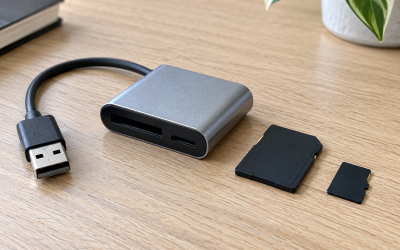
A video capture card shines when your retro gaming habits overlap with content creation, remote sharing, or a compact home office workflow. Rather than outputting directly to a television screen, a capture card ingests the video feed and translates it into a digital camera stream that your computer recognizes. For professionals working from home who maintain a hybrid desk setup, a capture card lets you keep an original console parked next to your monitor, allowing you to play inside a window on your desktop during lunch breaks without switching display inputs.
Software flexibility is another major asset. When running through a PC, capture software allows you to apply real-time digital color corrections, crop unwanted border noise from legacy signals, and capture screenshot archives with a single hotkey. You can also record uncompressed gameplay footage directly to your computer’s hard drive or stream your session to friends via Discord or Twitch. From a physical footprint perspective on a desk, a modern USB capture card is remarkably small—often drawing just 2.5 to 5 watts of power straight from your computer’s USB port without needing an additional wall adapter.
Where Upscaler for Retro Consoles Wins
If your goal is an authentic, friction-free gaming experience on a large living room television, an upscaler for retro consoles is vastly superior. Standard flat-screen TVs struggle with old analog video signals, often treating a 240p console signal as a 480i video stream. This causes severe motion blur, distorted colors, and input lag stretching from 50 to 150 milliseconds—making fast-paced platformers nearly unplayable. A dedicated upscaler solves this entirely in hardware, taking analog signals (Component YPbPr, SCART, S-Video, or Composite) and line-doubling or scaling them into crisp 480p, 720p, 1080p, or 4K HDMI signals with less than 1 millisecond of processing delay.
From an interior design standpoint, upscalers keep your living room clean and peaceful. You don’t need a noisy laptop sitting on your coffee table or an unsightly USB cord trailing across your rug. Entry-level units like an AV/S-Video/YPbPr to HDMI Converter, RetroScaler 2X Line Doubler with No Lags ($79.99) offer an accessible entry point with a tiny footprint that draws roughly 5 watts from a small power supply. For audiophiles and videophiles seeking razor-sharp pixels on custom media racks, open-source processors like the Kaico OSSC 1.8 Open Source Scan Converter, SCART Component VGA to HDMI ($169.99) provide deep control over pixel clock timing, scanlines, and aspect ratio management without ever introducing a computer into your relaxation space.
Cost Over 5 Years
When evaluating the long-term cost of ownership in 2026, both options appear similar upfront but diverge significantly over time when you factor in supporting equipment and power draw.
A quality USB video capture card costs between $60 and $200. However, its hidden cost lies in its total reliance on a secondary computer. Operating a mid-range gaming desktop or high-performance laptop to process video feeds adds 150 to 300 watts of continuous power draw during play sessions. Additionally, software updates to operating systems like Windows or macOS can occasionally break legacy driver support, requiring hardware upgrades every 4 to 6 years to maintain compatibility with new USB standards.
An upscaler for retro consoles requires a higher single hardware purchase—ranging from $80 for simple line-doublers to $170–$300 for advanced scan converters—but incurs virtually no ongoing operational costs. Drawing just 5 to 10 watts from a dedicated wall adapter, an upscaler’s annual electricity impact is negligible. Because upscalers operate using fixed hardware logic rather than complex software operating systems, they do not suffer from software rot or driver incompatibility. A quality upscaler purchased today will function identically a decade from now, delivering a lower total cost of ownership over a 5-year period.
Which One for Your Home
Small Apartment
In a tight floor plan where a single room serves as a bedroom, living space, and remote office, a video capture card offers excellent space saving. If your desktop computer monitor doubles as your primary entertainment display, plugging a retro console directly into a compact USB capture card avoids the need for a second TV or a bulky dedicated console rack. You can store the capture card in a desk drawer when not in use.
Family with Kids or Pets
For high-traffic family living rooms, an upscaler for retro consoles is far safer and more practical. An upscaler stays neatly locked away inside a media credenza or behind a TV wall-mount, with all cabling tucked cleanly out of reach. There are no loose laptops on coffee tables, trailing USB extension leads across walking paths, or open software windows for children to accidentally close. Anyone can turn on the console, grab a controller, and start playing immediately.
Rental Property
If you live in a rental where wall-mounting TVs or routing in-wall cables isn’t an option, a basic upscaler paired with a slim cable management raceway attached to your TV stand keeps your setup non-destructive and elegant. It allows you to hook vintage consoles directly to your landlord-approved TV setup without adding extra digital gear or temporary computer stands to your living area.
Long-Term Home
In a permanent residence with a dedicated game room or a fully curated media center, a high-end upscaler is the gold standard. It integrates seamlessly alongside modern AV receivers, soundbars, and smart home automation systems. You can route multiple retro consoles into a central upscaler or switcher box, outputting a crisp 1080p or 4K signal directly to your main television with pristine aesthetic presentation and zero input latency.
FAQ
Can I use an upscaler and a video capture card together?
Yes, combining both is a popular setup for retro content creators. You connect your retro console directly to an upscaler to convert the analog signal into zero-latency HDMI, then send that HDMI signal into a capture card with a pass-through port. The pass-through port sends the lag-free signal straight to your TV for playing, while the capture card sends the video feed to your computer for recording or streaming.
Why do retro games look blurry when connected directly to modern 4K TVs?
Modern TVs are optimized for high-definition video (1080p and 4K) and expect digital signals. When you feed an old 240p or 480i analog signal into a modern TV’s built-in ports, the TV misinterprets the signal as standard-definition video, applying heavy smoothing filters and slow de-interlacing algorithms. Hardware upscalers fix this by forcing sharp pixel boundaries and linedoubling the image before it ever reaches the TV screen.
Do video capture cards introduce lag when playing retro games?
Yes. Video capture cards process incoming video frames digitally before rendering them inside a PC software window, creating an encoding delay of 30 to 120 milliseconds. While this delay is unnoticeable for watching video, it creates a disorienting lag between pressing a button on your controller and seeing the action happen on your screen. To play comfortably through a capture card, you must use a card with an HDMI pass-through output connected to a second monitor.
How do I hide cable clutter when connecting multiple retro consoles?
The cleanest approach is to group your analog consoles into a centralized mechanical AV switcher box tucked inside an entertainment cabinet. Route a single set of output cables from the switcher directly into your upscaler, and run a single, hidden HDMI cable up to your TV. Using velcro cable sleeves and mounting the upscaler to the back of your media furniture keeps power bricks and excess wire length completely hidden from view.