Key takeaways
- Latency: Wired is effectively zero. Good 2.4GHz wireless now lands around 20–30ms — the NUBWO set advertises 23ms sync — which is imperceptible to the vast majority of players, though Bluetooth mode remains too slow for competitive FPS.
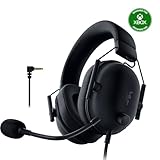
- Power: Wired never needs charging. Wireless runtimes have become genuinely non-issues: 40 hours on the Ozeino, 60 on the Arctis Nova 5, 70 on the Razer BlackShark V3 X HyperSpeed, 80 on the Stealth 600, and 100 on the NUBWO.
- Audio quality per dollar: At equal price, wired usually wins, because none of the budget goes toward radios, batteries, or charging circuitry.
- Compatibility: Wired 3.5mm works with nearly anything that has a jack. Wireless is more platform-specific — Xbox in particular requires explicit support, which is why multiplatform sets like the Stealth 600 are worth the premium.
- Freedom and comfort: No cable means no snagging, no tug on the earcup, and the ability to walk away mid-match. It’s a small daily quality-of-life gain that adds up.
- Longevity: Cables fray but are often replaceable; batteries degrade and frequently are not.
What's inside
The wireless-versus-wired debate used to have an easy answer: if you cared about latency and sound quality, you plugged in. In 2026 that logic no longer holds. Modern 2.4GHz dongles push wireless latency into the low-20ms range, battery life has crossed the 100-hour mark on some models, and the driver hardware in mid-range wireless sets now matches what wired headsets were shipping only a few years ago. The gap has narrowed to the point where the decision is about workflow, not compromise.
That said, wired headsets have not gone away, and for good reason. A cable is the only connection that never needs charging, never drops mid-raid, and never gets locked out by a console firmware update. Choosing correctly in 2026 means being honest about how you actually play: whether you’re anchored to one desk, bouncing between a PS5 and a Steam Deck, or streaming for six hours at a stretch. Below is a clear breakdown of where each option wins.
As an Amazon Associate we earn from qualifying purchases at no extra cost to you. Product prices and availability are accurate as of the date shown and are subject to change.


⚡ Save on Your Next PC — Amazon Prime
Prime members get fast free shipping on the systems above, plus early access to Prime Day & Black Friday PC deals. New members get a 30-day free trial.
Watch: Wireless vs Wired Gaming Headset in 2026 — Video Review
Quick Verdict
Wireless is the better default for most gamers in 2026. If you play across multiple systems, take calls, move around, or simply hate cable drag, a modern 2.4GHz headset like the SteelSeries Arctis Nova 5 or Turtle Beach Stealth 600 gives you effectively wired-grade latency with none of the tethering. Wired remains the smarter pick if you want maximum audio fidelity per dollar, absolute reliability in tournament settings, or a headset that will still work perfectly in five years without a battery replacement.
Key Differences
- Latency: Wired is effectively zero. Good 2.4GHz wireless now lands around 20–30ms — the NUBWO set advertises 23ms sync — which is imperceptible to the vast majority of players, though Bluetooth mode remains too slow for competitive FPS.
- Power: Wired never needs charging. Wireless runtimes have become genuinely non-issues: 40 hours on the Ozeino, 60 on the Arctis Nova 5, 70 on the Razer BlackShark V3 X HyperSpeed, 80 on the Stealth 600, and 100 on the NUBWO.
- Audio quality per dollar: At equal price, wired usually wins, because none of the budget goes toward radios, batteries, or charging circuitry.
- Compatibility: Wired 3.5mm works with nearly anything that has a jack. Wireless is more platform-specific — Xbox in particular requires explicit support, which is why multiplatform sets like the Stealth 600 are worth the premium.
- Freedom and comfort: No cable means no snagging, no tug on the earcup, and the ability to walk away mid-match. It’s a small daily quality-of-life gain that adds up.
- Longevity: Cables fray but are often replaceable; batteries degrade and frequently are not.
Wireless Gaming Headsets
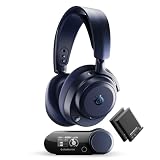
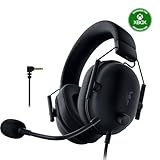
The strongest argument for wireless in 2026 is versatility. The SteelSeries Arctis Nova 5 switches between 2.4GHz and Bluetooth and covers PC, PS5, PS4, Switch and mobile, with 100+ audio presets and the ClearCast Gen2.X mic for chat clarity. The Razer BlackShark V3 X HyperSpeed pairs 50mm drivers with a cardioid mic tuned to reject room noise — a meaningful advantage if you share a space. For Xbox players, the Turtle Beach Stealth 600 is the pragmatic choice, since it’s one of the few sets covering Series X|S, Xbox One and PlayStation alongside PC and mobile.
Budget wireless has also matured. The Ozeino headset delivers lossless 2.4GHz audio over USB-A and Type-C with a play-and-charge design and flip mic, while the NUBWO model leans hard into endurance with a 100-hour battery and triple-mode connectivity. If a full-size headset feels like overkill, the Razer Hammerhead V3 X PS Edition brings low-latency wireless to earbuds — ideal for handheld and Remote Play sessions where bulk matters more than bass.
Wired Gaming Headsets
Wired headsets survive because they remove variables. There’s no pairing, no dongle to lose, no firmware handshake, and no battery indicator to watch during a long session. For competitive players, that predictability is the entire point: analog 3.5mm introduces essentially no processing delay, and the connection can’t be disrupted by a crowded 2.4GHz environment at a LAN event or in a dense apartment building.
They also stretch a budget further. Without a radio stack and battery, more of the price goes into drivers, earpads and headband construction, so a wired set often out-performs a wireless one at the same cost. The trade-off is real, though: you’re tethered to your desk, cables introduce microphonic noise when they brush your chair, and connecting to a phone increasingly requires a USB-C adapter. Many buyers now split the difference by choosing a wireless headset that also supports a wired mode.
Which Should You Buy?
- For competitive FPS on a fixed setup: pick wired, or a 2.4GHz set like the BlackShark V3 X HyperSpeed — never Bluetooth.
- For multi-console households: pick the Turtle Beach Stealth 600, the only listed option covering Xbox alongside PlayStation and PC.
- For marathon sessions and streaming: pick high-endurance wireless like the NUBWO (100 hours) or Stealth 600 (80 hours).
- For handhelds and travel: pick the Razer Hammerhead V3 X earbuds for portability.
- For the best all-round experience: pick the SteelSeries Arctis Nova 5 for its presets, mic quality and dual-connectivity flexibility.
Frequently Asked Questions
Is wireless latency still a problem in 2026?
Not over 2.4GHz. Sub-30ms figures are standard and undetectable in normal play. Bluetooth is a different story — use it for music and calls, not for shooters.
Do wireless headsets sound worse than wired?
At the same price, wired typically has a small edge. Above roughly the mid-range, the difference is negligible compared with driver quality, tuning and how well the earcups seal.
Can I use a wireless headset while it charges?
Often yes — the Ozeino explicitly supports play-and-charge. Check the listing before buying, as some older designs still disable audio while charging.
Which lasts longer overall?
Wired, generally. Lithium batteries lose capacity after a few hundred cycles, whereas a wired headset with a detachable cable can outlive several console generations.
Final Verdict
Buy wireless unless you have a specific reason not to. The latency argument is largely settled, battery anxiety has been engineered away, and the flexibility is worth far more day to day than the marginal audio advantage wired still holds. Reserve wired for tournament play, tight budgets, or setups where you truly never leave the desk.