Key takeaways
- Switch type over switch brand: Linear switches (red, yellow) suit fast-paced gaming; tactile browns suit mixed typing and gaming. At this price, focus on the feel category rather than chasing a specific brand name — budget switches from reputable factories are consistently decent now.
- Hot-swap sockets: The single most valuable feature under $50. Hot-swap lets you replace switches without soldering, so a $45 board can be upgraded over years instead of replaced. If two keyboards are otherwise equal, take the hot-swappable one.
- Keycap material: Double-shot PBT resists the greasy shine that plagues cheap ABS caps after a few months. It’s the clearest indicator that a manufacturer spent money where it counts rather than on RGB brightness.
- Layout and footprint: Full-size gives you a numpad; 75% and TKL free up desk space for low-sensitivity mouse movement. Decide before you shop — layout is the one thing you cannot change later.
- Build honesty: Expect plastic cases at this price and check for flex and case ping in reviews instead. A rigid plate and some internal foam matter far more than a metal top plate marketing bullet.
What's inside
Shopping for a mechanical keyboard under $50 used to mean accepting mushy switches, hollow plastic cases, and legends that wore off within a year. That’s no longer true. Budget boards in 2026 routinely ship with hot-swappable sockets, double-shot PBT keycaps, and pre-lubed switches — features that were premium-tier not long ago. The catch is that the sub-$50 shelf is also where the most aggressive corner-cutting happens, and marketing copy rarely tells you which corners were cut.
This guide narrows the field to six keyboards that genuinely hold up under daily gaming and typing, all realistically available at or near the $50 mark. We cover what actually matters at this price, review each pick honestly including its trade-offs, and answer the questions buyers ask most often before committing.
As an Amazon Associate we earn from qualifying purchases at no extra cost to you. Product prices and availability are accurate as of the date shown and are subject to change.





⚡ Save on Your Next PC — Amazon Prime
Prime members get fast free shipping on the systems above, plus early access to Prime Day & Black Friday PC deals. New members get a 30-day free trial.
Watch: Best Mechanical Keyboard Under $50 — Video Review
How to Choose Mechanical Keyboard Under $50
- Switch type over switch brand: Linear switches (red, yellow) suit fast-paced gaming; tactile browns suit mixed typing and gaming. At this price, focus on the feel category rather than chasing a specific brand name — budget switches from reputable factories are consistently decent now.
- Hot-swap sockets: The single most valuable feature under $50. Hot-swap lets you replace switches without soldering, so a $45 board can be upgraded over years instead of replaced. If two keyboards are otherwise equal, take the hot-swappable one.
- Keycap material: Double-shot PBT resists the greasy shine that plagues cheap ABS caps after a few months. It’s the clearest indicator that a manufacturer spent money where it counts rather than on RGB brightness.
- Layout and footprint: Full-size gives you a numpad; 75% and TKL free up desk space for low-sensitivity mouse movement. Decide before you shop — layout is the one thing you cannot change later.
- Build honesty: Expect plastic cases at this price and check for flex and case ping in reviews instead. A rigid plate and some internal foam matter far more than a metal top plate marketing bullet.
The Best Picks Reviewed
Redragon Hot-Swappable Wired Mechanical Keyboard
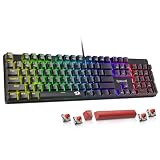
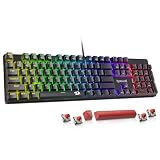
This is the value benchmark of the category: hot-swappable red switches, double-shot PBT keycaps, and full anti-ghosting in a wired board that undercuts most competitors. The 11 backlit modes are more novelty than necessity, but the fundamentals — upgradeable sockets and keycaps that won’t shine — are exactly what you want from a budget purchase you intend to keep.
AULA F75 Pro Wireless
The most feature-dense pick here, combining a 75% layout, a control knob, hot-swap sockets, pre-lubed Reaper switches, and triple connectivity across 2.4GHz, USB-C, and Bluetooth 5.0. Pre-lubed switches make a real audible and tactile difference out of the box, and getting wireless at this price with no meaningful latency penalty in 2.4GHz mode is a genuine bargain.
Razer BlackWidow V4 X
The BlackWidow V4 X brings Razer’s linear yellow switches and Synapse software support to the edge of this budget, typically landing at or just under $50 during sales rather than at list price. It isn’t hot-swappable, but the switches are quiet, fast, and factory-lubed, and the build quality is a clear step above generic budget boards.
Logitech G413 SE
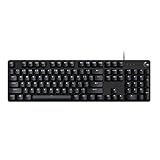
A deliberately plain full-size board with tactile switches, a brushed aluminium top plate, and white-only backlighting — no RGB, no software bloat, no hot-swap. What it offers instead is Logitech’s build consistency and durability, making it the safest pick for someone who wants a keyboard that simply works for five years.
Redragon K580
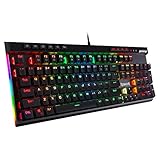
The K580 targets buyers who want dedicated macro keys and a media wheel without leaving the budget tier, and it delivers both alongside per-key RGB. Its keycaps are ABS rather than PBT, so expect some shine over time, but the macro column and volume wheel are genuinely useful daily features that most rivals here omit.
Frequently Asked Questions
Are mechanical keyboards under $50 actually mechanical?
Yes, though verify the listing carefully. Some budget boards are “mecha-membrane” or optical hybrids rather than true mechanical switches. Every keyboard in this guide uses genuine mechanical or optical-mechanical switches with individual key mechanisms.
Is hot-swap worth prioritising at this price?
Absolutely. Hot-swap sockets let you upgrade to better switches for around $20 later, effectively extending the keyboard’s life and letting you change its feel without buying a new board. It’s the highest-leverage feature available under $50.
Does wireless mean worse gaming performance?
Not with a 2.4GHz dongle. Modern 2.4GHz wireless is effectively indistinguishable from wired for gaming. Bluetooth carries noticeably higher latency and is better reserved for typing, tablets, and secondary devices.
Will a budget keyboard’s keycaps wear out?
ABS keycaps develop a shiny finish within six to twelve months of heavy use, while double-shot PBT resists this for years. If longevity matters, prioritise PBT — or buy a hot-swappable board and replace the caps cheaply later.
Final Thoughts
For most buyers, the Redragon hot-swappable board is the smartest under-$50 purchase available, pairing upgradeable sockets with PBT keycaps that outlast the price tag. Choose the AULA F75 Pro if you want a compact wireless layout with pre-lubed switches and a control knob, or the Logitech G413 SE if you’d rather trade features for build quality you can rely on for years.