Key takeaways
- Capacity: 16GB handles 1080p only; 32GB is the realistic 4K baseline, and 64GB is for heavy After Effects, Fusion, or 6K/8K raw footage.
- Dual-channel: Always buy two matched sticks (2x16GB), which roughly doubles bandwidth versus one stick and keeps playback smooth.
- Speed and standard: DDR5 at 5600-6000MHz feeds modern CPUs better than DDR4 during exports; match your motherboard’s supported standard.
- Matched kit vs mixing: A single kit avoids the timing mismatches that cause instability, so never pair two random single sticks.
- Desktop vs laptop: Desktops let you drop in a cheap kit later; laptops often solder RAM, so buy the capacity up front.
What's inside
Video editing punishes a system that is short on memory. The moment you stack 4K timelines, color nodes, and a few browser tabs of reference footage, 16GB of RAM starts swapping to disk and your scrubbing turns to slideshow. For editing, memory capacity is often the single cheapest upgrade that removes the most frustration.
This roundup covers the memory configurations worth buying for editing in 2026, from a 32GB desktop baseline to prebuilt creator systems that ship with the right amount already installed, such as the 32GB NIMO 17.3″ AI-Creator and the DDR5-equipped Lenovo 16. The target is clear: 32GB is the modern floor for 4K, and dual-channel matters as much as raw megahertz.
As an Amazon Associate we earn from qualifying purchases at no extra cost to you.




⚡ Save on Your Next PC — Amazon Prime
Prime members get fast free shipping on the systems above, plus early access to Prime Day & Black Friday PC deals. New members get a 30-day free trial.
Watch: Best RAM for Video Editing — Video Review
How to Choose
- Capacity: 16GB handles 1080p only; 32GB is the realistic 4K baseline, and 64GB is for heavy After Effects, Fusion, or 6K/8K raw footage.
- Dual-channel: Always buy two matched sticks (2x16GB), which roughly doubles bandwidth versus one stick and keeps playback smooth.
- Speed and standard: DDR5 at 5600-6000MHz feeds modern CPUs better than DDR4 during exports; match your motherboard’s supported standard.
- Matched kit vs mixing: A single kit avoids the timing mismatches that cause instability, so never pair two random single sticks.
- Desktop vs laptop: Desktops let you drop in a cheap kit later; laptops often solder RAM, so buy the capacity up front.
The Best Picks Reviewed
32GB DDR5-6000 Desktop Kit (2x16GB)
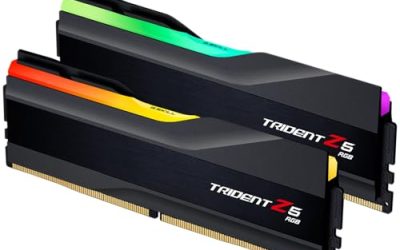
The value sweet spot for most editors. A matched 2x16GB DDR5 kit around 6000MHz keeps 4K timelines fluid and costs less than a single AAA game. Enable XMP or EXPO in BIOS so it runs at rated speed instead of the default 4800MHz.
64GB DDR5 Kit (2x32GB)
The pick for After Effects, Fusion, and high-resolution raw footage. Doubling to 64GB gives your NLE room to cache many timelines and effects at once, eliminating the memory ceiling on complex projects.
NIMO 17.3″ AI-Creator Laptop (32GB)
At about $800, this prebuilt creator laptop ships with 32GB and a 1TB SSD, meeting the 4K baseline out of the box. It is the pick if you edit on the move and cannot easily upgrade memory later.
Lenovo 16 i7-13620H (16GB DDR5)
Around $1,000, the Lenovo pairs a strong CPU with 16GB DDR5 and a 1TB SSD. It suits 1080p editing today, and its DDR5 slots leave room to add a second stick for a 4K-ready dual-channel setup.
16GB DDR4 Budget Kit (2x8GB)
The entry option for 1080p editors on older platforms. It is not enough for serious 4K, but a matched 2x8GB DDR4 kit is a cheap way to escape single-stick bottlenecks on a budget rig.
Frequently Asked Questions
Is 16GB enough for video editing in 2026?
Only for 1080p and light projects. For any serious 4K work, 32GB is the realistic minimum to keep playback smooth and avoid disk swapping.
Does RAM speed affect export times?
Modestly. Faster DDR5 helps CPU-bound effects and exports by a few percent, but capacity and your GPU move the needle far more for most editors.
Should I get 32GB or 64GB?
Choose 32GB for cuts, color, and YouTube editing; step to 64GB if you live in After Effects, Fusion, or work with 6K/8K raw footage.
Can I mix RAM brands and sizes?
You can, but it invites instability and drops you out of clean dual-channel. A single matched kit is always the safer, faster choice.
Final Thoughts
For most editors, a 32GB DDR5 dual-channel setup is the upgrade that transforms 4K timelines from stuttery to smooth. On a desktop, buy a matched 2x16GB kit and enable XMP/EXPO; if you edit on a laptop, buy a 32GB creator system like the NIMO up front since you may never get to change it. Only step to 64GB if compositing or high-res raw footage is your daily reality.