Our Top Picks
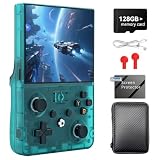
 RG353V Retro Video Handheld Game Console 3.5" IPS4.9 x 3.2 x 0.8 inches4.9 x 3.2 x 0.8 Inches0.7 PoundsCheck on Amazon
Currency Check
As of October 2026, the following is what we could verify. Handhelds built on entry chips such as the RK3566 and RK3562 are reported by reviewers to top out around PlayStation 1, Nintendo 64, and, game by game, PSP and Dreamcast. Snapdragon 8 Gen 2 handhelds are described by specialist outlets as covering most of the original Switch library. Switch 2 emulation on handhelds is not practical yet according to one handheld-focused guide, which says only partial CPU and memory emulation works. Any claim that a cheap retro handheld runs Switch 2 games is unconfirmed and should be treated as rumor.
The chip inside a retro handheld sets the ceiling for what it can emulate, and the two examples here, the RG353V on a Rockchip RK3566 and the RG52MINI on a Rockchip RK3562, are both entry-tier chips. They are a good fit for 8-bit, 16-bit and PlayStation 1 libraries, and reviewers report that Nintendo 64 is mostly strong, with PSP and Dreamcast hit or miss depending on the game. PlayStation 2 and GameCube sit above them. This guide explains the main chip tiers, what each is reported to handle, and how to match a handheld to the consoles you actually care about.
RG353V Retro Video Handheld Game Console 3.5" IPS Screen Android 11 and Linux System RK3566 64bit Game Player 64G TF Card Built-in 4450 Classic Games Bluetooth 4.2 and 5G WiFi
Picked as a relevant option in this category.
View on Amazon
RG52MINI Retro Handheld Game Console, 5.5 Inch IPS Screen, Portable Dual System, 64GB Support 30+ Emulator&22000+ Classic Games, WiFi Networked Fighting, HDMI TV Output, 5000mAh Battery(Black 64GB)
Chosen because it specifies 5.5 Inch IPS Screen and Portable Dual System.
View on Amazon
RG353V Retro Video Handheld Game Console 3.5" IPS Screen Android 11 and Linux System RK3566 64bit Game Player 64G TF Card Built-in 4450 Classic Games Bluetooth 4.2 and 5G WiFi
Picked as a relevant option in this category.
View on AmazonQuick Verdict
| Your situation | Our verdict |
|---|---|
| You mainly want NES, SNES, Game Boy, GBA and Genesis games | Any chip in this guide is more than enough; choose by screen, size and controls instead. |
| You want PlayStation 1 and most Nintendo 64 games | RK3566-class handhelds such as the RG353V are the sweet spot among the examples here. |
| You want PSP and Dreamcast to run reliably | Entry chips can run many titles but not all; expect to tweak settings and skip the heaviest games, or step up a tier. |
| You want PlayStation 2 or GameCube | Skip the entry tier. Reviewers point to Unisoc T820 devices for lighter titles and to Snapdragon 865 or newer for broad coverage. |
| You want original Switch games | Look at Snapdragon 8 Gen 2 handhelds. No chip in this guide’s examples is aimed at Switch. |
What Each Chipset Tier Can Realistically Emulate
Why the chip matters more than the screen size
Emulation asks a processor to imitate another console’s hardware in real time. Older systems have simple designs, so almost any modern chip can imitate them. Newer systems have complex graphics and fast processors, so the emulator needs strong single-thread CPU speed, a capable GPU and enough memory. That is why a small chip with the same screen as a premium device will still stall on a PlayStation 2 game: the shortfall is in the processor and graphics unit, not in the display.
Two other limits sit beside the chip. Memory matters, since a handheld with 1 GB of RAM stutters sooner than one with 2 GB. The software matters too, since the same chip can run the same game at different speeds depending on the emulator core and operating system. Reviewers of the RG353V, for example, report that some PSP and Dreamcast titles run better on one of its two operating systems than the other.
Entry tier: Allwinner H700, Rockchip RK3562 and RK3566
These chips use four small ARM cores. The Allwinner H700 pairs Cortex-A53 cores of about 1.5 GHz with a Mali-G31 GPU. The Rockchip RK3566, used in the RG353V, has newer Cortex-A55 cores up to 1.8 GHz and a Mali-G52 2EE GPU, and a hardware database lists the RG353V with 2 GB of LPDDR4 memory. The RK3562, used in the RG52MINI, is described by the seller as a quad-core Cortex-A53 up to 2.0 GHz with a Mali-G52 2EE GPU.
What they can emulate is broadly agreed. Everything through PlayStation 1 is reported to play well, and Nintendo 64 is strong with the right core. Reviewers of the RG353V report Dreamcast results from about 30 to 60 frames per second depending on the game, and PSP results ranging from smooth to choppy. The kind of title matters: 2D and role-playing games usually fare better than action-heavy 3D ones. PlayStation 2 is described as mostly out of reach: one reviewer saw a PS2 game on an RK3566 handheld stay in the teens for frame rate. One comparison page states plainly that the RK3566 is not a reliable GameCube or PlayStation 2 platform.
The reports for the RK3562 are less settled. A seller-published review calls PSP playable and N64 and Dreamcast functional, while an independent reviewer described PSP and Dreamcast as running well on an RG52 Mini and noted more caution on a model with less memory. On paper the RK3566 has the faster cores per clock, so the practical advice is to treat both as the same tier and verify the games you care about.
Mid tier: Unisoc T618 and T820
Android-class chips in the Unisoc range add stronger cores and graphics. The Unisoc T618, found in the Anbernic RG405V, is reported to handle PS2 and GameCube at a basic level, though not all titles run well. The newer Unisoc T820, in handhelds like the Anbernic RG556, is reported to play Dreamcast and PSP well, handle many GameCube games and run a large share of PS2 games, with demanding PS2 titles still dropping frames. Different reviewers disagree on how much of the PS2 library is comfortable, so look for per-game compatibility lists rather than percentages from sellers.
Premium tier: Snapdragon 865 and 8 Gen 2
Phone-class Snapdragon chips are a different league. The Snapdragon 865 is described as the long-standing reference point for PS2 and GameCube emulation on handhelds, helped by years of emulator tuning. The Snapdragon 8 Gen 2, used in handhelds like the AYN Odin 2, is described by specialist outlets as capable of the bulk of the original Switch library at full speed, with Switch 2 still impractical. These devices cost more and are bigger, which is why they are not the right answer for someone who only wants classic Game Boy and PlayStation games.
The tiers at a glance
| Chip | CPU and GPU | Found in | Reported ceiling |
|---|---|---|---|
| Allwinner H700 | 4x Cortex-A53, Mali-G31 | Budget Linux handhelds | PS1 solid; N64, PSP and Dreamcast vary sharply by game |
| Rockchip RK3562 | 4x Cortex-A53 up to 2.0 GHz, Mali-G52 2EE | RG52MINI | PS1 and N64; PSP and Dreamcast mostly playable per reviewers, with slowdowns |
| Rockchip RK3566 | 4x Cortex-A55 up to 1.8 GHz, Mali-G52 2EE | RG353V | PS1 and N64 strong; PSP and Dreamcast title-dependent; PS2 mostly out |
| Unisoc T618 | Android-class chip | Anbernic RG405V | Basic PS2 and GameCube; not every title |
| Unisoc T820 | Android-class chip | Anbernic RG556 | Dreamcast and PSP well; many GameCube and PS2 titles |
| Snapdragon 865 | Phone-class | Premium Android handhelds | PS2 and GameCube broadly |
| Snapdragon 8 Gen 2 | Phone-class | AYN Odin 2 and similar | Most of the original Switch library; Switch 2 not practical |
The “reported ceiling” column reflects reviewer and retailer coverage, which is not a systematic measurement. Compatibility is per game, so use it as a starting point.
How to Decide
Use this checklist, working from the games you own or want to play.
- List your consoles. Make three groups: easy (8-bit, 16-bit, Game Boy, GBA, PS1), medium (N64, PSP, Dreamcast, Nintendo DS) and hard (PS2, GameCube, Wii, Switch). If most of your list is in the first group, the entry tier is enough. If many titles sit in the hard group, budget for a higher tier from the start.
- Match the screen to the games. A 3.5 inch 640 x 480 display (4:3) suits older consoles whose native image is 4:3, while a 5.5 inch 1280 x 720 display suits larger-format and widescreen games. Be aware that 16:9 content gets black bars on a 4:3 screen and vice versa.
- Check memory and storage. PS1, PSP and Dreamcast games can run to more than 2 GB each, so a 64 GB card fills fast. As a rule of thumb, plan for 128 GB or 256 GB of card space if you want those systems. Check how much RAM the exact listing states.
- Think about battery. Reviewers report roughly 4 to 5 hours on PS1 and N64 and 3.5 to 4 hours on Dreamcast and PSP on the RG353V; a larger battery such as the 5000 mAh cell listed for the RG52MINI should help on a bigger screen, though real runtime depends on settings.
- Look at the operating system. Dual systems (Android plus Linux, or a Linux front end with an Android side) give more flexibility, because some systems run better on one than the other.
- Read the preloaded-games claim carefully. A very large game count in a listing is a marketing figure. The legal status of preloaded content is the seller’s matter, and many owners prefer to load their own legally obtained copies. Check the return and support terms.
Worked example: you want Super Nintendo, Game Boy Advance, PlayStation 1 and a few Nintendo 64 classics for travel. An RK3566 device with a 3.5 inch screen covers all of that and fits in a pocket. If you also want to play Dreamcast classics and a PSP library on a bigger screen, a 5.5 inch entry-tier device may work but expect settings changes and a few titles that stutter.
Products That Fit
The products below are examples that fit the situations above, not a ranking. Specs come from the listing names and published hardware information; anything the listing does not state is marked “confirm on listing.”
RG353V Retro Handheld (first listing) – for pocketable PS1 and N64 play
As an Amazon Associate we earn from qualifying purchases at no extra cost to you.

This listing is a 3.5 inch RK3566 handheld with Android 11 and Linux dual systems. It fits the “easy to medium” group in the checklist: classic consoles, PlayStation 1 and Nintendo 64, with some Dreamcast and PSP titles on top. The 3.5 inch 4:3 screen suits older games and keeps the device small. The title mentions a 64 GB TF card and a very large built-in game library, so look at what is actually included and consider adding more card space if you want PSP and Dreamcast.
- Rockchip RK3566 chipset, 64-bit (per listing name)
- 3.5 inch IPS screen (per listing name)
- Android 11 and Linux systems (per listing name)
- RAM, battery and exact included accessories: confirm on listing
Caveat: the RK3566 is not the chip for PlayStation 2 or GameCube, and the small screen is cramped for Nintendo DS dual-screen games.
RG52MINI – for a larger screen on a similar tier
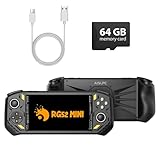
The RG52MINI trades the pocket size for a 5.5 inch IPS screen. The seller’s pages describe a Rockchip RK3562 chip, a 5000 mAh battery, HDMI output and a dual-system setup, with the listing mentioning 64 GB of storage and support for 30-plus emulators. It suits a player who wants the same entry-tier library as the RG353V but on a bigger display, including at home through a TV. Because reviewers differ on how smoothly the RK3562 handles heavier PSP and Dreamcast titles, treat those systems as “try before you rely.”
- 5.5 inch IPS screen (per listing name)
- Rockchip RK3562, quad-core Cortex-A53 up to 2.0 GHz (seller specifications)
- 5000 mAh battery and HDMI output (seller specifications)
- RAM and internal storage vary across seller pages: confirm on listing
Caveat: seller specifications for this model differ between pages on RAM and Wi-Fi bands, so verify before buying, and expect it to be a similar tier rather than a step up in emulation power.
RG353V Retro Handheld (second listing) – an alternative if the first is unavailable

This is a second listing with a near-identical title to the first: a 3.5 inch RK3566 handheld with Android 11 and Linux and a 64 GB card. It fits the same buyer, one who wants a compact PS1 and N64 machine, and is best treated as an alternative rather than a different product. The practical way to choose between the two listings is to compare what each includes (card capacity, accessories, return terms) rather than the chip, since the chipset is the same.
- Rockchip RK3566 chipset (per listing name)
- 3.5 inch IPS screen, Android 11 and Linux (per listing name)
- 64 GB TF card included (per listing name)
- Battery, RAM and accessories: confirm on listing
Caveat: because both RG353V listings look alike, check the seller details and confirm that the specs you care about match what the product page states.
Common Mistakes
- Buying for the biggest game count. Tens of thousands of preloaded titles do not mean the chip can run them; most are old-console games, and demanding systems depend on the chip.
- Expecting PlayStation 2 from an entry chip. Reviewers report that RK3566-class devices struggle with PS2 and GameCube.
- Ignoring the screen aspect ratio. A 4:3 screen shows older games without black bars, and widescreen handhelds shine for PSP and newer systems.
- Buying too little storage. Disc-based systems take far more space than cartridge systems.
- Forgetting software settings. Core choice, frameskip and resolution scaling can change the experience as much as the chip.
- Treating retailer roundups as measurements. Many compatibility claims are reviewer-reported or promotional; check per-game lists for the titles you want.
Questions
What is the difference between the RK3566 and the RK3562?
The RK3566 uses newer Cortex-A55 cores up to 1.8 GHz, while the RK3562 uses Cortex-A53 cores up to 2.0 GHz according to seller specifications. Both include a Mali-G52 2EE GPU. In practice, reviewers place them in the same entry tier, with strong PS1 and N64 results and mixed PSP and Dreamcast results.
Can an RK3566 handheld play PSP and Dreamcast games?
Many titles, yes, but not all. Reviewers report Dreamcast results from roughly 30 to 60 frames per second depending on the game, and PSP ranging from smooth to choppy. Lighter titles tend to run better than action-heavy 3D ones.
Why can’t a cheap handheld run PlayStation 2 games?
PlayStation 2 emulation needs strong CPU speed and a capable GPU, and entry chips use small, low-power cores. One reviewer measured a demanding PS2 game in the mid-teens frame rate on an RK3566 handheld. Chips in the Unisoc T820 class and above are where most reviewers see PS2 become practical.
Which handheld should I buy for Nintendo Switch games?
Specialist outlets point to Snapdragon 8 Gen 2 handhelds for most of the original Switch library. They do not describe Switch 2 emulation as practical yet. None of the examples in this guide is aimed at Switch.
Does a bigger battery or screen change what a handheld can emulate?
No. The chip, memory and software set the emulation ceiling. Screen size and battery capacity affect comfort and play time, not compatibility.
How much storage do I need?
For cartridge-based consoles, a small card is enough. For PlayStation 1, PSP and Dreamcast, a handheld guide recommends 128 GB or 256 GB because individual games can exceed 2 GB.
Update History
- October 14, 2026 – Initial publication.
- Check the product page for current specifications and availability before buying.
Sources and Methodology
We compiled this guide from the seller and manufacturer specification pages for the example handhelds, hardware databases, and reviewer and retailer roundups that report per-system results. Because many compatibility claims come from reviewers and sellers rather than systematic measurement, we describe them as reported and recommend per-game checks. This guide relies on published sources only and cites no frame-rate scores.
- AISLPC seller pages and listing specifications for the RG52 Mini
- Retro Catalog hardware database entry for the Anbernic RG353V
- Reviewer coverage by Retro Handhelds, GBAtemp and Retrododo
- KiwiPi chipset comparison of the Allwinner H700 and Rockchip RK3566
- Specialist handheld coverage of the Anbernic RG556 and the AYN Odin 2
- Retailer listing fields (title, feature bullets) for each example product