
Key takeaways
- Outstanding battery life that comfortably lasts all day.
- Quiet, cool operation thanks to the efficient Arm platform.
- Copilot+ NPU for on-device AI features.
- Premium OLED and touchscreen options on HP and Surface.
What's inside
Laptops built around Qualcomm’s Snapdragon X Plus have redefined what to expect from a thin-and-light Windows machine. These Arm-based Copilot+ PCs deliver exceptional battery life, silent fanless or near-silent operation, and a capable NPU for on-device AI, all while staying cool and quiet. For students, writers, and mobile professionals, they represent a genuine leap in efficiency over traditional x86 ultrabooks.
This review examines the leading Snapdragon X Plus laptops, from Microsoft’s Surface Laptop to HP’s OmniBook line, weighing performance, display quality, battery, and app compatibility. We’ll help you understand where these machines excel and the few areas where you should check compatibility before you commit.
As an Amazon Associate we earn from qualifying purchases at no extra cost to you. Product prices and availability are accurate as of the date shown and are subject to change.


🎮 Get More From Your Setup — Free
Prime Gaming gives you free PC games every month, in-game loot, and a free Twitch channel sub — plus fast free shipping on all the gear above. New members get a 30-day free trial.
Watch: Laptop With Snapdragon X Plus: Review & Buyer’s Guide — Video Review
Design & Build
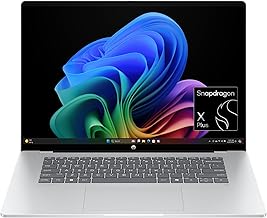
Snapdragon X Plus machines tend to be beautifully built. The Microsoft Surface Laptop offers a premium aluminum chassis with an excellent touchscreen, while HP’s OmniBook 5 pairs a striking OLED panel with a slim, light body in Glacier Silver. The OmniBook 3 targets a more budget-conscious buyer with a larger 16-inch screen and numeric keyboard. Because the Arm platform runs so efficiently, these laptops stay thin and cool without large cooling systems, and many run near-silent under everyday loads. Keyboards and trackpads across the premium models are among the best in their class.
Performance
The Snapdragon X Plus handles everyday productivity effortlessly: web browsing, office apps, video calls, and light photo editing all feel snappy, and the NPU accelerates Copilot+ AI features like live captions and image tools. The standout benefit is battery life, where these laptops routinely outlast x86 rivals by hours, easily covering a full workday. The trade-off is app compatibility: most mainstream software now runs natively on Arm or through emulation, but a handful of niche apps, some games, and certain specialized drivers may not be fully supported. For mainstream users, this rarely surfaces; for specialized workflows, it’s worth verifying first.
Pros & Cons
- Outstanding battery life that comfortably lasts all day.
- Quiet, cool operation thanks to the efficient Arm platform.
- Copilot+ NPU for on-device AI features.
- Premium OLED and touchscreen options on HP and Surface.
- App compatibility gaps for a few niche or legacy programs.
- Not a gaming platform, with limited GPU and game support.
- Emulation overhead can slow some x86-only apps.
Alternatives to Consider
If you rely on specialized x86 software or want to game, an Intel or AMD ultrabook remains the safer choice despite shorter battery life. Buyers who want even more AI and CPU headroom can step up to Snapdragon X Elite models. And anyone who values a large, vivid screen for media will appreciate the OLED OmniBook 5 over the standard-panel Surface configurations.
Frequently Asked Questions
Will my apps run on a Snapdragon laptop?
Most mainstream apps now run natively on Arm or through Windows emulation. A few niche programs, some games, and specialized drivers may not be supported, so check any critical software before buying.
How is the battery life?
Excellent. Snapdragon X Plus laptops routinely deliver all-day battery life, often outlasting comparable Intel and AMD ultrabooks by several hours in mixed use.
Can I game on these laptops?
These are productivity machines, not gaming laptops. Casual and cloud games work, but demanding titles and anti-cheat compatibility remain limited on the Arm platform.
What is Copilot+ and do I need it?
Copilot+ is Microsoft’s badge for PCs with a fast NPU that runs on-device AI features. It’s a useful bonus for tasks like live captions and image editing, though not essential for basic work.
Verdict
Snapdragon X Plus laptops are ideal for anyone who prizes battery life, silence, and portability in a premium Windows machine. The Microsoft Surface Laptop is the polished all-rounder, while the HP OmniBook 5 wins on display quality with its OLED panel. As long as your key apps are compatible, these Copilot+ PCs offer one of the best mobile experiences available today.


