Key takeaways
- Peak cooling headroom: A quality 360mm AIO still wins at the extreme top end, but a good dual-tower air cooler now trades blows with most 240mm units and beats budget AIOs outright.
- Noise under load: Air coolers only have fans to worry about. AIOs add pump whine, and cheaper pumps develop a persistent hum or gurgle over time.
- Clearance and fitment: Air coolers demand vertical case clearance and can crowd tall RAM; AIOs need radiator space in the roof or front and adequate tube routing.
- Longevity: Heat pipes have no moving parts and last the life of the build. AIOs have a finite pump lifespan and slowly lose coolant through permeation.
- Aesthetics: AIOs offer the cleanest look and the flashiest displays, though air coolers like the Peerless Assassin Vision MAX and SK700V now ship with their own IPS or digital screens.
- Cost per degree: Air wins decisively. You’ll typically spend two to three times more for an AIO that matches a mid-range tower.
What's inside
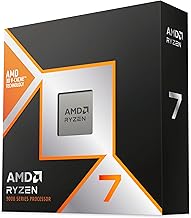
Modern gaming CPUs pull more power than ever. A 2026 build packing a high-core-count Intel or AMD chip can spike well past 200W under a heavy render or a poorly optimized shader compile, and the cooler you bolt on top decides whether that heat turns into sustained boost clocks or an early thermal throttle. The two paths are familiar: an all-in-one (AIO) liquid cooler with a pump block and a radiator, or a tower air cooler built from heat pipes, fins, and fans.
The choice matters more now than it did five years ago, and not just because of raw wattage. Cases have shifted toward mesh fronts and dual-chamber layouts, RAM heatsinks keep growing, and air coolers have quietly closed most of the performance gap with 240mm and even some 280mm AIOs. Meanwhile, AIOs have moved upmarket with LCD screens, thicker radiators, and better pumps. Getting this decision right saves you money, noise, and the misery of a rebuild three months later.
As an Amazon Associate we earn from qualifying purchases at no extra cost to you. Product prices and availability are accurate as of the date shown and are subject to change.


⚡ Save on Your Next PC — Amazon Prime
Prime members get fast free shipping on the systems above, plus early access to Prime Day & Black Friday PC deals. New members get a 30-day free trial.
Watch: AIO vs Air Cooler: Which Is Best in 2026? — Video Review
Quick Verdict
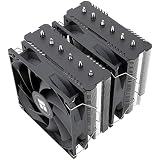
Buy an air cooler if you want the best value, the fewest failure points, and near-silent operation in a normally sized mid-tower — a dual-tower unit like the Peerless Assassin 120 SE or PCCOOLER RT720TC handles almost every mainstream gaming CPU without breaking a sweat. Buy an AIO if you’re cooling a flagship overclocked chip, building in a small or oddly shaped case where a 160mm tower simply won’t fit, or you want a clean, unobstructed look above the motherboard with a screen on the pump block.
Key Differences
- Peak cooling headroom: A quality 360mm AIO still wins at the extreme top end, but a good dual-tower air cooler now trades blows with most 240mm units and beats budget AIOs outright.
- Noise under load: Air coolers only have fans to worry about. AIOs add pump whine, and cheaper pumps develop a persistent hum or gurgle over time.
- Clearance and fitment: Air coolers demand vertical case clearance and can crowd tall RAM; AIOs need radiator space in the roof or front and adequate tube routing.
- Longevity: Heat pipes have no moving parts and last the life of the build. AIOs have a finite pump lifespan and slowly lose coolant through permeation.
- Aesthetics: AIOs offer the cleanest look and the flashiest displays, though air coolers like the Peerless Assassin Vision MAX and SK700V now ship with their own IPS or digital screens.
- Cost per degree: Air wins decisively. You’ll typically spend two to three times more for an AIO that matches a mid-range tower.
AIO Liquid Coolers
An AIO moves heat away from the socket instead of dissipating it right above the CPU. That’s the fundamental advantage: the radiator sits at the case boundary, exhausting hot air directly outside rather than dumping it near your VRMs and GPU. For 250W-plus chips running all-core workloads, a 360mm radiator provides thermal capacity that no air cooler can match, and it keeps the area around the socket physically clear for tall memory, large VRM heatsinks, and top-mounted connectors.
The trade-offs are real, though. You’re adding a pump — an active component with bearings, a power draw, and a service life typically rated in the five-to-seven year range. Installation is more involved, radiator placement affects tubing orientation (pump above the radiator top is a recipe for air bubbles and noise), and a leak, however rare on modern sealed units, is catastrophic. AIOs also perform poorly in cases with restricted airflow, since a radiator starved of fresh intake becomes a very expensive heatsink.
Tower Air Coolers
Air cooling has had a genuine renaissance. The Thermalright Peerless Assassin 120 SE popularized the six-heat-pipe dual-tower design at a price that made mid-range AIOs look indefensible, and competitors followed. The PCCOOLER RT720TC pushes to seven heat pipes and a 270W TDP rating with high-static-pressure 2200RPM fans, while the be quiet! Dark Rock 5 prioritizes acoustics with a Silent Wings 4 fluid dynamic bearing fan and a layout designed specifically to clear tall RAM and VRM heatsinks.
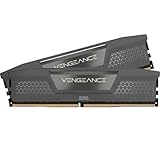
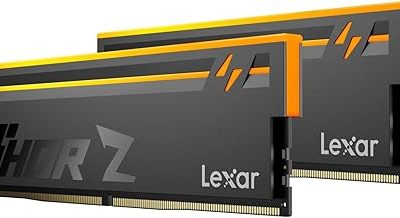
There’s variety beyond the raw performance tier, too. The SK700V is an AM5-exclusive single-tower with a digital display and an L-rail mount that guarantees full memory clearance — a smart pick for compact AMD builds. The Vetroo V5 Pink brings addressable RGB and a themed finish for colour-matched builds, and the Peerless Assassin Vision MAX adds a five-inch IPS screen if you want AIO-style flair without the pump. The main constraints remain height and weight: measure your case clearance, and confirm your first RAM slot isn’t blocked before you commit.
Which Should You Buy?
- For best value gaming builds: Pick air — the Peerless Assassin 120 SE handles any mainstream CPU for a fraction of AIO money.
- For flagship overclocking: Pick a 360mm AIO; the extra radiator surface is the only way to sustain those clocks.
- For silent builds: Pick air, specifically the Dark Rock 5 — no pump means one less noise source entirely.
- For tight RAM or clearance issues: Pick an AIO, or the SK700V if you’re on AM5 and want to stay air-cooled.
- For screens and RGB: Either works now — the Vision MAX and SK700V close the gap on air, otherwise an LCD AIO.
Frequently Asked Questions
Do AIOs actually cool better than air coolers?
At 360mm, yes, by a meaningful margin on high-wattage chips. At 240mm, the gap against a good dual-tower air cooler is often just a few degrees, and budget 120mm AIOs are typically worse than a mid-range tower.
How long does an AIO last?
Most manufacturers rate pumps for roughly 50,000 hours, which works out to five to seven years of typical use. Air coolers have no equivalent wear item — only the fans, which are cheap and easy to replace.
Will a big air cooler block my RAM?
It can. Dual-tower coolers often require shifting the front fan upward or using low-profile memory. The SK700V and Dark Rock 5 are both designed specifically to avoid this problem.
Is a dual-tower cooler too heavy for my motherboard?
Modern backplate mounting systems handle the load fine in an upright case. If you’re transporting the PC frequently, remove the cooler or support it during transit.
Final Verdict
For the vast majority of gaming builds in 2026, a quality dual-tower air cooler is the smarter purchase — it costs less, lasts longer, runs quieter, and gives up only a handful of degrees against AIOs that cost twice as much. Reserve liquid cooling for genuinely extreme chips, cases where a tall tower physically won’t fit, or builds where the aesthetic is worth the premium.