Key takeaways
- Bandwidth: A DDR5-6000 dual-channel kit delivers roughly 96 GB/s of theoretical bandwidth versus about 57 GB/s from a strong DDR4-3600 kit — a gap that widens further at 6400 MT/s and above.
- Latency: DDR4 still holds a small edge in raw CAS latency, but the gap has closed. DDR5-6000 CL30 works out to roughly 10ns of true latency against about 8.9ns for DDR4-3600 CL16 — close enough that DDR5’s bandwidth advantage wins decisively in practice.
- Platform support: DDR5 is mandatory on AM5 and LGA1851. DDR4 is confined to AM4 and DDR4-variant LGA1700 boards. The two are physically and electrically incompatible — the notch position differs, so cross-fitting is impossible.
- Architecture: Each DDR5 module runs two independent 32-bit sub-channels rather than one 64-bit channel, which improves access efficiency and helps modern CPUs with high core counts feed their caches.
- Power and reliability: DDR5 runs at 1.1V baseline (1.35–1.4V for XMP/EXPO profiles), moves voltage regulation onto the module itself via PMIC, and adds on-die ECC to catch bit errors at higher densities. DDR4 has none of this.
- Price and availability in 2026: DDR5 is now the volume product and priced accordingly. DDR4 has become a legacy part with shrinking supply, and per-gigabyte pricing has stopped being an advantage.
What's inside
The DDR5 versus DDR4 debate has changed shape entirely since the first DDR5 kits landed. In 2026, this is no longer a question of whether the newer standard has matured — it has — but of which side of the platform divide your build sits on, and what happens when you try to buy memory for hardware that the industry has already moved past. Every current AMD AM5 and Intel LGA1851 motherboard is DDR5-only. DDR4 lives on exclusively in older AM4 and LGA1700 systems, and increasingly at prices that make no sense for what you get.
That matters more than it used to. Memory manufacturers have shifted almost all wafer capacity to DDR5 and HBM, and DDR4 has quietly slipped into end-of-life status — which, counterintuitively, has pushed the older standard’s street prices up rather than down. Meanwhile, DDR5 has landed on a genuine sweet spot: 6000 MT/s at CL30 is now the mainstream default rather than a halo product, on-die ECC and integrated power management are standard, and 32GB dual-channel kits are the assumed baseline for a gaming PC. Here’s how the two actually compare, and what to buy in each scenario.
As an Amazon Associate we earn from qualifying purchases at no extra cost to you. Product prices and availability are accurate as of the date shown and are subject to change.




⚡ Save on Your Next PC — Amazon Prime
Prime members get fast free shipping on the systems above, plus early access to Prime Day & Black Friday PC deals. New members get a 30-day free trial.
Watch: DDR5 vs DDR4 RAM: Does It Matter in 2026? — Video Review
Quick Verdict
DDR5 is the correct answer for any new gaming build in 2026, and for most upgrades — it offers roughly double the theoretical bandwidth, better real-world minimum frame rates, and a platform that will still be supported in five years. DDR4 is only the right call in one narrow case: you already own a working AM4 or LGA1700 DDR4 motherboard, you’re happy with the CPU in it, and you simply want more capacity without replacing three components at once.
Key Differences
- Bandwidth: A DDR5-6000 dual-channel kit delivers roughly 96 GB/s of theoretical bandwidth versus about 57 GB/s from a strong DDR4-3600 kit — a gap that widens further at 6400 MT/s and above.
- Latency: DDR4 still holds a small edge in raw CAS latency, but the gap has closed. DDR5-6000 CL30 works out to roughly 10ns of true latency against about 8.9ns for DDR4-3600 CL16 — close enough that DDR5’s bandwidth advantage wins decisively in practice.
- Platform support: DDR5 is mandatory on AM5 and LGA1851. DDR4 is confined to AM4 and DDR4-variant LGA1700 boards. The two are physically and electrically incompatible — the notch position differs, so cross-fitting is impossible.
- Architecture: Each DDR5 module runs two independent 32-bit sub-channels rather than one 64-bit channel, which improves access efficiency and helps modern CPUs with high core counts feed their caches.
- Power and reliability: DDR5 runs at 1.1V baseline (1.35–1.4V for XMP/EXPO profiles), moves voltage regulation onto the module itself via PMIC, and adds on-die ECC to catch bit errors at higher densities. DDR4 has none of this.
- Price and availability in 2026: DDR5 is now the volume product and priced accordingly. DDR4 has become a legacy part with shrinking supply, and per-gigabyte pricing has stopped being an advantage.
DDR5 RAM
For AMD Ryzen on AM5, the target is unambiguous: 6000 MT/s at CL30, which keeps the memory controller running 1:1 with the Infinity Fabric and produces the best latency-to-bandwidth balance the platform offers. The G.SKILL Trident Z5 NeoX and KLEVV FIT V both hit that exact specification on SK Hynix A-die, with the KLEVV kit skipping RGB for a lower-profile, cooler-friendly heatspreader. The Lexar Thor Z RGB runs the same 6000 MT/s at a slightly looser CL38 while carrying both XMP 3.0 and EXPO profiles, making it a flexible choice if you’re undecided between Intel and AMD.
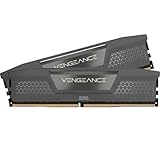
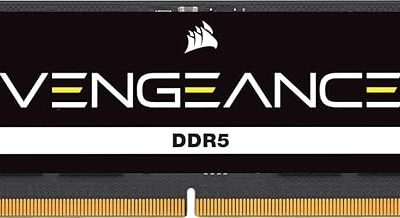
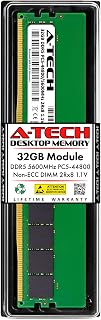
Intel builds tolerate — and often reward — higher frequencies, which is where the KLEVV CRAS V RGB at 6400 MT/s CL30 makes sense on a Core Ultra system. If aesthetics are part of the build, the CORSAIR Vengeance RGB in white is the obvious pick for light-themed cases and integrates with iCUE for lighting sync. At the practical end, the A-Tech 32GB DDR5-5600 module is a plain, no-frills JEDEC-spec upgrade aimed at prebuilts and office systems that won’t run an overclocking profile anyway — useful when you need capacity in a locked-down OEM board rather than tuned performance.
DDR4 RAM
DDR4 is not obsolete in any functional sense. A Ryzen 5700X3D or Core i5-12600K paired with 32GB of DDR4-3600 CL16 still plays every current title comfortably at 1440p, and in GPU-limited scenarios the difference against DDR5 narrows to low single-digit percentages. If that describes your machine, there is no urgency to change anything.
The problem is buying it new. With DDR4 production winding down, quality binned kits have become scarce and expensive, and you’re spending money on a dead-end platform — no upgrade path to a newer CPU, no capacity headroom beyond 128GB, and no on-die ECC. Where DDR5 genuinely pulls ahead is in 1% low frame rates in simulation and open-world titles, in large-texture streaming, and in anything running local AI models alongside a game. Spending meaningfully on DDR4 in 2026 is money better put toward the platform jump.
Which Should You Buy?
- For a new gaming build: DDR5, without hesitation — 32GB (2x16GB) at 6000 MT/s CL30 is the current baseline.
- For AMD AM5: Pick an EXPO-certified 6000 CL30 kit such as the G.SKILL Trident Z5 NeoX or KLEVV FIT V to keep the Infinity Fabric in sync.
- For Intel Core Ultra: Go higher — the KLEVV CRAS V RGB at 6400 CL30 or a 6000 CL36 kit like the Corsair Vengeance RGB suits Intel’s controller well.
- For a prebuilt or OEM upgrade: A standard 5600 MT/s module like the A-Tech kit avoids XMP compatibility headaches on locked boards.
- For an existing AM4 or LGA1700 DDR4 rig: Keep the DDR4 you have, add a matched kit only if you’re short on capacity, and put the savings toward a full platform upgrade later.