Key takeaways
- Substantial Cost Savings for Large Archives: Acquiring an analog capture card for $15 to $35 allows you to convert dozens of family tapes for a fixed price, avoiding commercial service fees that easily escalate into hundreds of dollars.
- Complete In-House Privacy and Security: Irreplaceable family memories stay safely in your home, eliminating the risk of physical loss, tape damage, or exposure associated with shipping home videos to third-party processing facilities.
- Immediate Living Space Decluttering: Digitizing analog tapes allows you to safely store original media in archival storage while clearing out bulky plastic cassette cases, VCR cabinets, and closet storage boxes across your living area.
- Granular Editing and Organizational Control: Direct computer capture gives you instant access to trim leading static, split long holiday recordings into separate event files, apply basic color balance adjustments, and organize media folders precisely to your liking.
- Negligible System Power Demands: Budget USB converters draw under 2.5 watts of bus power and operate smoothly on basic laptops or older desktop systems without requiring expensive graphics cards or specialized hardware upgrades.
What's inside
The Short Answer
An analog video capture card is worth buying if you have more than three or four legacy tapes—such as VHS, VHS-C, Hi8, or MiniDV—and access to a functional VCR or camcorder. When evaluating home digitization solutions in 2026, compact USB analog capture adapters priced between $15 and $35 offer the most practical, cost-effective path to digitizing home archives. Converting just a handful of tapes yourself recoups the hardware cost when compared to commercial mail-in scanning services, which routinely charge $18 to $30 per tape. However, if you only have one or two irreplaceable recordings, lack playback hardware, or do not wish to spend hours managing real-time video feeds, paying a local professional service remains the smarter, less tedious choice.
What You Actually Get
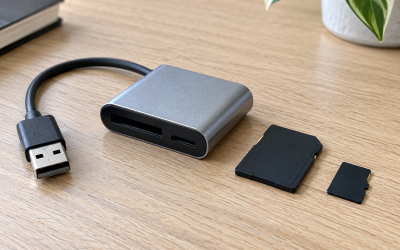
When purchasing an entry-level analog video capture card, you receive a compact USB dongle designed to bridge the gap between legacy analog playback hardware and modern computer operating systems. A typical USB capture card measures roughly 3.5 x 1.1 x 0.6 inches and weighs approximately 1.5 ounces. It draws power directly through your computer’s USB port, consuming a minimal 1.5 to 2.5 watts of power during active recording sessions.
As an Amazon Associate we earn from qualifying purchases at no extra cost to you. Product prices and availability are accurate as of the date shown and are subject to change.


On one side, the device features a standard USB-A or USB-C connector. On the opposite end, a breakout cable harness provides standard composite analog inputs: a yellow RCA jack for composite video, and red and white RCA jacks for analog stereo audio. Many capture dongles also include a 4-pin Mini-DIN S-Video connector, which separates luminance and chrominance signals to deliver noticeably sharper video output from tape decks or camcorders equipped with S-Video outputs.
By comparison, internal desktop hardware like a PCIe video capture card is significantly larger, measuring around 4.7 x 4.8 x 0.7 inches and weighing 3.2 ounces, with a power consumption ranging from 5 to 8 watts. While PCIe cards are engineered primarily for high-bandwidth HDMI feeds from gaming consoles or modern cameras, simple external USB dongles are specifically tuned for lower-bandwidth analog signal conversion.
It is important to understand the technical output reality of these capture cards. Analog VHS tapes carry a native signal equivalent to roughly 480i resolution (333×480 lines of horizontal resolution for NTSC formats). Budget capture cards record this signal and package it into a digital video container, such as MP4 or AVI encoded with H.264 video codecs. While hardware manufacturers often advertise “1080P Capture,” the card is simply deinterlacing and upscaling a standard-definition source. Digitized files typically require between 1.5 GB and 3.0 GB of storage space per hour of captured video, preserving the native home movie quality without artificially inflating file sizes or creating false high-definition detail.
Pros
- Substantial Cost Savings for Large Archives: Acquiring an analog capture card for $15 to $35 allows you to convert dozens of family tapes for a fixed price, avoiding commercial service fees that easily escalate into hundreds of dollars.
- Complete In-House Privacy and Security: Irreplaceable family memories stay safely in your home, eliminating the risk of physical loss, tape damage, or exposure associated with shipping home videos to third-party processing facilities.
- Immediate Living Space Decluttering: Digitizing analog tapes allows you to safely store original media in archival storage while clearing out bulky plastic cassette cases, VCR cabinets, and closet storage boxes across your living area.
- Granular Editing and Organizational Control: Direct computer capture gives you instant access to trim leading static, split long holiday recordings into separate event files, apply basic color balance adjustments, and organize media folders precisely to your liking.
- Negligible System Power Demands: Budget USB converters draw under 2.5 watts of bus power and operate smoothly on basic laptops or older desktop systems without requiring expensive graphics cards or specialized hardware upgrades.
Cons
- Strict Real-Time Capture Requirements: Analog video transfer cannot be accelerated. Capturing a standard 2-hour home video tape requires exactly 2 hours of continuous, un-accelerated playback and active computer monitoring.
- Direct Reliance on Aging Playback Hardware: Video quality depends directly on the mechanical condition of your playback deck; worn VCR tape heads, dirty tracking mechanisms, or misaligned audio heads will degrade the capture file regardless of card quality.
- Driver and Software Setup Friction: Budget conversion dongles frequently ship with outdated utility software on mini-CDs, often requiring users to download third-party tools like OBS Studio or search for updated system drivers manually.
- Potential Audio-Video Sync Drift: Prolonged recording sessions on computers running heavy background processes can occasionally cause audio and video tracks to drift out of sync, requiring settings tweaks or shorter recording intervals.
- No Automated Image Restoration: A capture card transfers signal line-for-line, meaning tape dropouts, signal noise, color fading, and static lines inherent to aging magnetic media transfer directly into the digital file.
Who Should Buy It
An analog video capture card is an exceptional purchase for homeowners, family archivists, and DIY technology enthusiasts who possess a collection of five or more legacy video tapes alongside a working VCR or camcorder. It is designed for patient users who prefer total hands-on management of their family archives, enabling custom file naming, individual video trimming, and private local cloud backups. If your primary goal is organizing years of family media while maintaining absolute privacy and eliminating physical media clutter, this tool delivers outstanding long-term value.
Who Should Skip It
You should skip buying an analog capture card if you only own one to three family tapes, as setting up drivers, testing software, and sitting through real-time playback yields minimal financial return over local photo-scanning counters. Similarly, if you do not already own or have free access to a functional VCR or camcorder, purchasing secondhand playback hardware will add $50 to $150 to your overall project cost, invalidating the savings of a low-cost adapter. Finally, users seeking a zero-effort, push-button transfer process should opt for commercial digitizing services instead.
Cheaper Alternatives
If you choose not to purchase a USB analog capture card, several alternative methods exist for transferring legacy tape media to modern storage formats, depending on your available hardware and budget constraints:
| Option | Cost | Trade-off |
|---|---|---|
| Commercial Mail-In or Local Service | $18 – $30 per tape | Requires zero hardware setup or technical knowledge, but incurs high total costs for large media archives and carries risks related to shipping delicate originals. |
| Standalone Hardware Recorders (VCR-to-DVD or Direct SD Deck) | $75 – $160 | Operates entirely without a computer, but involves a higher initial hardware cost and offers limited options for editing or trimming recordings prior to final save. |
| Camcorder FireWire / IEEE 1394 Passthrough | $0 – $20 (cable only) | Delivers excellent native digital transfer quality for MiniDV or Digital8 tapes, but requires legacy motherboard ports or specialized expansion cards. |
FAQ
Does an analog video capture card improve the picture quality of old tapes?
No, an analog capture card does not restore or enhance magnetic video tape quality. It digitizes the exact signal broadcast by your VCR or camcorder deck. If the original tape exhibits tracking lines, static, dropouts, or color bleed, those defects transfer directly into the resulting digital video file. However, post-processing video software can be used after capture to apply basic color correction and sharpening.
How long does it take to convert a VHS tape to digital format?
Because analog video signals stream in real-time, conversion takes the exact duration of the tape’s runtime. Capturing a standard 2-hour home video tape requires 2 full hours of recording time. Additionally, you should budget 10 to 15 minutes per tape for setting up capture paths, verifying audio levels, and labeling saved files.
Will a budget USB capture card work on current computer operating systems?
Most modern USB analog capture dongles utilize standard UVC (USB Video Class) architecture, allowing them to function natively on Windows 10, Windows 11, and macOS systems as generic video input devices. While bundled software discs are often outdated, free open-source applications such as OBS Studio recognize the capture card instantly for recording.
Do I need a high-performance computer to use an analog capture card?
No, capturing standard-definition analog video demands minimal computational resources. Because the hardware processes 480i signals at standard bitrates, basic desktop computers and budget laptops with standard processor configurations and 8 GB of RAM can capture video smoothly without dropping frames or overheating.