Key takeaways
- For best value: The RTX 5070 wins decisively on price-to-performance.
- For native 4K brute force: The RTX 4090’s raw power and 24GB VRAM lead.
- For DLSS 4 frame rates: The 5070 gains a major boost in supported titles.
- For efficiency and smaller builds: The 5070 runs cooler and draws far less power.
- For creators needing VRAM: The 4090’s 24GB buffer is the clear pick.
What's inside
The RTX 5070 versus RTX 4090 debate captures one of the most interesting questions of this GPU generation: can a new mid-range card challenge last generation’s flagship? NVIDIA’s marketing has fueled the comparison, and gamers weighing an upgrade want to know whether the affordable 5070 can really stand in for the mighty, and much pricier, 4090.
This comparison cuts through the hype to look at raw performance, VRAM, features, and value. Since the 4090 is largely sold out at retail, the practical decision for most buyers is between a readily available RTX 5070 (or 5070 Ti) and hunting down a used 4090, so we frame it accordingly.
As an Amazon Associate we earn from qualifying purchases at no extra cost to you. Product prices and availability are accurate as of the date shown and are subject to change.




🎮 Get More From Your Setup — Free
Prime Gaming gives you free PC games every month, in-game loot, and a free Twitch channel sub — plus fast free shipping on all the gear above. New members get a 30-day free trial.
Watch: Rtx 5070 Vs 4090: Full Comparison — Video Review
Quick Verdict
In raw rasterized horsepower, the RTX 4090 remains significantly faster and carries far more VRAM, making it the stronger card for native 4K and heavy workloads. The RTX 5070 closes much of the gap in supported titles thanks to DLSS 4 frame generation, and it does so at a fraction of the price and power draw. For most gamers, the 5070 or 5070 Ti is the smarter buy; the 4090 wins only where brute force and VRAM truly matter.
RTX 5070
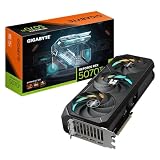
The RTX 5070, in cards like the MSI Gaming Trio OC, ASUS TUF Gaming OC, and GIGABYTE AERO OC, brings the Blackwell architecture and DLSS 4 to the mainstream. With 12GB of GDDR7 on a 192-bit bus, it delivers excellent 1440p performance and strong 4K with upscaling, all at modest power consumption and an accessible price.
Its trump card is DLSS 4 multi-frame generation, which can dramatically inflate frame rates in supported games, letting the 5070 match or exceed a 4090’s DLSS 3 output in specific titles. The limitation is the 12GB frame buffer and narrower bus, which cap it in the most demanding native-resolution scenarios.
RTX 4090
The RTX 4090 is a monster of raw capability. Its enormous core count and 24GB of VRAM make it dramatically faster in native rendering, professional workloads, and VRAM-intensive games. Even against the newer generation, it remains one of the fastest gaming GPUs in existence for brute-force performance.
The downsides are availability, price, size, and power draw. It is expensive and increasingly hard to find new, physically massive, and hungry for wattage. If you already own one, there is little reason to downgrade to a 5070; if you are shopping, the value equation is far less friendly than the 5070’s.
Head-to-Head: Which Should You Buy?
- For best value: The RTX 5070 wins decisively on price-to-performance.
- For native 4K brute force: The RTX 4090’s raw power and 24GB VRAM lead.
- For DLSS 4 frame rates: The 5070 gains a major boost in supported titles.
- For efficiency and smaller builds: The 5070 runs cooler and draws far less power.
- For creators needing VRAM: The 4090’s 24GB buffer is the clear pick.
Frequently Asked Questions
Is the RTX 5070 really as fast as a 4090?
Only in specific DLSS 4 scenarios. In raw rasterization the 4090 is considerably faster, but frame generation can close or reverse the gap in supported games.
Does the VRAM difference matter?
Yes. The 4090’s 24GB comfortably outmatches the 5070’s 12GB for high-resolution textures, content creation, and future demanding titles.
Which is better for 1440p gaming?
The RTX 5070 is more than enough for excellent 1440p gaming and represents far better value at that resolution than a 4090.
Should I upgrade from a 4090 to a 5070?
No. A 4090 remains faster overall, so there is no reason to move sideways or down. The 5070 is aimed at new buyers and those upgrading from older cards.
Final Verdict
For the vast majority of gamers building or upgrading today, the RTX 5070, or the 5070 Ti if you want more headroom, is the wiser purchase, delivering superb value, efficiency, and DLSS 4 gains. The RTX 4090 is still the raw-performance and VRAM champion, but its price and scarcity make it a niche choice reserved for those who genuinely need maximum brute force.