Key takeaways
- Target resolution: Match the card to your monitor. 1080p players can save money, while 1440p and 4K demand more VRAM and raw power.
- VRAM capacity: Aim for at least 12GB for modern titles; 16GB gives comfortable headroom for high-texture games.
- Power and PSU: Check your power supply’s wattage and connectors before committing to a higher-tier card.
- Case clearance: Triple-fan and 2.5-slot designs need room; measure before you buy.
- Feature set: DLSS 4 on NVIDIA and FSR on AMD can dramatically boost frame rates, so weigh software as much as hardware.
What's inside
Choosing among the top GPU cards in 2026 comes down to matching your resolution, refresh rate, and budget to the right silicon. With NVIDIA’s Blackwell RTX 50 series in full swing and AMD’s Radeon RX 9000 line offering strong competition, there has rarely been a better time to upgrade, but the sheer number of options can feel overwhelming.
This roundup gathers a cross-section of the best graphics cards available today, spanning mainstream 1080p performers up to enthusiast 1440p and 4K contenders. Whatever your build and budget, one of these belongs on your shortlist.
As an Amazon Associate we earn from qualifying purchases at no extra cost to you. Product prices and availability are accurate as of the date shown and are subject to change.


🎮 Get More From Your Setup — Free
Prime Gaming gives you free PC games every month, in-game loot, and a free Twitch channel sub — plus fast free shipping on all the gear above. New members get a 30-day free trial.
Watch: Best Top Gpu Cards — Video Review
How to Choose the Right Graphics Card
- Target resolution: Match the card to your monitor. 1080p players can save money, while 1440p and 4K demand more VRAM and raw power.
- VRAM capacity: Aim for at least 12GB for modern titles; 16GB gives comfortable headroom for high-texture games.
- Power and PSU: Check your power supply’s wattage and connectors before committing to a higher-tier card.
- Case clearance: Triple-fan and 2.5-slot designs need room; measure before you buy.
- Feature set: DLSS 4 on NVIDIA and FSR on AMD can dramatically boost frame rates, so weigh software as much as hardware.
The Best GPU Cards Reviewed
ASUS Prime Radeon RX 9070 XT 16GB OC
AMD’s RX 9070 XT is the value darling of this group, delivering excellent 1440p rasterization and capable 4K performance with 16GB of GDDR6. The ASUS Prime cooler keeps it quiet, and PCIe 5.0 plus dual BIOS add future-proofing.
PNY RTX 5070 Epic-X ARGB OC
With 12GB of GDDR7 and Blackwell’s DLSS 4, this triple-fan RTX 5070 is a superb high-refresh 1440p card. Its SFF-ready design and ARGB lighting make it a favorite for compact showpiece builds.
ASUS Dual RTX 5060 Ti 16GB OC
The 5060 Ti 16GB hits the sweet spot for 1440p gamers who want generous VRAM without a flagship price. Its 0dB fan technology means silence at idle and low loads.
EVGA RTX 3090 FTW3 Ultra
A previous-generation flagship, the RTX 3090 still packs 24GB of GDDR6X and enough muscle for 4K and heavy content creation. It remains a strong choice for creators who find a good deal.
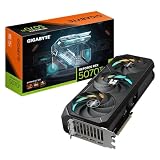
GIGABYTE RTX 5060 WINDFORCE OC 8G
The most affordable Blackwell card here, the 5060 8GB is a fantastic 1080p performer with DLSS 4 support. Its dual-fan WINDFORCE cooler fits nearly any case.
Frequently Asked Questions
Which card offers the best value?
The RX 9070 XT and RTX 5060 Ti 16GB both deliver outstanding performance per dollar, depending on whether you favor AMD or NVIDIA.
Is 8GB of VRAM still enough?
For 1080p gaming, yes. For 1440p and beyond, 12GB or 16GB is strongly recommended to avoid texture bottlenecks.
What is DLSS 4 and does it matter?
DLSS 4 is NVIDIA’s AI upscaling and frame-generation tech. It can significantly raise frame rates, making it a meaningful advantage on RTX 50 cards.
Do I need PCIe 5.0?
Not strictly. These cards run fine on PCIe 4.0 slots, but PCIe 5.0 offers a bit of future headroom.
Final Thoughts
The top GPU cards of 2026 give buyers real choice at every tier. For 4K and creative work, the RTX 3090 and RX 9070 XT lead this group; for high-refresh 1440p, the RTX 5070 and 5060 Ti are the smart picks; and for budget 1080p, the RTX 5060 8GB is hard to beat. Decide on your resolution first, then let VRAM and features guide the final call, and you will land on a card that keeps you gaming happily for years.