Key takeaways
- VRAM capacity: Aim for at least 8GB for 1080p/1440p gaming and 12GB or more if you play at 4K or use ray tracing and DLSS frame generation heavily.
- GPU architecture generation: Newer RTX 50-series cards support DLSS 4 and improved ray tracing cores, giving you better performance headroom for high-refresh settings.
- Power supply and case fit: Check your PSU wattage and case clearance against the card’s power draw and slot width before buying a standalone GPU upgrade.
- Prebuilt vs. component upgrade: A full prebuilt desktop simplifies cooling, RAM, and motherboard compatibility, while a standalone GPU is cheaper if your current rig already has a strong CPU and PSU.
- Target resolution and refresh rate: Match the card’s tier to your monitor; a mid-range GPU is wasted on a 4K 144Hz display, just as a flagship card is overkill for 1080p 60Hz.
What's inside
Dialing in the right Nvidia settings can mean the difference between choppy frame drops and buttery-smooth, tear-free gameplay, but the software side only gets you so far if your GPU is already outmatched by modern titles. Before you touch a single slider in the Nvidia Control Panel or GeForce Experience, you need hardware that can actually deliver the frame rates those settings are optimizing for.
This guide covers the best Nvidia-powered graphics cards and prebuilt gaming PCs for 2026, along with practical advice on choosing the right GPU tier for your resolution and refresh rate, plus real reviews of the top options so you can pair the correct hardware with the ideal settings for your setup.
As an Amazon Associate we earn from qualifying purchases at no extra cost to you. Product prices and availability are accurate as of the date shown and are subject to change.



🎮 Get More From Your Setup — Free
Prime Gaming gives you free PC games every month, in-game loot, and a free Twitch channel sub — plus fast free shipping on all the gear above. New members get a 30-day free trial.
Watch: Best Nvidia Settings For Gaming — Video Review
How to Choose a Nvidia Settings For Gaming (2026)
- VRAM capacity: Aim for at least 8GB for 1080p/1440p gaming and 12GB or more if you play at 4K or use ray tracing and DLSS frame generation heavily.
- GPU architecture generation: Newer RTX 50-series cards support DLSS 4 and improved ray tracing cores, giving you better performance headroom for high-refresh settings.
- Power supply and case fit: Check your PSU wattage and case clearance against the card’s power draw and slot width before buying a standalone GPU upgrade.
- Prebuilt vs. component upgrade: A full prebuilt desktop simplifies cooling, RAM, and motherboard compatibility, while a standalone GPU is cheaper if your current rig already has a strong CPU and PSU.
- Target resolution and refresh rate: Match the card’s tier to your monitor; a mid-range GPU is wasted on a 4K 144Hz display, just as a flagship card is overkill for 1080p 60Hz.
The Best Nvidia Settings For Gaming (2026)s Reviewed
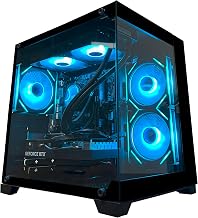
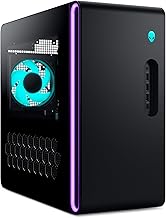
Alienware Aurora Gaming Desktop (RTX 5070)
This prebuilt pairs an RTX 5070 with an Intel Core Ultra 7 265F and 32GB of DDR5, giving you a balanced system that handles high refresh rates at 1440p with DLSS and ray tracing settings maxed out. The Wi-Fi 7 and 2.5Gb Ethernet also make it a smart pick for competitive online play where latency matters.
ASUS Dual RTX 3050 OC Edition
Budget-focused and efficient, this 2-slot card is best suited for 1080p gaming with moderate settings and DLSS upscaling doing the heavy lifting on demanding titles. It’s an easy drop-in upgrade for older PCIe 4.0 systems that don’t need flagship-level power.
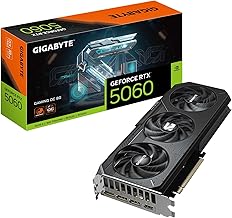
GIGABYTE RTX 5060 Gaming OC 8G
The WINDFORCE cooling system keeps this card running cool under sustained load, and its GDDR7 memory on a PCIe 5.0 interface delivers strong 1440p performance for the price. It’s a solid middle ground for gamers who want next-gen DLSS features without stepping up to the 5070 tier.
ASUS TUF Gaming RTX 5070 OC Edition
Built with military-grade components and a protective PCB coating, this card is designed for longevity as much as raw performance, comfortably pushing high frame rates at 1440p and enabling 4K with DLSS assistance. The dual HDMI/DP 2.1 outputs also future-proof it for high-refresh 4K monitors.
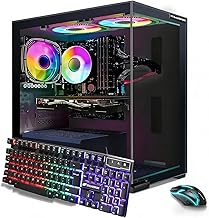
Skytech Storm Gaming PC (RTX 5060 Ti)
This prebuilt offers excellent value by combining a Ryzen 5 5500 with an RTX 5060 Ti and 8GB of VRAM, making it a capable 1440p rig right out of the box. The 650W Gold PSU leaves headroom for future GPU upgrades without needing a full power supply swap.
Frequently Asked Questions
What Nvidia Control Panel settings improve gaming performance most?
Setting “Power Management Mode” to Prefer Maximum Performance and enabling Low Latency Mode typically deliver the most noticeable improvements, alongside matching your in-game resolution scaling to your monitor’s native resolution.
Should I enable DLSS and Frame Generation for every game?
DLSS is generally safe to enable for a free performance boost, but Frame Generation works best in single-player titles since it can introduce input latency that’s noticeable in fast-paced competitive shooters.
Do I need an RTX 5080 for 4K gaming, or is a 5070 enough?
An RTX 5070 can handle 4K gaming with DLSS upscaling in most titles, but the RTX 5080 provides more consistent native 4K performance and headroom for fully maxed-out ray tracing settings.
Is a prebuilt PC or a standalone GPU upgrade better value?
A prebuilt makes more sense if you need a full system overhaul including CPU and RAM, while a standalone GPU is the better investment if your existing motherboard, PSU, and processor are still capable.
Final Thoughts
For most gamers chasing the best balance of price and performance in 2026, the ASUS TUF Gaming RTX 5070 OC Edition and the GIGABYTE RTX 5060 Gaming OC 8G stand out as excellent standalone upgrades, while the Alienware Aurora Gaming Desktop is the top pick for anyone wanting a fully optimized system with zero setup hassle.