Key takeaways
- Strong value: Excellent 1440p and entry 4K performance for the price.
- Generous VRAM: 16GB of GDDR6 handles high-texture and future titles well.
- Modern outputs: DisplayPort 2.1 and HDMI 2.1 across the lineup.
- Cooling variety: Options for compact builds and quiet, high-airflow rigs.
What's inside
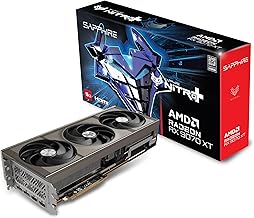
AMD’s Radeon RX 9070 XT has quickly become one of the most talked-about graphics cards for high-refresh 1440p and entry-level 4K gaming, thanks to its RDNA 4 architecture, 16GB of GDDR6, and strong price-to-performance ratio. The tricky part for buyers is not deciding whether to get one, but choosing between the many board partner versions, each with its own cooler design, factory overclock, and acoustic profile.
This review breaks down the key RX 9070 XT variants, from GIGABYTE’s Gaming OC and ICE editions to models from PowerColor, ASRock, ASUS, and XFX. We will focus on what actually differs between them, cooling, clock speeds, physical size, and noise, so you can pick the card that fits your case, your budget, and your performance goals without overpaying for features you will never notice.
As an Amazon Associate we earn from qualifying purchases at no extra cost to you. Product prices and availability are accurate as of the date shown and are subject to change.




🎮 Get More From Your Setup — Free
Prime Gaming gives you free PC games every month, in-game loot, and a free Twitch channel sub — plus fast free shipping on all the gear above. New members get a 30-day free trial.
Watch: Rtx 9070 Xt: Review & Buyer’s Guide — Video Review
Design & Build
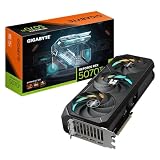
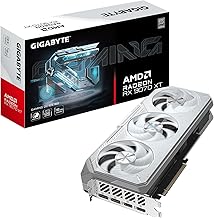
Cooler engineering is where these cards separate. The GIGABYTE Gaming OC and its ICE white variant use large triple-fan Windforce-style coolers with reinforced structures and server-grade thermal gel, occupying roughly 2.7 slots. The ASUS Prime keeps to a slightly more compact 2.5-slot axial-tech design with dual BIOS and GPU Guard bracing, while the ASRock Challenger and XFX Swift both employ triple-fan setups aimed at balancing airflow and size. The PowerColor Reaper offers a leaner profile for tighter builds. All support PCIe 5.0 and modern DisplayPort 2.1 and HDMI 2.1 outputs.
Performance
At the silicon level these cards are very close, since they share the same RX 9070 XT GPU and 16GB of GDDR6. Real-world differences come from factory overclocks and cooling headroom. The ASRock Challenger OC ships with a 2970MHz boost clock and robust triple-fan cooling that sustains high clocks under load, while the GIGABYTE Gaming OC models and ASUS Prime OC edition offer modest out-of-box overclocks. In practice, expect excellent 1440p performance at high refresh rates and capable 4K gaming, with the better-cooled cards holding boost clocks slightly longer during extended sessions.
Pros & Cons
- Strong value: Excellent 1440p and entry 4K performance for the price.
- Generous VRAM: 16GB of GDDR6 handles high-texture and future titles well.
- Modern outputs: DisplayPort 2.1 and HDMI 2.1 across the lineup.
- Cooling variety: Options for compact builds and quiet, high-airflow rigs.
- Large coolers: Triple-fan models like the GIGABYTE are physically big.
- Minor performance gaps: Overclock differences between cards are small.
- Power draw: Ensure your PSU meets the recommended wattage.
Alternatives to Consider
If you game primarily at 1080p, a lower-tier RDNA 4 or previous-generation card offers similar frame rates for less money. Buyers who rely heavily on ray tracing or specific creative software may want to cross-shop NVIDIA’s competing GeForce cards, which can lead in those niches. But for raw rasterized performance per dollar at 1440p, the RX 9070 XT lineup is a compelling sweet spot.
Frequently Asked Questions
Is the RX 9070 XT good for 4K gaming?
Yes, it handles 4K capably in most titles, especially with upscaling enabled. Its real strength, however, is high-refresh 1440p, where it delivers excellent frame rates.
Which RX 9070 XT version should I buy?
For compact cases, the PowerColor Reaper or ASUS Prime fit better. For maximum cooling and quiet operation, the GIGABYTE Gaming OC or ASRock Challenger triple-fan models are ideal.
How much VRAM does the RX 9070 XT have?
All versions come with 16GB of GDDR6, which is plenty for high texture settings today and provides good headroom for demanding future games.
What power supply do I need?
Check each card’s recommended wattage, as triple-fan overclocked models draw more power. A quality PSU with sufficient headroom and the correct connectors is essential for stability.
Verdict
The RX 9070 XT is one of the best-value gaming graphics cards available, and every board partner version delivers the same strong core performance. The ASRock Challenger OC stands out for its high boost clock and cooling, the GIGABYTE Gaming OC is the pick for quiet triple-fan builds, and the ASUS Prime suits slightly tighter cases. Choose based on your case size and cooling preference, since performance differences between them are minimal.