Our Top Picks
 RG35XX H Retro Handheld Game Console Linux System2.49 x 3.45 x 0.71 inches3.45 x 2.49 x 0.71 inches0.65 poundsCheck on Amazon
 Retroid Pocket Flip 2 Retro Game Console5.5 Inches5.53 x 3.52 x 0.96 inches0.7 poundsCheck on Amazon
 Anbernic RG40XX H Retro Handheld Game Consoles RG40XXHMedium6.35 x 3.08 x 0.62 inches0.45 PoundsCheck on Amazon
The best retro handheld for emulation in this lineup is the Retroid Pocket Flip 2. It runs Android on a Snapdragon 865 chip, has a 5.5-inch 1080p AMOLED screen, Hall effect sticks and a 5000mAh battery, which gives it enough horsepower for systems that overwhelm cheaper Linux handhelds, such as PlayStation 2, GameCube, Dreamcast and PSP. If your tastes stop at the 8-bit, 16-bit and PlayStation 1 eras, the Anbernic RG35XX H is the better value, with a huge community and strong custom firmware support. If you want the biggest screen for the least complexity, the 5.5-inch RG52MINI is the widescreen budget option. This guide covers eight handhelds, explains what each chip class can realistically emulate, and flags the spec details to verify on each product page.
Top 3 Picks
Best overall: Retroid Pocket Flip 2. The Snapdragon 865 platform, 1080p AMOLED display and clamshell design make it the most capable and most versatile device here. It is also an Android computer, so it can run streaming apps and many other applications.
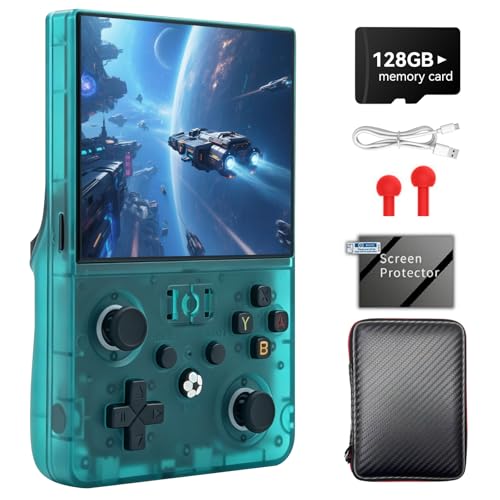
R36MAX 2 Retro Handheld Game Console, 4.5" IPS HD Display
Included for 'Best Retro Handheld for Emulation in 2026' because the listing specifies 4.5" IPS HD Display, details this guide uses to compare options.
View on Amazon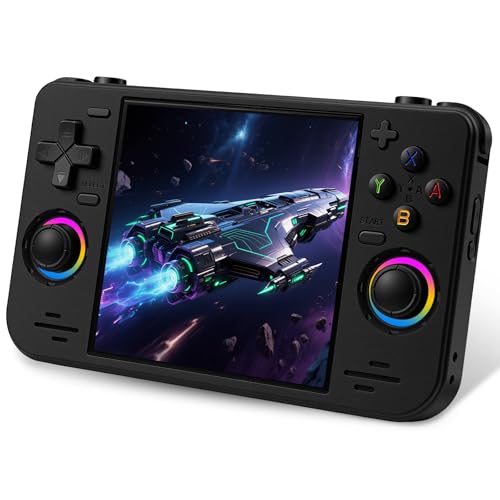
RF40H Handheld Game Console, 4.0" Retro Gaming Console Preloaded 20,000+ Classic Games, Open Source Linux System, Support WiFi Online Play, Portable Pocket Hand Held Video Game (Black)
Included for 'Best Retro Handheld for Emulation in 2026' because the listing specifies 4.0" Retro Gaming Console Preloaded 20 and 000+ Classic Games, details this guide uses to compare options.
View on AmazonRG35XX H Retro Handheld Game Console Linux System 3.5''IPS Screen 64G TF Card with 3545+ Preinstalled Games RG 35XXH Portable Gaming Console RG35XXH Support 5G WiFi Bluetooth HDMI Purple
Included for 'Best Retro Handheld for Emulation in 2026' as a relevant option in this category; details come from the product listing.
View on AmazonRetroid Pocket Flip 2 Retro Game Console, 5.5" AMOLED 1080P Display, Hall Effect Sticks, 5000mAh Battery, Portable Android Handheld (Black)
Included for 'Best Retro Handheld for Emulation in 2026' because the listing specifies 5.5" AMOLED 1080P Display and Hall Effect Sticks, details this guide uses to compare options.
View on AmazonAnbernic RG40XX H Retro Handheld Game Consoles RG40XXH Retro Gaming Console 64 TF Card Preloaded Games 5000+ Portable Gaming Console Linux System 4.0'' IPS Screen WiFi Bluetooth HD and TV Output Black
Included for 'Best Retro Handheld for Emulation in 2026' as a relevant option in this category; details come from the product listing.
View on Amazon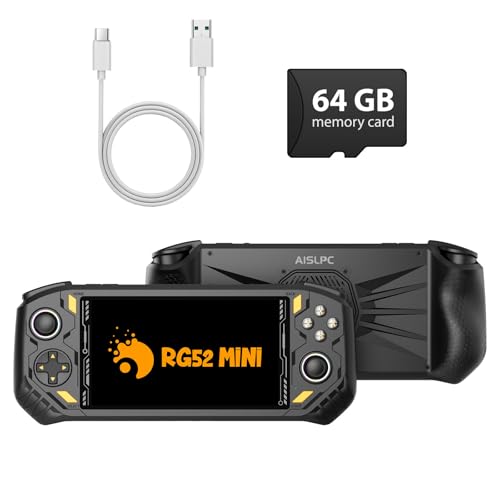
RG52MINI Retro Handheld Game Console, 5.5 Inch IPS Screen, Portable Dual System, 64GB Support 30+ Emulator&22000+ Classic Games, WiFi Networked Fighting, HDMI TV Output, 5000mAh Battery(Black 64GB)
Included for 'Best Retro Handheld for Emulation in 2026' because the listing specifies 5.5 Inch IPS Screen and Portable Dual System, details this guide uses to compare options.
View on Amazon
RG43H Pro Retro Handheld Game Console,Dual Game System,Powerful RK3562 Chip
Included for 'Best Retro Handheld for Emulation in 2026' because the listing specifies Dual Game System and Powerful RK3562 Chip, details this guide uses to compare options.
View on Amazon
Retro Handheld Game Console, Built-in 400 Classic Video Games, Portable Mini Video Gaming Emulator with 3.0" IPS Screen and Rechargeable Battery, Retro Gaming Device Player
Included for 'Best Retro Handheld for Emulation in 2026' because the listing specifies Built-in 400 Classic Video Games and Retro Gaming Device Player, details this guide uses to compare options.
View on AmazonBest value: Anbernic RG35XX H. A 3.5-inch 640 by 480 screen, dual analog sticks and a mature Linux ecosystem with community firmware make it the dependable choice for classic consoles up through PlayStation 1 and Game Boy Advance, with some Nintendo 64 and Dreamcast titles in reach.
Best for a big screen on a budget: RG52MINI. A 5.5-inch IPS display, a Rockchip RK3562 chip and a 5000mAh battery give it more screen and more processing headroom than the small 3.5- and 4-inch Linux handhelds, at the cost of less polish and community support.
Quick Comparison
| Product | Best for | Key specs (as listed) |
|---|---|---|
| R36MAX 2 | Compact 4:3 screen for classic systems | 4.5-inch IPS HD display, Linux handheld |
| RF40H | Pocketable square-screen retro play | 4.0-inch screen, open-source Linux, Wi-Fi online play |
| Anbernic RG35XX H | Community firmware and value | 3.5-inch IPS, Linux, 64GB card |
| Retroid Pocket Flip 2 | Heavier systems and Android apps | 5.5-inch AMOLED 1080p, Hall effect sticks, 5000mAh, Android |
| Anbernic RG40XX H | Horizontal 4-inch classic gaming | Linux, 64GB card, preinstalled games |
| RG52MINI | Widescreen budget gaming | 5.5-inch IPS, dual system, 64GB card, 30+ emulators |
| RG43H Pro | Dual-boot tinkering on a small screen | RK3562 chip, dual game system |
| 3.0-inch 400-game handheld | Kids and simple nostalgia | 3.0-inch IPS, 400 built-in games, rechargeable battery |
How We Chose
We built this ranking from published research. We read the specifications each listing publishes, cross-checked chip and screen details against independent published reviews and manufacturer documentation, and considered common themes in community discussions about these device families. The criteria were, in order: processing platform, because the chip determines which systems run well; screen size, resolution and aspect ratio; battery capacity; controls, including analog sticks and shoulder buttons; software environment and community support; and how clearly the listing states its specifications. Many handheld listings from small sellers are vague or vary between sellers, so wherever a detail could not be confirmed we say so and point you to what to check.
1. R36MAX 2 – Best for a Compact 4:3 Screen on Classic Systems
As an Amazon Associate we earn from qualifying purchases at no extra cost to you.
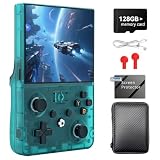
The R36MAX 2 is a Game Boy-style vertical handheld with a 4.5-inch IPS display. It is a sequel to the R36 Max, which had a 4-inch square screen; the second version moves to a 4:3 panel at 1024 by 768 according to several published descriptions. The listing title in this list carries only the model name and screen size, so confirm other details with the seller. Many unbranded listings of this name vary in RAM, storage and Wi-Fi support.
Key specs
- Screen: 4.5-inch IPS (1024 by 768 per published descriptions)
- Processor: commonly described as a Rockchip RK3326 quad-core chip with Mali-G31 graphics; verify on the page
- Battery: described as 4000mAh with Type-C charging, roughly six hours of play
- Controls: Hall sensor analog sticks and a detachable grip in some listings
- Software: open-source Linux with 30-plus emulators in the family description
- Memory and storage: varies by seller, so confirm
Who it suits
The R36MAX 2 suits players whose collection centers on 8-bit and 16-bit systems: NES, Game Boy, Game Boy Color, Game Boy Advance, Super Nintendo, Genesis, Master System, Neo Geo and arcade classics from the early 1990s. The 4:3 aspect ratio matches the original shape of most of those consoles, so a 1024 by 768 screen shows 4:3 games without stretching. Its vertical form factor also fits in a jeans pocket more easily than a landscape device with sticks on either side of the screen.
What the RK3326 can run
The RK3326 is a low-power chip with four Cortex-A35 cores. Experience reported in community writeups suggests it handles PlayStation 1 well, many Sega CD and Saturn-era titles unevenly, and Nintendo 64 and PSP only partially. Dreamcast and anything more demanding are generally beyond its reach. Treat it as a high-quality classic-gaming machine rather than a 3D powerhouse.
Strengths
The screen is large for the form factor, and a 4:3 IPS panel is a good match for retro games. A 4000mAh battery is respectable for a chip that sips power. Hall effect sticks are less prone to drift than potentiometer sticks, an important reliability benefit. Open Linux firmware means cheap and active community support for themes and tools.
Weaknesses to plan for
Seller variation is the main hazard: reports describe differences in memory, storage and Wi-Fi among listings with the same name. The RK3326 platform is aging and is outclassed by newer chips for 3D systems. Preloaded game counts, which sellers advertise in the thousands, should not be a buying factor: using ROMs you do not own raises copyright concerns, and the ideal approach is to load backups of games you own.
Pros
- Large 4.5-inch 4:3 screen in a compact body
- Hall effect sticks resist drift
- Suited to 8-bit, 16-bit and PlayStation 1 libraries
- Type-C charging and a sizable battery
Cons
- Limited power for N64, PSP and later systems
- Specifications vary between sellers
- Name is shared by several slightly different products
- Wi-Fi and memory need confirming
How it compares
The closest sibling is the RF40H, which has a smaller, square screen. Choose the R36MAX 2 if you want a larger display. Against the Anbernic RG35XX H, the R36MAX 2 has the bigger screen, but the RG35XX H has a stronger chip, better software support and a more thoroughly documented hardware design.
2. RF40H – Best for Pocketable Square-Screen Retro Play
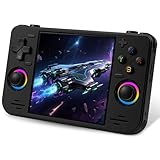
The RF40H is a small vertical handheld with a 4.0-inch screen. The listing describes a retro gaming console running an open-source Linux system, with Wi-Fi for online play and a claim of 20,000 or more preloaded classic games. Other listings of the same model indicate a 720 by 720 square IPS panel and a 4000mAh battery. The maker’s chip is not named in the listing text, so treat the processor as unconfirmed: a similar 4-inch model is described with an RK3326, which would put it in the same performance class as the R36MAX 2, but that is an inference.
Key specs
- Screen: 4.0-inch IPS (720 by 720 in other listings of this model)
- Software: open-source Linux
- Battery: 4000mAh in other listings; confirm
- Connectivity: Wi-Fi advertised for online play
- Included: a microSD card preloaded with games, per the listing
Who it suits
This is a pocket companion for lighter retro gaming. A square screen suits Game Boy, Game Boy Color, Game Boy Advance, Neo Geo Pocket and arcade-style vertical shooters better than it suits widescreen systems. At 720 by 720, a Game Boy Advance picture at 3 times integer scaling uses 720 by 480 pixels, leaving black bars above and below; a 240 by 160 GBA image therefore does not fill the panel, but it remains sharp. Players who like the compact shape of old Game Boy-era devices will find the form factor appealing.
Strengths
The format is light and easy to carry, and a square panel at 720 by 720 has plenty of pixels for crisp scaling of low-resolution systems. A 4000mAh class battery is generous for the likely chip class. Wi-Fi allows you to transfer files wirelessly and update firmware or themes in many Linux frontends. The open-source Linux base makes it possible to install community software, though you should confirm which operating system image your unit uses.
Weaknesses to plan for
The unclear chip and generic listing are the central problem. If you buy it expecting PlayStation 1 or Nintendo 64 performance, you may be disappointed. The huge preloaded game count is a marketing number that you should ignore: preinstalled collections often contain unlicensed copies, and a smaller library of games you own and have backed up will serve you better. Check the return window and test the buttons, D-pad and sticks soon after arrival.
Safety note
Like all lithium battery devices, a handheld should be charged with a quality USB charger, kept away from heat, and retired if the case bulges. Avoid charging it overnight on a bed or sofa.
Pros
- Pocketable 4-inch body
- Square screen suits Game Boy-era libraries
- Wi-Fi and open Linux system
- Comfortable battery capacity in related listings
Cons
- Chip is not named in the listing
- Square panel leaves bars on widescreen systems
- Preloaded game count is a poor basis for buying
- Limited track record for the brand
How it compares
Compared with the R36MAX 2, the RF40H has a smaller panel and similar likely performance, so the R36MAX 2 is the better pick for a bigger 4:3 view, while the RF40H is the more pocketable. Compared with the RG40XX H, which is also four inches, the RF40H is a vertical device, while the RG40XX H is a horizontal one with a proven chip and a stronger software ecosystem.
3. Anbernic RG35XX H – Best for Community Firmware and Value

The Anbernic RG35XX H is a horizontal handheld with a 3.5-inch 640 by 480 IPS screen and a Linux system, supplied with a 64GB card. Anbernic is among the best-known makers in the category, and the RG35XX line has an unusually large community. The H model adds dual analog sticks to the earlier layout. Established specifications for the family include an Allwinner H700 quad-core Cortex-A53 chip at 1.5GHz with 1GB of RAM and a battery in the 3,300mAh range, though you should confirm figures on the product page.
Key specs
- Screen: 3.5-inch IPS, 640 by 480 (4:3)
- Processor: Allwinner H700, quad-core Cortex-A53, per family specifications
- Memory: 1GB RAM, per family specifications
- Storage: 64GB card, per the listing
- Controls: dual analog sticks, D-pad, face and shoulder buttons
- Software: Linux with community alternatives
Who it suits
The RG35XX H suits anyone who wants a no-nonsense retro handheld and values support more than raw power. The 640 by 480 screen is a perfect match for 4:3 consoles. A 256 by 224 Super Nintendo image scales 2 times to 512 by 448, filling nearly the entire 480-pixel height with crisp pixels, while Game Boy Advance games scale to 480 by 320 or fill the screen with slight scaling. It is a good first handheld and a good gift for anyone who likes tinkering.
What the H700 can run
Community reports indicate smooth emulation of the 8-bit and 16-bit eras, Game Boy Advance, PlayStation 1, Sega CD, Neo Geo, CPS arcade boards and most Nintendo 64 titles with game-specific settings. Dreamcast and PSP are playable in part, with demanding titles needing lower resolution. PlayStation 2 and GameCube are out of reach. Plan around the 1GB of RAM and treat any heavier system as an experiment.
Strengths
The software ecosystem is the main attraction. Community firmware projects such as muOS and Knulli give the RG35XX family cleaner menus, better theming and more consistent emulator settings than stock firmware, according to community documentation. Standard parts and a widely owned design mean help is easy to find. Dual analog sticks add support for N64, PSP and Dreamcast games that need them. The compact body is comfortable for small hands.
Weaknesses to plan for
The 3.5-inch screen is small compared with 4.3- to 5.5-inch rivals. Plastic shells and the sticks feel budget-grade. Battery life is decent but not remarkable. Stock firmware is serviceable, but you will likely want to try a community alternative, which means flashing a microSD card. Preloaded games on included cards raise the same legal questions as on other devices, so build your library from your own backups.
Pros
- Large community and multiple firmware options
- Good fit for 8-bit through PlayStation 1 libraries
- Dual analog sticks
- Pocketable and comfortable
Cons
- Small 3.5-inch screen
- 1GB of RAM limits heavier systems
- Stock firmware is basic
- Plastic build
How it compares
The RG40XX H is its larger sibling, with a 4-inch screen on the same family design. Choose the RG35XX H for pocketability, the RG40XX H for screen size. Compared with the RG43H Pro, the RG35XX H has a smaller screen but a far larger support community, and one published review of the RG43H Pro explicitly favors the RG35XX H when the two are comparable. Compared with the Retroid Pocket Flip 2, the Anbernic is simpler, smaller and far less capable.
4. Retroid Pocket Flip 2 – Best for Heavier Systems and Android Apps

The Retroid Pocket Flip 2 is a clamshell handheld: a hinged design that closes to protect the screen and opens to a 5.5-inch AMOLED display at 1080p. It runs Android on the Snapdragon 865 platform, the same chip family that powered flagship phones in 2020, and it includes Hall effect sticks and a 5000mAh battery, according to the listing. Because it is an Android device, it behaves like a phone-class computer and installs apps from Android app stores.
Key specs
- Screen: 5.5-inch AMOLED, 1920 by 1080
- Processor: Snapdragon 865 (established chip for the Retroid Pocket Flip 2)
- Controls: Hall effect sticks
- Battery: 5000mAh
- Software: Android handheld; confirm the installed version and the RAM and storage tier on the page
- Design: clamshell with a folding screen
Who it suits
This is the pick for players who want to go beyond the 16-bit and PlayStation 1 eras. The Snapdragon 865 is powerful enough that community reports show PlayStation 2, GameCube, Dreamcast, PSP, Nintendo DS and 3DS emulation running well, with many titles at higher internal resolution than the original consoles. It also works as a streaming device for services and local game streaming apps. If your retro library includes later systems, this is the only handheld in this list that is truly built for them.
Why the screen matters
AMOLED panels have black levels and color saturation that LCD handhelds cannot match, and the 1080p resolution gives room for integer scaling. A Super Nintendo image at 224 pixels tall scales 4 times to 896, leaving a small border on a 1080-pixel-tall display, and filters or shaders can emulate the look of a CRT. The 16:9 shape means that 4:3 games show black bars at the sides unless stretched, so choose your scaling mode.
Strengths
Raw performance is the headline. The clamshell design protects the screen and sticks in a bag, which is a practical benefit for a device you carry. Hall effect sticks avoid drift. A 5000mAh battery supports long sessions on lighter systems. Android means access to a wide range of frontends and the ability to run native Android games. Retroid has an established community with regular firmware updates.
Weaknesses to plan for
Complexity and cost of ownership are higher: Android needs setup, and each emulator has its own settings. The hinge adds a possible point of wear. Heavy emulation drains the battery faster, so the 5000mAh cell may deliver far fewer hours on PlayStation 2 than on Super Nintendo. Demanding titles can run warm. Always charge with a quality charger, avoid leaving the device in a hot car, and stop using it if the battery swells.
Pros
- Snapdragon 865 handles PS2, GameCube, Dreamcast and PSP
- 1080p AMOLED screen
- Clamshell protects the display
- Hall effect sticks and a large battery
Cons
- More setup than Linux handhelds
- Hinge adds a wear point
- Battery life varies strongly with the system emulated
- Widescreen shows bars on 4:3 games
How it compares
The nearest alternative in capability is none of the others; the Rockchip RK3562 handhelds, the RG52MINI and RG43H Pro, are well below it in performance. The Anbernic RG35XX H is far smaller and cheaper to run, but handles only older systems. Choose the Flip 2 if you want one device for nearly every retro era. Choose a Linux handheld if you want a simple, fast-booting machine for classics.
5. Anbernic RG40XX H – Best for a Horizontal 4-Inch Classic Handheld

The Anbernic RG40XX H grows the RG35XX H concept to a 4-inch, 640 by 480 IPS screen while keeping the horizontal layout and dual analog sticks. It runs a Linux system, ships with a 64GB card and advertises more than 5,000 preloaded games. Family specifications indicate the same Allwinner H700 platform as the RG35XX H, with 1GB of RAM and a battery of about 3,200mAh; confirm these figures on the product page.
Key specs
- Screen: 4.0-inch IPS, 640 by 480 (4:3)
- Processor: Allwinner H700, quad-core Cortex-A53, per family specifications
- Storage: 64GB card included
- Controls: dual analog sticks, D-pad, shoulder buttons
- Software: Linux; community firmware is available for the RG40XX family
Who it suits
This is a good match for people who want the RG35XX experience with a little more screen. The extra half-inch makes text-heavy RPGs and the fine detail of 16-bit sprites easier to read, and the larger body offers a more comfortable grip for adult hands. It suits a main retro handheld for a collection built around 8-bit, 16-bit, Game Boy Advance and PlayStation 1 games, with N64 and Dreamcast as bonus capabilities.
A worked scaling example
Game Boy Advance games output 240 by 160 pixels. On a 640 by 480 screen, 2 times scaling yields 480 by 320, leaving borders, while 2.67 times fills the width at 640 by 427, using non-integer scaling that can add slight shimmer. NES games at 256 by 240 scale 2 times to 512 by 480, filling the height exactly with side borders. Super Nintendo’s common 256 by 224 mode scales 2 times to 512 by 448. Since 4:3 consoles match this panel’s shape, most classic games look natural without stretching.
Strengths
The RG40XX H inherits the family’s compatibility with community firmware, so users can pick a cleaner interface than the stock one. Physical controls are balanced for a handheld this size. The 4-inch screen is the sweet spot between portability and legibility, and many players consider it the best size for 4:3 retro systems. Anbernic’s long history in the category means accessories, cases and tutorials are easy to find.
Weaknesses to plan for
Performance matches the RG35XX H, so the extra size does not help with demanding games. A battery near 3,200mAh powers a larger screen, so expect a few hours of play rather than a whole day on heavier systems. Preloaded game counts of 5,000 or more are marketing figures and should not drive a purchase; building a legal library from your own backups is the better approach.
Pros
- Larger 4-inch 4:3 screen than the RG35XX H
- Same proven H700 platform and community support
- Dual analog sticks
- Comfortable horizontal grip
Cons
- Not suited to PS2, GameCube or demanding PSP games
- Battery capacity is moderate for the screen size
- Plastic construction
- Same 1GB RAM ceiling as the smaller sibling
How it compares
Choose between the RG35XX H and RG40XX H on screen size and pocket space alone, since the performance class is the same. Against the RF40H, the RG40XX H has the stronger software story. Against the RG43H Pro, the RG40XX H has a slightly smaller screen but a more established ecosystem and a proven chip family, while the RG43H Pro uses a newer chip with a different set of strengths and limitations.
6. RG52MINI – Best for Widescreen Budget Gaming
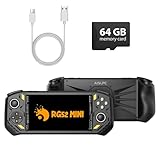
The RG52MINI is a large-screen Linux handheld with a 5.5-inch IPS display, a portable dual-system design, a 64GB card and a claim of 30-plus emulators. According to published reviews, it uses a Rockchip RK3562 quad-core Cortex-A53 chip running at 2.0GHz with a Mali-G52 graphics unit and a 5000mAh battery. The display is described as 720 by 1280, used in landscape as 1280 by 720. RAM is reported as 2GB by one independent reviewer, while the seller listing mentions a different configuration, so confirm the memory on the page.
Key specs
- Screen: 5.5-inch IPS, 1280 by 720 in landscape use
- Processor: Rockchip RK3562, quad-core, per published reviews
- Battery: 5000mAh, with roughly six to eight hours claimed
- Software: dual system (EmuELEC and RGB Box, per reviews)
- Ports and wireless: USB-C, microSD, mini HDMI, 3.5mm audio, 2.4GHz Wi-Fi and no Bluetooth in reviews
- Physical: about 226 by 90 by 19 millimeters and 308 grams, per a published review
Who it suits
This device is for players who want a wide, bright screen and PlayStation 1-class and better performance without spending Android-handheld money. The 16:9 panel suits widescreen hacks and modern shapes, and the size is comfortable for long sessions. Mini HDMI output means you can connect it to a television, which makes it work as a small console. It also suits shoppers who prioritize hardware over software polish and are comfortable with a smaller community.
What the RK3562 can run
The RK3562 is faster than the RK3326 in older budget handhelds. Reviews describe PlayStation 1, Sega Saturn partially, Nintendo 64 and PSP as mostly playable, with demanding titles stuttering, and Dreamcast as hit or miss. A budget Cortex-A53 chip is not a Snapdragon 865: PlayStation 2 and GameCube are beyond it. Plan on 8-bit, 16-bit, PlayStation 1, many N64 games and a selection of PSP and Dreamcast titles.
Battery arithmetic
A 5000mAh cell at a nominal 3.7 volts stores about 18.5 watt-hours. A device drawing 3 watts would run for around 6 hours, and one drawing 2 watts for roughly 9 hours, before losses. Screen brightness and system complexity change the draw, so a Super Nintendo session may last far longer than a PSP session.
Strengths
The screen is the highlight. It is large, sharp and well suited to widescreen play. The 5000mAh battery is generous. Dual analog sticks, Hall effect triggers and HDMI out add flexibility. The chip is a step up from the typical RK3326 or H700 devices.
Weaknesses to plan for
Software polish and community support lag behind Anbernic and Retroid, and the exact firmware shipped may vary. Bluetooth is absent according to reviews, so wireless controllers and headphones may not connect. Memory configuration is unclear. Advertised library counts of 22,000-plus games are a marketing figure, partly tied to downloadable content, and should not influence your decision.
Pros
- Large 5.5-inch widescreen display
- Faster chip than RK3326 and H700 handhelds
- 5000mAh battery and HDMI output
- Hall effect triggers and dual sticks
Cons
- Limited community and firmware support
- No Bluetooth in published reviews
- Memory figures are inconsistent between sources
- Not capable of PS2 or GameCube
How it compares
The RG52MINI shares its chip with the RG43H Pro, so the question is screen size and shape: 5.5-inch widescreen versus 4.3-inch 4:3. Against the Retroid Pocket Flip 2, it is a fraction as capable but a simpler, lighter device. Against the RG35XX H, it offers more screen and more processing power, while giving up community depth.
7. RG43H Pro – Best for Dual-Boot Tinkering on a Small 4:3 Screen

The RG43H Pro is a retro handheld built around the Rockchip RK3562 chip and a dual game system. Published reviews describe it as a 4.3-inch device with a 1024 by 768 IPS screen, sold under generic branding rather than by Anbernic, despite the similar naming. Reviews report a quad-core Cortex-A53 chip with Mali-G52 graphics, 1GB of RAM on the units reviewed, 4GB of internal storage with a microSD card included, and a 4000mAh battery. The listing title in this roundup is brief, so confirm the screen size and battery on the product page.
Key specs
- Screen: 4.3-inch IPS, 1024 by 768 (4:3), per published reviews
- Processor: Rockchip RK3562, quad-core Cortex-A53 up to 2.0GHz
- Memory: 1GB RAM on many units; 2GB variants exist elsewhere
- Battery: 4000mAh, with around six hours reported by one reviewer
- Software: dual boot between EmuELEC and RGBOX
- Connectivity: HDMI output, 2.4GHz Wi-Fi, USB-C, no Bluetooth reported
- Controls: dual analog sticks with RGB rings, Hall effect triggers, vibration
Who it suits
This handheld is for tinkerers who like trying alternative software and want a screen that is larger than the RG35XX class. The 4:3 shape at 1024 by 768 gives integer scaling for several systems and a pleasant fit for 4:3 consoles. Dual boot means you can switch between operating systems, which is useful if one environment handles a given emulator better than the other. Kids and casual players can also use it as an all-round retro gaming console connected to a television via HDMI.
What to expect from the chip
With 1GB of RAM and a Cortex-A53 CPU at 2.0GHz, the RG43H Pro handles PlayStation 1 comfortably, many Nintendo 64 games and PSP titles with lowered settings. Reviewers note that demanding games stutter because of the memory limit. It is a step above the RK3326 handhelds in this list and a step below the Snapdragon-class Retroid.
Strengths
The 4:3 screen and compact size are an excellent match for classic consoles. Hall effect triggers, vibration and HDMI output are unusual extras at this tier. The dual-boot setup gives flexibility. The 4000mAh battery is respectable.
Weaknesses to plan for
Value versus the Anbernic alternatives is the open question. One published review calls it a big-screen budget handheld with a value question, and favors the Anbernic RG35XX H when the two are comparable because of its community. Software quality depends on the firmware images supplied. Bluetooth is not reported, and internal storage is small. As with other devices, large preloaded libraries are legally murky, so use games you own.
Pros
- 4.3-inch 1024 by 768 screen
- RK3562 chip is stronger than older handheld chips
- HDMI out, Hall triggers and vibration
- Dual-boot software environment
Cons
- Small community and uncertain long-term support
- 1GB RAM limits demanding games
- No Bluetooth reported
- Value depends on how it stacks up against alternatives
How it compares
The RG43H Pro and RG52MINI are siblings in performance. Choose this one for a 4:3 screen and a smaller body, and the RG52MINI for widescreen. The RG40XX H has a slightly smaller screen and weaker chip, but a community that makes it easier to live with. If you want the strongest support, buy Anbernic; if you want the highest screen resolution at this size, consider this one.
8. 3.0-Inch Retro Handheld with 400 Built-In Games – Best for Kids and Simple Nostalgia

This final entry is different from the others, and it is important to be clear about that. The listing describes a small retro game console with 400 classic video games built in, a 3.0-inch IPS screen and a rechargeable battery, and calls it a portable mini video gaming emulator. It does not name a chip, an operating system or an expandable storage slot in the visible title. Devices of this kind generally run a fixed library of simple, often NES-style games on a low-cost chip, and are not general-purpose emulation handhelds like the Anbernic or Retroid models. Check the product page for whether it accepts game files, supports a card, or offers a TV output.
Key specs
- Screen: 3.0-inch IPS
- Games: 400 built-in classic titles
- Power: rechargeable battery (capacity not stated in the visible title)
- Platform details: not stated; confirm on the product page
Who it suits
This handheld is for gift-giving, for children who want a simple device, and for adults who like the idea of a pocket full of 8-bit games without any setup. There are no emulators to configure, no cards to prepare and no firmware to flash. You turn it on and pick a game. For those users, simplicity is the feature. For anyone who wants to play their own library of Super Nintendo, Game Boy Advance or PlayStation 1 games, it is the wrong choice.
Understanding the limits
A fixed library of 400 games means the value depends on the titles themselves. Many such collections contain simple clones or variants of 8-bit games, and you cannot know the exact mix until you see the list. Screen size is small at 3 inches, and if the resolution is low, the image can look soft. Controls are likely a simple D-pad and a few buttons, with no analog sticks, so this device cannot play 3D games. Whether it works as a legitimate emulation device depends on features the visible listing does not describe.
Strengths
Ease of use and size are the draws. The device is small enough for a child’s hands and a school bag. IPS screens, even at 3 inches, offer wide viewing angles. A rechargeable battery means no disposable cells. There is no learning curve, which is valuable for a young player.
Weaknesses to plan for
The visible specifications are minimal. You cannot assume it has Wi-Fi, a card slot, TV output or any way to add games. Build quality and battery life are unknown. As with all lithium batteries, supervise charging for children and use a quality charger. For anyone seeking real emulation, the other seven handhelds in this list are better matched to the task.
Pros
- No setup required
- Small and light for children
- 400 built-in games in the listing
- Rechargeable battery and IPS screen
Cons
- Not a full emulation handheld according to the visible description
- Platform, memory and expandability not stated
- Small 3-inch screen
- Game quality of the built-in library is unknown
How it compares
Against the RG35XX H, this handheld is simpler and likely much less capable, since the Anbernic can run your own library across many systems. Choose this model only if you want a self-contained nostalgia toy. If you want to play specific games or systems, pick the RG35XX H for 16-bit and PlayStation 1, or the Retroid Pocket Flip 2 for everything beyond.
How to Choose a Retro Handheld for Emulation
The most useful way to shop is to start with the oldest and newest systems you want to play, then work backward to the hardware that can run them. A handheld that is too weak will stutter in your favorite games, while one that is too powerful costs more and drains the battery faster than you need.
Match the chip to your library
Each step up in console generation roughly multiplies the processing needed. The table below summarizes the community consensus for the chip classes found in this list. “Smooth” means full speed in most games; “partial” means some titles need tweaking or run below full speed.
| Systems | RK3326 class (R36MAX 2, likely RF40H) | H700 class (RG35XX H, RG40XX H) | RK3562 class (RG52MINI, RG43H Pro) | Snapdragon 865 (Flip 2) |
|---|---|---|---|---|
| NES, SNES, Genesis, Game Boy, GBA | Smooth | Smooth | Smooth | Smooth |
| PlayStation 1, Neo Geo, CPS arcade | Smooth to mostly smooth | Smooth | Smooth | Smooth |
| Nintendo 64, Sega Saturn, PSP | Partial | Partial to mostly smooth | Mostly smooth, some stutter | Smooth |
| Dreamcast, Nintendo DS | Weak | Partial | Partial | Smooth |
| PlayStation 2, GameCube, 3DS | Not practical | Not practical | Not practical | Many titles playable |
Treat this as a guide rather than a guarantee. Emulator versions, firmware and individual games change results, and the listings in this roundup do not all state their chip, so confirm it first.
Screen size, resolution and aspect ratio
Most pre-2000 consoles use a 4:3 picture, so a 4:3 screen at 640 by 480 or 1024 by 768 shows them without bars. Widescreen 16:9 panels, like the 5.5-inch ones on the Flip 2 and RG52MINI, work better for PSP, modern Android games and widescreen patches but leave side borders for 4:3 games. Square 720 by 720 panels suit Game Boy-era games and vertical arcade titles. For readability, 3.5 inches is the practical minimum, 4 to 4.3 inches is comfortable, and 5.5 inches is closest to a phone.
Battery capacity and runtime
Capacity in milliamp-hours is not the whole story. Multiply by the nominal 3.7 volts to estimate watt-hours: 3,300mAh is about 12.2Wh, 4,000mAh about 14.8Wh and 5,000mAh about 18.5Wh. Divide by average power draw to estimate runtime: an older system on a low-power Linux handheld might draw 1.5 to 2.5 watts, giving roughly 6 to 10 hours on a 5,000mAh cell, while a Snapdragon device running PlayStation 2 might draw 7 watts or more, giving about 2.5 hours. These are estimates, not promises.
Controls
- Check for analog sticks if you plan to play N64, PSP, Dreamcast or PS1 games that need them.
- Hall effect sticks resist drift better than traditional potentiometer sticks.
- Shoulder buttons matter: two on each side are needed for PlayStation and many arcade layouts.
- A good D-pad matters most for 2D fighters and platformers.
Software environment
Linux handhelds boot quickly and are simple, but their software quality varies with the firmware. Android handhelds give you more emulators and apps at the cost of more setup. Community firmware, such as that for the Anbernic RG35XX family, can transform the experience. Decide how much tinkering you want before buying.
Storage and game files
Classic cartridge systems are small: NES games are well under a megabyte, SNES games run around 1 to 6 megabytes, and Game Boy Advance games up to 32 megabytes. CD-based systems are larger; a PlayStation 1 disc image can be around 650 megabytes, often compressed to roughly half that size. A 64GB card holds an enormous 8-bit and 16-bit library with room for hundreds of PlayStation 1 games. Use quality microSD cards and keep a backup of your save files.
Legal and practical notes
Preloaded game libraries advertised in the thousands often include copyrighted titles without permission. A safer path is to use backups of games you own, homebrew titles and freely distributable games. Some systems also require BIOS files that you must supply from your own consoles. Treat advertised game counts as marketing and judge the hardware instead.
Safety
These devices contain lithium-ion batteries. Use a reputable USB charger, avoid charging unattended or under pillows, keep devices out of hot cars and stop using any unit that swells, smells or becomes unusually hot.
Quick decision guide
- Want to play PS2, GameCube, Dreamcast and PSP: Retroid Pocket Flip 2.
- Want classics through PS1 with the best community: RG35XX H or RG40XX H.
- Want widescreen on a budget: RG52MINI.
- Want a 4:3 screen with extra tinkering: RG43H Pro or R36MAX 2.
- Want a pocket Game Boy-style option: RF40H.
- Want a simple device for a child: the 400-game handheld.
Setup Tips and Common Mistakes
Most disappointment with retro handhelds comes from setup rather than hardware. These habits will save time on any device in this list.
Start with the card
The microSD card holds your games, saves and often the operating system itself. Before loading anything, make a copy of the original card contents so you can restore the factory setup if an experiment goes wrong. If you switch to community firmware, use a second card and keep the first untouched. Cards from reputable brands with an A1 or A2 application rating generally load games faster and corrupt less often than unmarked cards.
Organize files the way the firmware expects
Each firmware has its own folder names for systems, BIOS files and artwork. Placing a PlayStation 1 game in the wrong folder, or leaving out a required BIOS file, is the most common reason a game fails to launch. Read the firmware’s documentation once, build the folders, and the rest becomes routine. Compressed formats such as CHD for disc-based games save space and keep multi-file games tidy.
Do not chase maximum settings
Raising internal resolution, adding shaders or enabling frame skipping all cost performance. On low-power chips, begin with the default settings and change one option at a time. A game that runs at a steady full speed with plain graphics is more enjoyable than one that looks sharper but dips below speed in busy scenes.
Mind the heat and the battery
Demanding emulation warms the device, and a warm device that is also charging heats up faster. Avoid playing under a blanket, on a car dashboard or in direct sun. Store the handheld at a partial charge if you will not use it for weeks, and replace a battery that bulges. Never pierce, crush or charge a visibly damaged cell.
Check the return window early
Because many of these devices come from small sellers, test everything in the first days: every button, both sticks, the triggers, the screen for dead pixels or uneven backlighting, the speakers, the headphone jack and charging. If anything is wrong, returning it is easier than chasing a repair.
Accessories that earn their place
A hard or semi-hard carrying case protects screens and sticks far better than a loose pocket, and for clamshell designs it adds protection around the hinge. A second microSD card is the cheapest insurance against file corruption. A short, good-quality USB-C cable and a charger with a recognized safety certification are better than whatever cable happens to be in a drawer. If you plan to play on a television, check whether the handheld outputs video over HDMI and whether it supports wireless controllers; several devices here report no Bluetooth, which limits wireless pad options. Screen protectors are helpful on glass-faced handhelds, but make sure they do not cover the ambient light sensor or the front buttons, and apply them in a dust-free room to avoid trapped specks.
Know when to stop upgrading
It is easy to spend more time tuning menus, themes and scrapers than playing. Pick a firmware, pick one emulator per system, set controls once, and then play. If a particular game refuses to run well, move on rather than rebuilding the whole setup. A small, stable library you actually enjoy beats a vast one you never open.
Frequently Asked Questions
What is the best retro handheld for emulation overall?
The Retroid Pocket Flip 2 is the most capable device in this list because of its Snapdragon 865 chip and AMOLED screen. It can handle systems up to PlayStation 2 and GameCube. If you only play 8-bit through PlayStation 1 games, a simpler Anbernic handheld is easier to live with.
Can these handhelds play PlayStation 2 games?
Only the Android-based Retroid Pocket Flip 2 is in a class where PlayStation 2 emulation is realistic. The Linux handhelds with H700 and RK3562 chips are not designed for it. Even on the Flip 2, performance varies by game and emulator settings.
Are preloaded games legal?
Often they are not, because many collections include commercial games distributed without permission. Laws differ by country. The safe approach is to load backups of games you own, homebrew software and freely distributable titles, and to ignore advertised preloaded counts when buying.
Do I need to buy a microSD card?
Several listings include a 64GB card, but the quality of included cards varies. If yours is slow or unreliable, replace it with a reputable microSD card from a known brand. Format and file system requirements depend on the device and firmware, so check the manual.
What is the difference between Linux and Android handhelds?
Linux handhelds boot fast, are simple to use and focus on emulation. Android handhelds are like small phones: more flexible, able to run apps and heavier emulators, but with more setup and higher battery use. Your choice should follow the systems you want to play.
Is a bigger screen always better?
Not always. Larger screens are easier to read but make the device bulkier and drain the battery faster. For 4:3 classics, a 3.5- to 4.3-inch screen is plenty. A 5.5-inch panel is best if you plan on PSP, widescreen games or Android apps.
What does Hall effect mean for sticks?
Hall effect sticks use magnets and sensors instead of physical contacts to read stick position. Because there is less wear, they are generally less prone to the drift that can develop in traditional sticks over time. They are a useful durability feature on any handheld with analog sticks.
Why do listings for the same model name differ?
Small sellers often use the same model name for versions with different memory, storage or Wi-Fi hardware. Compare the specifications on each page, read the questions section, and check the return policy so you can send the device back if it does not match.
Our Recommendation by Situation
If you want the most powerful retro handheld here, buy the Retroid Pocket Flip 2. If you want the best support and value for classics up to PlayStation 1, the Anbernic RG35XX H is the dependable choice, with the RG40XX H as the larger-screen alternative. If you want a big widescreen display on a modest budget, take the RG52MINI. For a 4:3 screen with tinkering potential, look at the RG43H Pro or the R36MAX 2. The RF40H suits pocket-sized play, and the 400-game handheld is for children or anyone who wants zero setup.