Key takeaways
- GPU first, always: The graphics card determines whether a machine games at all. At this budget, an RX 580 8GB or RTX 2060 is the realistic ceiling — anything with a GT 1030 or integrated graphics is an esports-only machine.
- Treat the CPU as “good enough”: A Ryzen 5 2600 or older Core i7 has plenty of headroom for 1080p gaming, where the GPU is the bottleneck. Don’t pay a premium for CPU horsepower you can’t use.
- 16GB RAM is the floor: 8GB causes stutter in modern titles. Every pick here ships with 16GB, and dual-channel configurations matter especially on APU-based systems.
- NVMe over SATA, capacity over speed: A 512GB NVMe SSD is the sweet spot. Two modern installs will fill a 256GB drive, so budget for an upgrade if you go smaller.
- Check the upgrade path: Look for a standard ATX power supply, a free PCIe slot, and spare RAM slots. A sub-$500 machine you can add a GPU to later is worth more than a sealed proprietary box.
What's inside
Shopping for a gaming PC under $500 in 2026 is an exercise in managing expectations. The budget tier is crowded with rebadged office towers, ambiguous “gaming” branding, and spec sheets that hide the one component that actually matters — the GPU. Buyers routinely end up with 16GB of RAM and a fast SSD wrapped around a graphics card that can’t hold 60fps in anything released after 2020.
This guide cuts through that. We’ve focused on prebuilt desktops that stay genuinely within a sub-$500 budget while delivering playable frame rates at 1080p, and we’ve flagged where each machine’s compromises actually land. You’ll find a breakdown of what to prioritize at this price, honest reviews of the strongest current options, and answers to the questions that trip up first-time buyers.
As an Amazon Associate we earn from qualifying purchases at no extra cost to you. Product prices and availability are accurate as of the date shown and are subject to change.




⚡ Save on Your Next PC — Amazon Prime
Prime members get fast free shipping on the systems above, plus early access to Prime Day & Black Friday PC deals. New members get a 30-day free trial.
Watch: Best Gaming PC Under $500 — Video Review
How to Choose Gaming PC Under $500
- GPU first, always: The graphics card determines whether a machine games at all. At this budget, an RX 580 8GB or RTX 2060 is the realistic ceiling — anything with a GT 1030 or integrated graphics is an esports-only machine.
- Treat the CPU as “good enough”: A Ryzen 5 2600 or older Core i7 has plenty of headroom for 1080p gaming, where the GPU is the bottleneck. Don’t pay a premium for CPU horsepower you can’t use.
- 16GB RAM is the floor: 8GB causes stutter in modern titles. Every pick here ships with 16GB, and dual-channel configurations matter especially on APU-based systems.
- NVMe over SATA, capacity over speed: A 512GB NVMe SSD is the sweet spot. Two modern installs will fill a 256GB drive, so budget for an upgrade if you go smaller.
- Check the upgrade path: Look for a standard ATX power supply, a free PCIe slot, and spare RAM slots. A sub-$500 machine you can add a GPU to later is worth more than a sealed proprietary box.
The Best Picks Reviewed
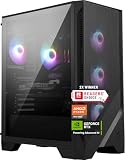
STGAubron Core i7 with RX 580 8GB
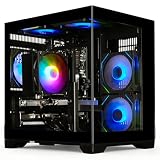
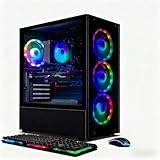
This is the value benchmark for the category: an 8GB RX 580 still handles 1080p high settings in most modern titles, and the 8GB frame buffer ages far better than 4GB and 6GB cards in texture-heavy games. Pair it with 16GB of RAM and a 512GB SSD and you have a machine that needs no immediate upgrades.
STGAubron Ryzen 5 2600 with RTX 2060 6GB
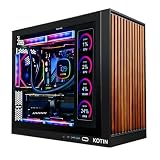
The RTX 2060 is meaningfully faster than the RX 580 and unlocks DLSS, which is the single most effective way to stretch an aging GPU through 2026’s release calendar. The Ryzen 5 2600 is the weak link here, but at 1080p it rarely holds the card back.
YAWYORE Ryzen 5 5600GT
This one relies on the 5600GT’s integrated Radeon graphics, which means smooth 1080p in CS2, Valorant, Rocket League, and Fortnite, but not much beyond esports. What makes it worth considering is the 1TB NVMe drive and a clean upgrade path — drop in a used discrete GPU later and it becomes a genuinely capable system.
YAWYORE Ryzen 7 5700X with RTX 5060
The strongest hardware on this list by a wide margin, and the one most likely to sit above a strict $500 cap depending on the day’s pricing. If you can find it near budget, the RTX 5060 with a Ryzen 7 5700X is a comfortable 1080p high-refresh machine with real 1440p potential.
Dell Gaming Tower with Core i5-7500 (Renewed)
Included with a caveat: the GT 1030 is not a gaming GPU by 2026 standards, and the 7th-gen i5 is genuinely dated. Its value is as a well-built, renewed chassis with 16GB RAM and Windows 11 Pro that you upgrade — treat the included graphics card as a placeholder, not a feature.
Frequently Asked Questions
Can a $500 gaming PC run modern AAA games?
Yes, at 1080p with medium-to-high settings and upscaling enabled. An RX 580 or RTX 2060 will hold 60fps in most 2024–2026 releases, though ray tracing and 1440p are out of reach at this budget.
Are renewed or refurbished gaming PCs worth buying?
They can be, particularly for the chassis, power supply, and licensed OS. Check the seller’s return window and warranty length, and assume you’ll replace the GPU — that’s usually where the cost savings came from.
Should I buy prebuilt or build my own at this price?
Under $500, prebuilts frequently win. Sellers source used and OEM parts at prices individual buyers can’t match, and a self-built machine at this budget often ends up with an older GPU for the same money.
What should I upgrade first?
The graphics card, without exception. After that, storage capacity — 512GB fills quickly. RAM and CPU upgrades rarely deliver noticeable gains at 1080p until you’ve addressed the GPU.
Final Thoughts
For most buyers, the STGAubron Core i7 with RX 580 8GB is the safest sub-$500 pick — no immediate upgrades required and an 8GB frame buffer that will stay usable for years. If DLSS matters to you and pricing cooperates, the STGAubron Ryzen 5 2600 with RTX 2060 is the faster machine, while the YAWYORE Ryzen 5 5600GT is the smart choice for esports players who plan to add a discrete GPU down the line.