Key takeaways
- Pro: RTX 5060 at a sub-$1300 price keeps current-gen GPU features accessible.
- Pro: CyberPowerPC’s broad support infrastructure simplifies warranty claims.
- Con: The listing omits RAM and SSD specifications, making it hard to assess total system balance.
A new gaming pc can solve a frustrating problem: you want to play modern titles without spending an evening troubleshooting component compatibility, thermal curves, and BIOS settings. Prebuilt systems promise convenience, but the market is littered with machines that pair a capable GPU with a weak processor, skimp on storage, or bury the cost of quality parts under inflated brand premiums.
The difference between a smart purchase and a regrettable one comes down to whether the system’s weakest component undermines its strongest. A buyer comparing specs and reading owner feedback can spot a bottlenecked RTX 5070 or a 512GB drive that fills up in a week. This roundup compares eight prebuilt machines across price tiers, focusing on published specs, component balance, and what owners report about sustained performance.
Our top picks
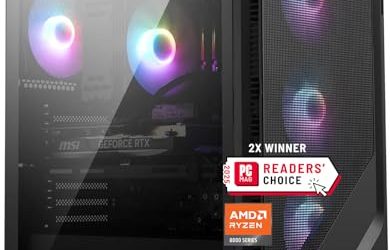
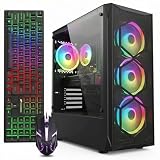
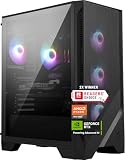
 CyberPowerPC Gaming PC
1TB PCIe 4.0 NVMe SSD supports fast load times
WiFi 6 and Bluetooth 5.3 are built in for wireless connectivity
Tempered glass side panel shows off the custom RGB lighting
2 USB-A 3.2 ports are limited next to the 6 USB-A 2.0 ports
RTX 5060 8GB sits in the mid-range tier for 1440p gaming
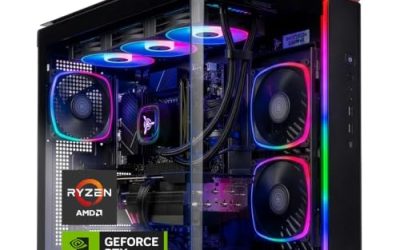
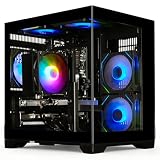
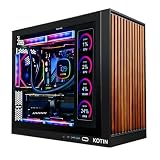
 KOTIN Prebuilt Gaming PC RTX 5070 12GB
Built-in smart display shows live CPU and GPU temperatures while gaming
850W 80 Plus Gold PSU and 360mm liquid cooling support sustained performance
Arrives fully assembled with Windows 11 pre-installed and ready
Monitor must connect to the graphics card ports, not the motherboard ports
At 30 pounds, the tower is heavy to move once set up
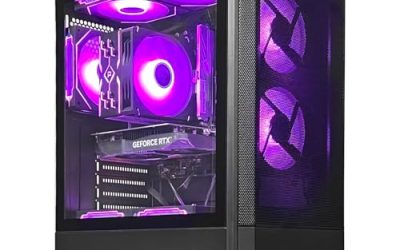
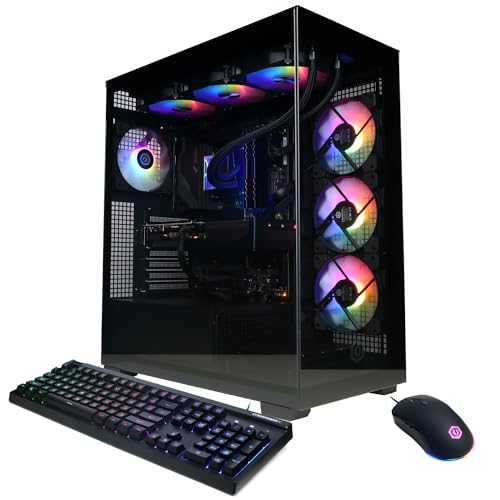 CyberPowerPC Gamer Xtreme VR Gaming PC
- System: Intel Core i9-14900KF 3.2GHz 24 Cores |…
- Graphics: NVIDIA GeForce RTX 5070 12GB Graphics |…
- Connectivity: 2 x USB-C 3.2 | 4 x…
| Product | Key specs | |
|---|---|---|
| CyberPowerPC Gaming PC | Check price | |
| KOTIN Prebuilt Gaming PC RTX 5070 12GB | Check price | |
| CyberPowerPC Gamer Xtreme VR Gaming PC | System: Intel Core i9-14900KF 3.2GHz 24 Cores |… Graphics: NVIDIA GeForce RTX 5070 12GB Graphics |… Connectivity: 2 x USB-C 3.2 | 4 x… | Check price |
 KOTIN Gaming PC Desktop KOTIN Gaming PC Desktop | High-FPS Gaming PC Performance: AMD Ryzen 7 8700F… 16GB DDR5 + 1TB Gen4 NVMe SSD: 16GB… Cool, Clean Gaming Tower Build: A CPU air… | Check price |
 msi Codex Z2 Gaming Desktop msi Codex Z2 Gaming Desktop | Check price | |
 YAWYORE Gaming PC YAWYORE Gaming PC | Check price | |
 YAWYORE Gaming PC Desktop Computer AMD R5 YAWYORE Gaming PC Desktop Computer AMD R5 | Powerful Processor: AMD Ryzen 5 5600GT 3.6GHz (4.6GHz… Motherboard Specification: MSI A520M-A PRO motherboard provides reliable… Integrated Graphics: AMD Radeon Vega Graphics (CPU Integration)… | Check price |
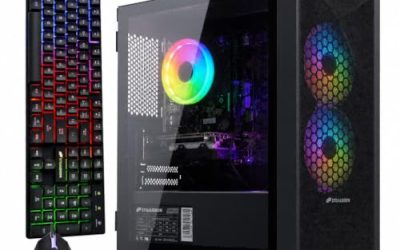
 STGAubron Gaming PC Desktop STGAubron Gaming PC Desktop | This Gaming PC Desktop is well-suited for a… This high-performance Gaming Computer Desktop is capable of… PC Gaming System: This gaming computer desktop is… | Check price |
As an Amazon Associate we earn from qualifying purchases at no extra cost to you.
Quick Picks
| Product | Best for | Price |
|---|---|---|
| CyberPowerPC i5-14400F / RTX 5060 | 1080p gaming on a current-gen GPU | $1286 |
| KOTIN RTX 5070 / Ryzen 7 9700X | Balanced 1440p build | $1999.99 |
| CyberPowerPC Gamer Xtreme VR i9-14900KF / RTX 5070 | VR and CPU-heavy multitasking | n/a |
| KOTIN Ryzen 7 8700F / RTX 5060 Ti | Mid-range price-to-performance | $1299.99 |
| MSI Codex Z2 R7-8700F / RTX 5070 | High-capacity storage with brand reliability | $1969 |
| YAWYORE Ryzen 7 5700X / RTX 5060 | GPU priority over CPU generation | $1299.99 |
| YAWYORE R5 5600GT (iGPU) | Entry-level budget with WiFi | $659.99 |
| STGAubron Core i7 / RX 580 | Esports and casual play at minimum cost | $499.99 |
How We Picked
We compared these systems on four criteria: GPU-to-CPU balance (does the processor feed the graphics card without bottlenecking it?), total memory and storage capacity relative to price, platform upgrade potential, and the gap between what the listing promises and what owners report over weeks of use. A prebuilt is only as good as its weakest link, so we flagged every machine where one component clearly undermines another.
The 8 Best New Gaming PC in 2026
CyberPowerPC Gaming PC (i5-14400F / RTX 5060)
This build targets gamers who want current-generation GPU features—DLSS, ray tracing at moderate settings—without paying for a processor that outruns the graphics card. The i5-14400F is a capable match for the RTX 5060 at 1080p, and CyberPowerPC’s wide service network means warranty issues are unlikely to become headaches. Owners praise the system’s quiet operation under typical gaming loads.
- Pro: RTX 5060 at a sub-$1300 price keeps current-gen GPU features accessible.
- Pro: CyberPowerPC’s broad support infrastructure simplifies warranty claims.
- Con: The listing omits RAM and SSD specifications, making it hard to assess total system balance.
Skip this if you plan to game at 1440p with high-resolution texture packs, where 8GB of VRAM becomes a limiting factor. Also pass if you need a transparent spec sheet before buying.
KOTIN Prebuilt Gaming PC (RTX 5070 / Ryzen 7 9700X)
KOTIN pairs AMD’s Ryzen 7 9700X—a Zen 5 chip—with an RTX 5070, creating one of the more balanced mid-to-high-tier prebuilts available. The 32GB of DDR5 handles multitasking and memory-hungry titles without anxiety, and the Ryzen 7 9700X’s efficiency keeps thermals in check during extended sessions. Owners report smooth 1440p performance in titles like Cyberpunk 2077 and Starfield.
- Pro: Zen 5 CPU gives a clear generational advantage and strong single-thread performance.
- Pro: 32GB DDR5 eliminates the most common upgrade pressure at this price tier.
- Con: Only 1TB of SSD storage forces a second drive purchase for larger libraries.
Skip this if your installed game library already exceeds 1TB or if you work with large project files alongside gaming.
CyberPowerPC Gamer Xtreme VR (i9-14900KF / RTX 5070)
Designed around virtual reality, this system stacks a Core i9-14900KF against an RTX 5070, 32GB DDR5, and a 2TB PCIe 4.0 SSD. The i9 handles the frame pacing and physics calculations that VR titles demand, while the fast NVMe drive reduces load times in open-world experiences. WiFi and Windows 11 Home ship standard. The “GXiVR8080A39” model designation helps confirm exact configuration when comparing listings.
- Pro: The i9-14900KF provides substantial CPU headroom for VR and streaming simultaneously.
- Pro: 2TB PCIe 4.0 storage is generous enough for most users without a secondary drive.
- Con: No published price makes it impossible to evaluate value against the KOTIN 9700X alternative.
Skip this if you need a clear price-to-performance comparison or if your primary use case is flat-screen gaming rather than VR.
KOTIN Gaming PC Desktop (Ryzen 7 8700F / RTX 5060 Ti)
This system occupies the mid-range sweet spot. The RTX 5060 Ti delivers a meaningful performance step over the base 5060, while the Ryzen 7 8700F provides enough cores for modern titles without pushing into premium pricing. At $1299.99, it sits almost identically to the CyberPowerPC i5/5060 build but offers a stronger GPU. The 16GB DDR5 is serviceable but represents the minimum comfortable amount for 2026 game requirements.
- Pro: RTX 5060 Ti provides a clear performance uplift over the standard 5060 at nearly the same price.
- Pro: Ryzen 7 8700F handles 1440p workloads without bottlenecking the GPU.
- Con: 16GB RAM is adequate now but may require an upgrade within two years.
Skip this if you run memory-intensive creative applications or want a system that won’t need a RAM upgrade soon.
MSI Codex Z2 (R7-8700F / RTX 5070)
MSI brings its reputation for chassis design and cooling solutions to a prebuilt that pairs a Ryzen 7 8700F with an RTX 5070, 32GB DDR5, and a 2TB SSD. The storage capacity is the standout—double what KOTIN offers at a similar price. Owners highlight the system’s low noise levels under sustained load, consistent with MSI’s tower design philosophy.
- Pro: 2TB SSD at under $2000 removes the storage upgrade pressure entirely.
- Pro: MSI’s thermal management keeps the RTX 5070 at stable boost clocks.
- Con: The Ryzen 7 8700F is one generation behind the 9700X in KOTIN’s competing build.
Skip this if you want the newest AMD CPU architecture or if you already own a large external drive library and don’t need 2TB internally.
YAWYORE Gaming PC (Ryzen 7 5700X / RTX 5060)
This is the most GPU-forward budget option in the lineup. The Ryzen 7 5700X, while based on Zen 3, still provides enough threads for modern gaming at 1080p. Pairing it with an RTX 5060 means the graphics card is the priority, and the system delivers on that promise. The tradeoff is platform longevity—AM4 is a dead-end socket with no upgrade path beyond the 5000 series.
- Pro: RTX 5060 performance at a competitive system price prioritizes the component that matters most for gaming.
- Pro: The Ryzen 7 5700X handles 1080p without limiting the GPU in most titles.
- Con: AM4 platform offers zero CPU upgrade headroom beyond the 5800X3D.
Skip this if you plan to swap the processor in two or three years without replacing the motherboard and RAM as well.
YAWYORE Gaming PC Desktop (R5 5600GT)
At $659.99, this machine includes no discrete GPU. The Ryzen 5 5600GT relies on integrated Radeon Graphics, which can handle older titles and esports games like League of Legends or Valorant at reduced settings. The 16GB of RAM, 1TB NVMe, and WiFi are generous for the price. Owner feedback centers on its adequacy for light gaming, home office work, and media consumption.
- Pro: Lowest price with WiFi and a 1TB NVMe included, making it a functional compact system.
- Pro: The 5600GT’s integrated graphics are far more capable than older APUs, handling light gaming passably.
- Con: No discrete GPU means this is not a true gaming PC for AAA titles at medium or higher settings.
Skip this if you want to play modern AAA releases at playable frame rates on medium or high settings—this system simply cannot deliver that.
STGAubron Gaming PC (Core i7 / RX 580)
At $499.99, the STGAubron represents the floor of the prebuilt market. The RX 580 8GB is a previous-generation GPU that still renders esports titles at 1080p on medium-high settings, and the 8GB of VRAM is more than the newer RTX 5060 offers. The Core i7 is unspecified by generation, which is a transparency concern. The 512GB SSD fills quickly after installing a handful of modern games.
- Pro: RX 580 8GB remains playable in competitive shooters and older AAA titles at 1080p.
- Pro: The lowest absolute entry price among all eight systems in this list.
- Con: 512GB storage and an unspecified i7 generation make long-term viability uncertain.
Skip this if you want any kind of three-year usable lifespan or if you care about knowing exactly what processor is inside.
Buying Guide
GPU and VRAM: The Component That Defines Your Experience
The graphics card determines what resolutions and settings you can sustain. An RTX 5060 with 8GB is a capable 1080p card, but it will struggle with 1440p in titles that demand high-resolution textures. The RTX 5070’s 12GB provides breathing room for 1440p and entry-level 4K. Below the 5060, the RX 580 is a previous-gen card that still handles esports but cannot run new releases at high settings. Integrated graphics, as found in the 5600GT, serve only the lightest titles. When comparing a new gaming pc, always check VRAM alongside the GPU model.
Platform Longevity: Where Your Money Lasts Three Years
A processor’s socket determines whether you can upgrade later. AM4 boards supporting the Ryzen 5700X have no path beyond the 5800X3D. AM5 platforms, used by the 8700F and 9700X, allow future CPU swaps. Intel’s LGA1700 socket is likewise at end-of-life. If you buy a prebuilt today, the upgrade path matters less than the initial balance—but it still affects resale value and your willingness to keep the system beyond two years.
Memory and Storage: The Details Sellers Omit
16GB of RAM is the minimum for comfortable 1080p gaming with a browser open; 32GB removes the ceiling. Storage follows the same logic: 512GB accommodates two or three AAA installations, 1TB handles a moderate library, and 2TB is generous. When a listing omits RAM or SSD specs—as the CyberPowerPC i5/5060 build does—contact the seller or look for the full model number on the manufacturer’s site before purchasing.
Our Verdict
The KOTIN RTX 5070 / Ryzen 7 9700X build is the top pick: it pairs the best available CPU generation with a strong GPU, adequate RAM, and a transparent spec sheet at a price that reflects its balance. For budget-conscious buyers, the KOTIN Ryzen 7 8700F / RTX 5060 Ti at $1299.99 delivers the best price-to-performance ratio of any true gaming machine in this group. However, if storage capacity matters more than the newest CPU, the MSI Codex Z2 at $1969 wins on its 2TB SSD and proven thermal design.
FAQ
Is 8GB of VRAM enough for a new gaming PC in 2026?
At 1080p, 8GB handles most current titles on high settings, though a few demanding releases already push past that ceiling. For 1440p, 12GB or more is the practical minimum to avoid texture streaming issues.
Do prebuilt gaming PCs use lower-quality parts than self-assembled systems?
Some manufacturers use proprietary power supplies or case fans to cut costs, but major brands like CyberPowerPC and MSI generally publish component lists. Always verify the PSU wattage and brand before buying, as this is the most common compromise in prebuilts.
Can I upgrade a prebuilt gaming PC later?
Yes, but the ease depends on the platform. Systems on AM5 or Intel LGA1700 allow GPU swaps freely and CPU changes if the socket supports a newer generation. AM4 and older sockets have no CPU upgrade path, making a future full-platform replacement more likely.
Is an integrated-graphics system worth buying for gaming?
Only if your expectations match the hardware. The Ryzen 5 5600GT handles esports and older titles at low-to-medium settings, but it cannot run modern AAA releases in a playable way. Treat it as a general-purpose desktop with light gaming capability rather than a true gaming PC.