Key takeaways
- Engineered D-Pad Precision: Built-in pivot points and tactile switches prevent accidental diagonal inputs during retro play.
- Ultra-Low Input Latency: Direct 2.4GHz dongles or wired USB connections offer 1ms to 4ms input response times compared to laggy Bluetooth.
- Authentic Face Button Layouts: Provides true 6-button arcade layouts (Sega Genesis/Saturn style) or tactile diamond layouts ideal for retro titles.
- Preserves Modern Hardware: Prevents wear-and-tear and analog stick drift on expensive $70 primary console controllers.
- Lightweight Ergonomics: Reduced physical mass (170g–220g) minimizes wrist fatigue over multi-hour gaming sessions.
- Dedicated System Mapping: Eliminates the need to constantly rebind controller button configurations inside emulator settings.
What's inside
The Short Answer
No, you do not strictly need a dedicated controller for emulation if you already own a modern game pad like an Xbox Wireless Controller, PlayStation DualSense, or Nintendo Switch Pro Controller. However, your decision depends on one key condition: whether your emulation focus centers on precision 2D games that rely heavily on D-pad accuracy and classic button layouts. If you are emulating modern 3D consoles like the GameCube or PS2, your current controller is ideal. But if you spend hours on 8-bit, 16-bit, or fighting games, spending $25 to $70 on a dedicated retro gamepad drastically improves control responsiveness and physical comfort.
What You Actually Get
Investing in a dedicated emulation controller adds tangible functional and aesthetic upgrades to your home desk or living room entertainment setup. Beyond nostalgic appeal, dedicated hardware addresses the ergonomic and mechanical limitations inherent in standard modern gamepads when running retro software.
As an Amazon Associate we earn from qualifying purchases at no extra cost to you. Product prices and availability are accurate as of the date shown and are subject to change.

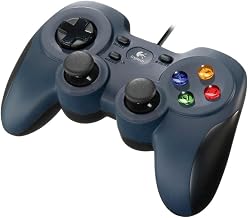
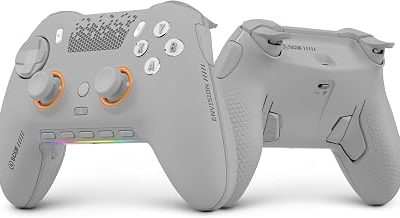
First, you gain a purpose-built directional input. Modern Xbox and PlayStation controllers treat the D-pad as a secondary input placed below the primary analog stick to prioritize 3D camera control. A dedicated retro gamepad reverses this hierarchy, placing a tuned D-pad directly under your primary thumb position. High-quality dedicated controllers feature a physical center pivot with microswitches or soft rubber membranes, preventing the dreaded diagonal misclicks common when performing precise platforming jumps or special moves in classic fighting titles.
Second, dedicated controllers offer significant latency reductions and connection stability. While standard Bluetooth connections on modern controllers introduce between 10ms and 25ms of input lag, specialized retro gamepads operating on a 2.4GHz USB wireless dongle or direct USB-C connection deliver response times down to 1ms to 4ms with polling rates reaching 1000Hz. This minimal lag keeps your gameplay feeling instantaneous on modern high-refresh-rate displays.
Third, specialized hardware simplifies setup integration in home offices or dedicated gaming stations. If you run a multi-PC environment—such as a dedicated retro emulation workstation alongside a daily work machine—a dedicated controller stays permanently configured to your emulation software profiles (such as RetroArch or DuckStation). To keep your desk surface organized and free of cable clutter, many enthusiasts route their emulation setup through a high-bandwidth KVM switch. Hardware like an 8K HDMI KVM switch (ranging from standard $60 units up to $389.99 for dual-monitor, USB 3.0 gaming docks) lets you toggle your specialized controller and dual displays between machines with a single hotkey press.
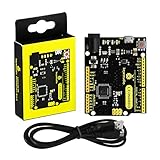
For DIY home craftspeople building custom tabletop arcade setups or wooden console enclosures, dedicated controllers can even be built from scratch. Utilizing a microchip kit like the KEYESTUDIO Leonardo R3 microcontroller development board ($13.99) allows you to wire custom arcade joysticks and arcade buttons directly into a zero-latency USB controller interface tailored to your specific furniture design.
Finally, physical weight and desk footprint play a major role in setup ergonomics. Dedicated retro controllers typically weigh between 170 and 220 grams, making them roughly 30% lighter than a standard modern controller (which averages 280 to 330 grams). This lighter build reduces wrist strain during extended evening gaming sessions.
Pros
- Engineered D-Pad Precision: Built-in pivot points and tactile switches prevent accidental diagonal inputs during retro play.
- Ultra-Low Input Latency: Direct 2.4GHz dongles or wired USB connections offer 1ms to 4ms input response times compared to laggy Bluetooth.
- Authentic Face Button Layouts: Provides true 6-button arcade layouts (Sega Genesis/Saturn style) or tactile diamond layouts ideal for retro titles.
- Preserves Modern Hardware: Prevents wear-and-tear and analog stick drift on expensive $70 primary console controllers.
- Lightweight Ergonomics: Reduced physical mass (170g–220g) minimizes wrist fatigue over multi-hour gaming sessions.
- Dedicated System Mapping: Eliminates the need to constantly rebind controller button configurations inside emulator settings.
Cons
- Desk and Media Console Clutter: Introduces an additional physical peripheral, charging cable, or USB dongle to your living space.
- Limited Modern Game Compatibility: Lack of dual analog sticks or analog shoulder triggers makes retro controllers unusable for modern 3D games.
- Added Expense: Demands an out-of-pocket investment between $25 and $80 for quality hardware.
- Variable D-Pad Quality on Cheap Models: Low-cost knockoffs under $15 often feature mushy rubber pads that perform worse than standard modern controllers.
- Initial Software Configuration: Requires manual button mapping across various emulation software cores before first use.
Who Should Buy It
You should buy a dedicated emulation controller if your retro gaming library consists primarily of 8-bit, 16-bit, arcade, or 2D fighting games where split-second reaction times and D-pad accuracy are critical. It is also an ideal purchase for home theater PC owners who want a permanent gamepad left on their living room media console, or DIY enthusiasts constructing custom arcade cabinets and retro desk setups. In 2026, the refinement of 2.4GHz wireless dongles and tactile D-pad switches makes dedicated controllers feel as crisp and authentic as original coin-operated arcade machines.
Who Should Skip It
You should skip buying a dedicated emulation controller if you primarily emulate 3D platforms—such as GameCube, PlayStation 2, Nintendo Wii, or PlayStation 3—that rely heavily on dual analog sticks and analog triggers. Casual retro gamers who play emulated games infrequently, laptop gamers who prioritize lightweight travel setups, and minimalists who prefer keeping their desk surfaces clean and uncluttered should simply use their existing Xbox, PS5, or Switch controller.
Cheaper Alternatives
| Option | Cost Range | Trade-off |
|---|---|---|
| Existing Xbox / PS5 Controller | $0 (Already Owned) | Suboptimal D-pad position for 2D retro titles; risks wearing out expensive thumbsticks. |
| Budget USB Retro Replica | $10 – $18 | Mushy D-pad performance, higher input latency (~15ms), lightweight plastic shell prone to cracking. |
| DIY Microcontroller Encoder (Leonardo R3) + Arcade Kit | $14 (Board) + $20 (Parts) | Requires manual wiring, basic soldering, and crafting a custom wooden or plastic enclosure. |
| Smartphone Touch Screen Controller Apps | $0 – $5 | Zero physical tactile feedback, high touch latency, and uncomfortable hand cramping after 15 minutes. |
FAQ
Does Bluetooth latency noticeably affect emulation gameplay?
Yes. Standard Bluetooth connections introduce 10ms to 25ms of input lag, which is noticeably slow when playing fast-paced 8-bit and 16-bit platformers that require precise jump timing. Utilizing a dedicated controller with a 2.4GHz USB receiver or a direct wired USB connection lowers latency to 1ms–4ms for instant responsiveness.
Can I use an Xbox or DualSense controller for all emulation?
Technically, yes. Modern controllers possess more than enough buttons, triggers, and thumbsticks to map virtually every retro console up to modern hardware. However, using a lower-positioned D-pad or clicky directional disc for hours can lead to thumb fatigue and inaccurate inputs in traditional 2D titles.
How do I switch one controller between a work PC and an emulation rig?
The cleanest setup solution is using a hardware USB switch or a high-end KVM switch. Ranging from basic $50 switch boxes to $389.99 dual-monitor 8K KVM docks, these devices allow you to route your keyboard, mouse, and dedicated game controllers between two separate computers at the touch of a button without unpairing Bluetooth.
What key specs should I check before buying an emulation controller?
Focus on three primary specifications: connectivity (look for 2.4GHz wireless or USB-C wired over plain Bluetooth), D-pad construction (ensure it features a physical center pivot), and weight (aim for 170g to 220g for optimal hand comfort). A high polling rate of 500Hz to 1000Hz also ensures your button inputs register instantly.