Key takeaways
- Gaming FPS: AMD X3D chips lead by 10-20 percent in CPU-bound titles thanks to 3D V-Cache.
- Multi-core value: Intel often gives more cores and threads per dollar for editing and rendering.
- Platform life: AMD’s AM5 supports multiple CPU generations; Intel tends to change sockets faster.
- Efficiency: X3D chips run cool and sip power; high-end Intel parts draw more under full load.
- Prebuilt availability: Both are everywhere, from Intel Core i5-14400F towers to Ryzen mini PCs.
- Bundled memory: Many AMD kits ship EXPO-ready; Intel leans on XMP, though most RAM supports both.
The Intel versus AMD debate has swung hard toward AMD for pure gaming in recent years, but 2026 makes the choice more nuanced than the internet would have you believe. AMD’s 3D V-Cache chips dominate frame rates, while Intel’s latest Core Ultra parts fight back with strong multi-core value and efficiency. The right pick depends on what you actually do besides game.
This comparison breaks down real gaming performance, price-to-frame value, platform longevity, and which prebuilt systems make sense right now, from a budget Intel Core i5 tower to an AMD Ryzen-powered rig. We keep it practical so you can decide with confidence.
Our top picks


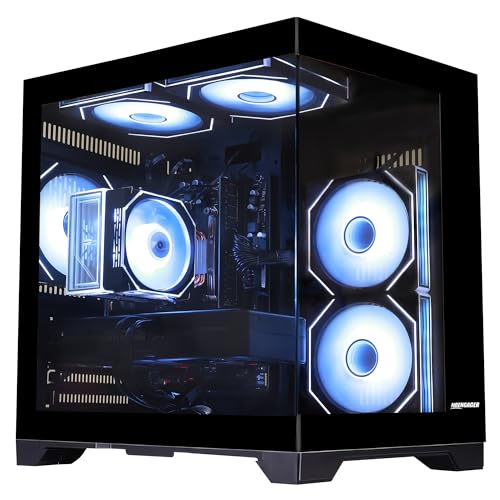


As an Amazon Associate we earn from qualifying purchases at no extra cost to you. Ratings are shown as listed on Amazon.
⚡ Save on Your Next PC — Amazon Prime
Prime members get fast free shipping on the systems above, plus early access to Prime Day & Black Friday PC deals. New members get a 30-day free trial.
Watch: Intel vs AMD for Gaming in 2026 — Video Review
Quick Verdict
For a gaming-first build in 2026, AMD’s Ryzen X3D chips win outright on frame rates and platform upgradability through the long-lived AM5 socket. If you split your time between gaming, streaming, and productivity, or you want the lowest entry price, a modern Intel Core Ultra system is the smarter all-rounder. Neither choice is a mistake; the tie-breaker is your workload.
Key Differences
- Gaming FPS: AMD X3D chips lead by 10-20 percent in CPU-bound titles thanks to 3D V-Cache.
- Multi-core value: Intel often gives more cores and threads per dollar for editing and rendering.
- Platform life: AMD’s AM5 supports multiple CPU generations; Intel tends to change sockets faster.
- Efficiency: X3D chips run cool and sip power; high-end Intel parts draw more under full load.
- Prebuilt availability: Both are everywhere, from Intel Core i5-14400F towers to Ryzen mini PCs.
- Bundled memory: Many AMD kits ship EXPO-ready; Intel leans on XMP, though most RAM supports both.
The Case for AMD
AMD’s Ryzen 7 and Ryzen 9 X3D processors are the frame-rate kings. In CPU-limited games at 1080p and 1440p they routinely top the charts, and they do it while barely warming up. Systems like the AVGPC Hellfire with a Ryzen 7 7800X3D or a GMKtec M5 Ultra mini PC on Ryzen 7 show how flexible the lineup is, from full towers to tiny living-room boxes.
The AM5 socket is the other big draw. Buy a board today and you can likely drop in a next-gen chip later without a full rebuild, which stretches your budget across years rather than a single generation.
The Case for Intel
Intel’s strength is balanced value. A prebuilt like the Intel Core i5-14400F 10-core paired with an RX 9060 XT delivers excellent 1080p and 1440p gaming for less than a comparable X3D build, and the extra threads help streaming and content work. Entry towers on the Core i5 platform remain the cheapest path into PC gaming.
Laptops tilt Intel’s way too in some segments; an ASUS ROG or similar Core i7 machine with an RTX 5060 pairs a proven CPU with strong mobile graphics.
Which Should You Buy?
- Pure high-refresh gaming: choose an AMD Ryzen X3D system.
- Gaming plus streaming or editing: an Intel Core Ultra or Core i7 gives more all-round headroom.
- Tightest budget: an Intel Core i5 prebuilt is usually the cheapest entry.
- Longest upgrade path: AMD AM5 lets you swap CPUs for years.
- Small-form-factor or mini PC: both work, but Ryzen mini PCs are especially efficient.
Frequently Asked Questions
Is AMD really better for gaming than Intel?
For frame rates in CPU-bound games, yes. The X3D chips lead thanks to their large 3D V-Cache. At 4K the gap shrinks because the GPU becomes the bottleneck.
Does Intel still make sense in 2026?
Absolutely. Intel offers strong multi-core value and the cheapest entry-level prebuilts, making it ideal for mixed gaming, streaming, and productivity use.
Will an AMD board last through future upgrades?
AM5 has a long support roadmap, so a board bought now can usually accept a next-generation Ryzen chip, unlike Intel’s shorter socket cycles.
Does the CPU matter at 4K?
Less than at 1080p. At 4K your GPU does most of the work, so mid-range CPUs from either brand keep up with high-end cards.
Final Verdict
Pick AMD X3D if maximum frame rate and a long upgrade path top your list. Pick Intel if you want the best mix of price, multi-core muscle, and everyday versatility. Both brands ship excellent gaming hardware in 2026, so match the chip to how you play and work rather than to a brand loyalty.