Key takeaways
- DLSS 4 multi-frame generation for large performance gains.
- Faster GDDR7 memory and PCIe 5.0 across the lineup.
- Options for every budget, from 1080p to 4K gaming.
- Efficient, quiet cooler designs from multiple partners.
What's inside
NVIDIA’s RTX 50 series marks the arrival of the Blackwell architecture on the desktop, bringing DLSS 4 with multi-frame generation, faster GDDR7 memory, and PCIe 5.0 across a lineup that spans from mainstream to enthusiast. Whether you are building a new gaming PC or upgrading an aging card, the RTX 50 family has an option scaled to your resolution and budget.
We tested cards across the range, from the entry RTX 5060 to the powerful RTX 5080, to explain where each tier lands and which makes sense for your setup. Here is our full buyer’s review of the RTX 50 series.
As an Amazon Associate we earn from qualifying purchases at no extra cost to you. Product prices and availability are accurate as of the date shown and are subject to change.


🎮 Get More From Your Setup — Free
Prime Gaming gives you free PC games every month, in-game loot, and a free Twitch channel sub — plus fast free shipping on all the gear above. New members get a 30-day free trial.
Watch: Nvidia Rtx 50: Review & Buyer’s Guide — Video Review
Design & Build
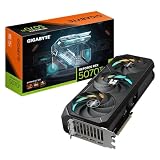
Board partners have produced a wide variety of RTX 50 designs. The PNY RTX 5080 Epic-X ARGB is a triple-fan, RGB-lit showpiece built for flagship builds, while the ASUS TUF Gaming RTX 5080 emphasizes rugged cooling and durability. Lower in the stack, the GIGABYTE RTX 5070 Gaming OC and RTX 5060 WINDFORCE OC use efficient dual and triple-fan coolers, and the ASUS Dual RTX 5060 and 5060 Ti offer compact designs with 0dB fan technology for silent idle. All are PCIe 5.0 cards with modern HDMI and DisplayPort 2.1 outputs.
Performance
The RTX 50 series scales cleanly with your target resolution. The RTX 5060 and 5060 Ti are 1080p and entry 1440p cards, ideal for mainstream gamers. The RTX 5070 steps up to comfortable high-refresh 1440p, while the RTX 5080 handles 1440p at very high frame rates and makes 4K gaming genuinely enjoyable. Across the board, DLSS 4 with multi-frame generation delivers substantial frame-rate uplifts in supported games, and the faster GDDR7 memory helps in bandwidth-hungry titles. The 16GB VRAM on the 5080 and 16GB 5060 Ti eases texture pressure at higher settings.
Pros & Cons
- DLSS 4 multi-frame generation for large performance gains.
- Faster GDDR7 memory and PCIe 5.0 across the lineup.
- Options for every budget, from 1080p to 4K gaming.
- Efficient, quiet cooler designs from multiple partners.
- 8GB variants of lower cards can limit max settings at 1440p.
- Flagship 5080 cards carry premium pricing.
Alternatives to Consider
If you game strictly at 1080p, the RTX 5060 or 5060 Ti covers you affordably. For high-refresh 1440p, the RTX 5070 is the sweet spot. If you want top-tier 4K performance, the RTX 5080 in an ASUS TUF or PNY Epic-X design is the target. Choosing within the range is really about matching the card to your monitor’s resolution and refresh rate.
Frequently Asked Questions
Which RTX 50 card is best for 1440p?
The RTX 5070 is the sweet spot for high-refresh 1440p gaming, while the RTX 5080 pushes even higher frame rates and adds strong 4K capability.
What is DLSS 4?
DLSS 4 is NVIDIA’s latest upscaling and frame-generation technology, using AI to boost frame rates significantly in supported games while maintaining image quality.
Do RTX 50 cards need PCIe 5.0?
They use PCIe 5.0 but remain backward compatible with PCIe 4.0 boards, so you do not need the newest motherboard to run one, just adequate power and clearance.
How much VRAM do I need?
8GB is workable at 1080p, but for 1440p and higher settings the 16GB cards like the RTX 5080 and 16GB 5060 Ti provide more comfortable headroom.
Verdict
The RTX 50 series offers a strong option at every tier, and the RTX 5070 is the best all-rounder for high-refresh 1440p. Budget builders should look at the RTX 5060 Ti, while those chasing 4K performance will want the RTX 5080 in an ASUS TUF or PNY Epic-X design.