Key takeaways
- New standard: ATX 3.1 units like the MSI MAG A850GL and CORSAIR RM750e handle the power spikes of modern GPUs far better than older designs.
- Native cable: A built-in 12V-2×6 connector powers current graphics cards directly, avoiding messy multi-cable adapters.
- Future-proofing: Choosing ATX 3.1 now means your PSU stays compatible with the next GPU upgrade.
What's inside
The power supply is the most overlooked component in a gaming PC, and the one most likely to cause mysterious crashes, shutdowns, and shortened hardware life when it’s wrong. It’s not glamorous, but it’s the part that feeds clean, stable power to everything else, so a smart choice here protects the expensive components around it.
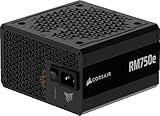
This guide explains how to size a PSU correctly, decode the efficiency and ATX standards that actually matter in 2026, and avoid the traps that catch first-time builders. Modern, well-reviewed units like the MSI MAG A850GL and the CORSAIR RM750e appear as reference points for the wattage, standards, and build quality worth paying for.
As an Amazon Associate we earn from qualifying purchases at no extra cost to you.




⚡ Save on Your Next PC — Amazon Prime
Prime members get fast free shipping on the systems above, plus early access to Prime Day & Black Friday PC deals. New members get a 30-day free trial.
Watch: What PSU Do I Need for Gaming? (2026 Guide) — Video Review
Sizing: Add Up Your Real Draw
Start with the two components that matter: your GPU and CPU. Take the graphics card’s recommended system wattage, factor in your CPU’s power draw under load, and add comfortable headroom. As a practical rule for 2026, a mid-range RTX 5060/5070 build is happy on a quality 750W unit, while high-end systems benefit from 850W to 1000W. Headroom keeps the PSU running efficiently and quietly rather than maxed out.
Efficiency Ratings Explained
The 80 Plus (and Cybenetics) rating tells you how much wall power actually reaches your components instead of being lost as heat. For most gamers, 80 Plus Gold is the value sweet spot, offering strong efficiency without the price premium of Platinum. Higher efficiency also means less waste heat and quieter operation, since the fan spins less to stay cool.
ATX 3.1 and the 12V-2×6 Connector
- New standard: ATX 3.1 units like the MSI MAG A850GL and CORSAIR RM750e handle the power spikes of modern GPUs far better than older designs.
- Native cable: A built-in 12V-2×6 connector powers current graphics cards directly, avoiding messy multi-cable adapters.
- Future-proofing: Choosing ATX 3.1 now means your PSU stays compatible with the next GPU upgrade.
Modularity and Cables
A fully modular PSU lets you connect only the cables you need, which makes for cleaner builds and better airflow than a fixed-cable unit with a bundle of unused wires stuffed into a corner. Semi-modular is a reasonable budget compromise, but for most builders the tidiness and flexibility of full modularity is well worth the small premium.
Don’t Cheap Out on Protection
A PSU sits between your wall outlet and every component you own, so its protection circuitry matters. Reputable units include over-voltage, over-current, and short-circuit protection, plus quality capacitors rated for high temperatures. This is not the place to save a few dollars on an unknown brand; a failing bargain PSU can take other parts down with it.
Tips
- Buy for your GPU’s recommended wattage plus roughly 30% headroom, not the bare minimum.
- Target 80 Plus Gold for the best balance of efficiency, noise, and price.
- Choose an ATX 3.1 unit with a native 12V-2×6 cable to power modern and future GPUs cleanly.
- Stick to reputable brands with real protection features and long warranties; a 10-year warranty signals confidence.
Frequently Asked Questions
How many watts do I need for a gaming PC?
A mid-range 2026 build runs comfortably on a quality 750W unit, while high-end GPUs and CPUs are better served by 850W to 1000W. Size to your specific GPU’s recommendation and add headroom rather than guessing high.
Is a higher-wattage PSU always better?
No. A wildly oversized PSU wastes money and can run less efficiently at low loads. Pick enough wattage for your parts plus sensible headroom; more than that buys nothing for most builds.
Do I need an ATX 3.1 power supply?
For a new build with a current GPU, it’s strongly recommended. ATX 3.1 handles modern power spikes and includes the native 12V-2×6 connector, saving you adapters and improving reliability with today’s graphics cards.
What does 80 Plus Gold actually mean?
It certifies the PSU converts wall power to usable power with high efficiency across typical loads, wasting less as heat. Gold is the value pick for gamers; Platinum and Titanium cost more for marginal gains most users won’t notice.
Conclusion
The right power supply is about matching wattage to your components, choosing a modern ATX 3.1 unit with an 80 Plus Gold rating, and never compromising on build quality and protection. Get it right and the PSU quietly does its job for a decade; get it wrong and it becomes the source of crashes you’ll chase for months. Size sensibly, buy reputable, and let units like the ones above set your baseline.