Key takeaways
- VRAM capacity: 12GB is the practical minimum for 1440p in modern titles; 16GB gives you headroom for 4K textures and future-proofing.
- Resolution target: Match the card to your monitor — 1080p/1440p cards don’t need to be as powerful (or expensive) as true 4K performers.
- PCIe generation and power draw: PCIe 5.0 cards need adequate case airflow and a PSU with the right connectors; check your power supply’s wattage before buying.
- Cooling design: Triple-fan and vapor-chamber coolers run quieter and cooler under sustained load, which matters for long gaming sessions.
- Prebuilt vs. DIY: If you already own a compatible case, motherboard, and PSU, a standalone card is cheaper; if you’re starting from scratch, a prebuilt PC often saves money and hassle.
What's inside
Shopping for a new GPU in 2026 means wading through a market split between two very different upgrade paths: buying a standalone graphics card and slotting it into an existing rig, or picking a prebuilt gaming PC that already has one installed. Add in confusing naming schemes, VRAM sizes that don’t tell the whole story, and wildly different price-to-performance ratios across brands, and it’s easy to overspend on the wrong card or underspend on one that bottlenecks your CPU.
This guide breaks down the best graphics options available right now, from mid-range workhorses to high-end 4K performers, and includes a couple of fully assembled desktops for buyers who’d rather skip the install process entirely. Below, we cover what actually matters when choosing a GPU, review the top picks in detail, and answer the questions we hear most often from gamers upgrading their setups.
As an Amazon Associate we earn from qualifying purchases at no extra cost to you. Product prices and availability are accurate as of the date shown and are subject to change.


🎮 Get More From Your Setup — Free
Prime Gaming gives you free PC games every month, in-game loot, and a free Twitch channel sub — plus fast free shipping on all the gear above. New members get a 30-day free trial.
Watch: Best Graphics In Gaming — Video Review
How to Choose a Graphics Card for Gaming (2026)
- VRAM capacity: 12GB is the practical minimum for 1440p in modern titles; 16GB gives you headroom for 4K textures and future-proofing.
- Resolution target: Match the card to your monitor — 1080p/1440p cards don’t need to be as powerful (or expensive) as true 4K performers.
- PCIe generation and power draw: PCIe 5.0 cards need adequate case airflow and a PSU with the right connectors; check your power supply’s wattage before buying.
- Cooling design: Triple-fan and vapor-chamber coolers run quieter and cooler under sustained load, which matters for long gaming sessions.
- Prebuilt vs. DIY: If you already own a compatible case, motherboard, and PSU, a standalone card is cheaper; if you’re starting from scratch, a prebuilt PC often saves money and hassle.
The Best Graphics In Gaming (2026)s Reviewed
GIGABYTE Radeon RX 9070 XT Gaming OC 16G
This is the card to buy if you want genuine 1440p-to-4K performance without stepping into flagship pricing. The 16GB buffer and PCIe 5.0 interface give it plenty of legs for demanding titles for years to come.
GIGABYTE Radeon RX 9060 XT Gaming OC 16G
A smart mid-range pick that pairs a generous 16GB frame buffer with solid 1440p performance, making it a better long-term value than lower-VRAM competitors in the same price bracket.
ASUS TUF Gaming RTX 5070 OC Edition
Built with military-grade components and a protective PCB coating, this card is designed to survive years of heavy use while delivering strong 1440p performance and ray tracing via GDDR7 memory.
MSI RTX 5070 Ti 16G Gaming Trio OC Plus
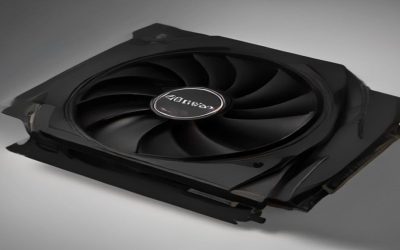
The TRI FROZR 4 cooler with triple STORMFORCE fans keeps this card impressively quiet under load, and the 16GB of GDDR7 makes it one of the strongest choices here for high-refresh 1440p and entry-level 4K gaming.
KOTIN Prebuilt Gaming PC (RTX 5070)
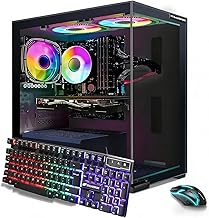
For buyers who want a complete 1440p/4K-ready system out of the box, this prebuilt pairs an RTX 5070 with a Ryzen 7 9700X and 32GB of DDR5, backed by an 850W 80+ Gold PSU and 360mm liquid cooler for sustained performance.
Frequently Asked Questions
How much VRAM do I actually need for 1440p gaming?
12GB is comfortable for most 1440p titles today, but 16GB provides better headroom for texture-heavy games and modded content over the next few years.
Is a prebuilt gaming PC worth it compared to building my own?
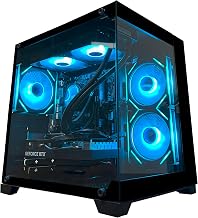
Prebuilts like the KOTIN or MSI Codex Z2 make sense if you don’t already own a case, PSU, and motherboard, since buying those separately often costs more than the markup on a prebuilt.
Do I need PCIe 5.0 on my motherboard to use these cards?
No, PCIe 5.0 cards are backward compatible with PCIe 4.0 and 3.0 slots; you’ll just be limited by the slot’s bandwidth, which has minimal real-world impact on gaming performance.
What’s the difference between the RX 9070 XT and RX 9060 XT?
The 9070 XT targets higher-end 1440p and 4K performance, while the 9060 XT is tuned for smooth 1440p and high-refresh 1080p gaming at a lower price point.
Final Thoughts
For most gamers, the MSI RTX 5070 Ti Gaming Trio OC Plus offers the best balance of performance and cooling for high-end 1440p play, while the GIGABYTE RX 9070 XT is the value pick for those wanting strong 4K capability without flagship pricing. If you’d rather skip the build entirely, the KOTIN prebuilt with an RTX 5070 delivers a complete, well-balanced system ready to game on day one.