Key takeaways
- VRAM Capacity: Aim for at least 6GB for current games at 1080p; 8GB gives more headroom for texture-heavy titles and future-proofing.
- Power Requirements: Check your PSU’s wattage and connector types before buying, especially for cards needing 8-pin power inputs.
- Cooling Design: Dual or triple-fan coolers run quieter and cooler under sustained load than single-fan blower-style designs.
- Port Selection: Confirm the card has the outputs your monitor needs, whether that’s HDMI 2.1 for high refresh rates or DisplayPort for adaptive sync.
- Generation vs. Price: A newer architecture often delivers better efficiency and features than an older card with similar raw specs, even at a similar price point.
What's inside
Shopping for a new GPU in 2026 means wading through a confusing mix of last-generation leftovers, budget rebrands, and new releases that all claim to be the best choice for 1080p gaming. Prices swing wildly, specs get marketed in misleading ways, and it’s easy to overspend on power you don’t need or underspend and end up with stuttery frame rates in modern titles.
This guide breaks down six graphics cards that cover every budget tier for 1080p gaming, from entry-level cards that handle esports titles with ease to mid-range options built for high-refresh-rate gameplay in demanding AAA games. We’ll walk through what actually matters when choosing a card, review the top picks in detail, and answer the most common questions buyers have before checking out.
As an Amazon Associate we earn from qualifying purchases at no extra cost to you. Product prices and availability are accurate as of the date shown and are subject to change.




🎮 Get More From Your Setup — Free
Prime Gaming gives you free PC games every month, in-game loot, and a free Twitch channel sub — plus fast free shipping on all the gear above. New members get a 30-day free trial.
Watch: Best Graphics Card For 1080p Gaming — Video Review
How to Choose a Graphics Card For 1080p Gaming (2026)
- VRAM Capacity: Aim for at least 6GB for current games at 1080p; 8GB gives more headroom for texture-heavy titles and future-proofing.
- Power Requirements: Check your PSU’s wattage and connector types before buying, especially for cards needing 8-pin power inputs.
- Cooling Design: Dual or triple-fan coolers run quieter and cooler under sustained load than single-fan blower-style designs.
- Port Selection: Confirm the card has the outputs your monitor needs, whether that’s HDMI 2.1 for high refresh rates or DisplayPort for adaptive sync.
- Generation vs. Price: A newer architecture often delivers better efficiency and features than an older card with similar raw specs, even at a similar price point.
The Best Graphics Card For 1080p Gaming (2026)s Reviewed
ASUS Dual RTX 3050 OC Edition
The ASUS Dual RTX 3050 pairs a compact 2-slot design with Axial-tech fans that stay quiet even under load, making it a great fit for smaller builds. Its 6GB of GDDR6 and PCIe 4.0 interface handle modern 1080p titles comfortably, and the steel bracket adds durability for years of use.
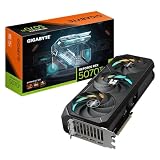
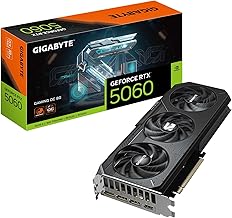
GIGABYTE RTX 5060 Gaming OC 8G
With 8GB of GDDR7 memory and PCIe 5.0 support, the RTX 5060 Gaming OC is the most future-ready card in this lineup, offering strong headroom for demanding games and ray tracing effects at 1080p. GIGABYTE’s WINDFORCE cooling keeps temperatures in check even during extended gaming sessions.
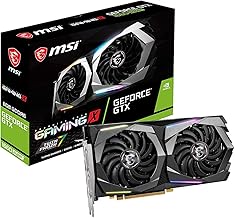
MSI GTX 1660 Super Gaming X
The GTX 1660 Super remains a dependable mid-range choice thanks to its 6GB GDDR6 memory and efficient 192-bit bus, delivering smooth 1080p performance in most modern titles. Its dual-fan cooler and VR-ready certification make it a versatile pick for gamers who don’t need cutting-edge ray tracing.
MSI RTX 3050 Ventus 2X OC
MSI’s Ventus 2X version of the RTX 3050 brings Ampere architecture efficiency to a budget-friendly package, with a 1492 MHz boost clock that keeps esports and competitive titles running smoothly. The dual-fan design and HDMI/DP outputs make it a solid all-around entry point for 1080p gaming.
MOUGOL RX 580 8GB
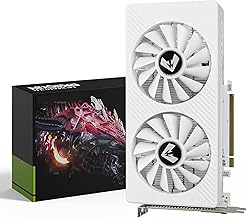
The MOUGOL RX 580 offers 8GB of GDDR5 memory and triple video outputs, giving budget-conscious builders flexibility for multi-monitor setups at 1080p. Its dual-fan cooling keeps noise low, though buyers should expect older-generation performance suited to less demanding titles.
Frequently Asked Questions
Is 6GB of VRAM enough for 1080p gaming in 2026?
Yes, for most current titles 6GB is sufficient, though 8GB provides more comfortable headroom for texture-heavy AAA games and modding.
Do I need an 8-pin power connector for these cards?
It depends on the model. Entry-level cards like the RTX 3050 often draw power directly from the PCIe slot, while higher-performance cards typically require a supplemental 8-pin connector, so check your PSU before buying.
Are older cards like the RX 580 or RX 590 still worth buying?
They can be a good value for casual or esports gaming on a tight budget, but expect to lower settings in newer, more demanding titles compared to current-generation cards.
What’s the difference between PCIe 3.0, 4.0, and 5.0 for 1080p gaming?
At 1080p resolutions, the bandwidth difference between PCIe generations has minimal real-world impact on frame rates, so it shouldn’t be a deciding factor unless you’re also prioritizing future upgrades.
Final Thoughts
For most 1080p gamers in 2026, the GIGABYTE RTX 5060 Gaming OC 8G stands out as the top overall pick thanks to its modern architecture and generous VRAM, while the ASUS Dual RTX 3050 OC Edition offers excellent value for smaller builds. Budget-focused buyers should strongly consider the MSI GTX 1660 Super Gaming X for reliable performance without breaking the bank.