Key takeaways
- Match your resolution: Buy for the display you own — 1080p, 1440p, or 4K each demands a very different tier of GPU.
- VRAM: 12GB is a comfortable baseline for modern games at higher settings; more helps at 4K and with texture-heavy titles.
- Upscaling tech: DLSS and FSR boost frame rates dramatically, so factor in which features each card supports.
- Power and cooling: Check your PSU wattage and case size, since higher-end cards draw more power and run larger.
- Ports: Ensure HDMI 2.1 and DisplayPort 2.1 for high-refresh and 4K output to your specific monitor.
What's inside
The graphics card is the heart of any gaming PC, and the choices in 2026 span an enormous range — from efficient 1080p performers to ray-tracing monsters built for 4K. Picking the right GPU comes down to matching its power to your monitor’s resolution and refresh rate, then leaving a little headroom for the games you’ll play next year.
We compared the standout gaming graphics cards available now across raw performance, VRAM, upscaling features, and value. Whether you’re building a budget 1080p rig or chasing high-refresh 4K, the cards below represent the best of both NVIDIA’s GeForce and AMD’s Radeon lineups.
As an Amazon Associate we earn from qualifying purchases at no extra cost to you. Product prices and availability are accurate as of the date shown and are subject to change.


🎮 Get More From Your Setup — Free
Prime Gaming gives you free PC games every month, in-game loot, and a free Twitch channel sub — plus fast free shipping on all the gear above. New members get a 30-day free trial.
Watch: Best Graphics Gaming Card — Video Review
How to Choose a Gaming Graphics Card
- Match your resolution: Buy for the display you own — 1080p, 1440p, or 4K each demands a very different tier of GPU.
- VRAM: 12GB is a comfortable baseline for modern games at higher settings; more helps at 4K and with texture-heavy titles.
- Upscaling tech: DLSS and FSR boost frame rates dramatically, so factor in which features each card supports.
- Power and cooling: Check your PSU wattage and case size, since higher-end cards draw more power and run larger.
- Ports: Ensure HDMI 2.1 and DisplayPort 2.1 for high-refresh and 4K output to your specific monitor.
The Best Gaming Graphics Cards Reviewed
ASUS TUF RTX 5080 OC
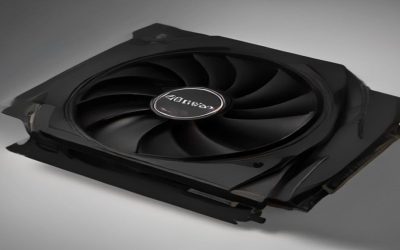
A near-flagship built for high-refresh 4K, the TUF 5080 pairs 16GB of GDDR7 with DLSS 4 and robust cooling. It’s the pick for enthusiasts who want top-tier performance without stepping up to a 5090.
GIGABYTE Radeon RX 9070 XT Gaming OC
AMD’s 16GB RX 9070 XT is a superb 1440p-to-4K performer with PCIe 5.0 and strong rasterization value. It’s the standout Radeon choice for players who want a lot of frames per dollar.
GIGABYTE RTX 5070 Gaming OC
With 12GB of GDDR7, PCIe 5.0, and WINDFORCE cooling, the 5070 is an excellent 1440p card that dips into 4K with DLSS. It hits the sweet spot of price and performance for most builders.
XFX Radeon RX 7900 XT
Packing a generous 20GB of GDDR6, the 7900 XT remains a strong high-resolution option for texture-heavy games. Its large frame buffer future-proofs it for demanding 4K titles.
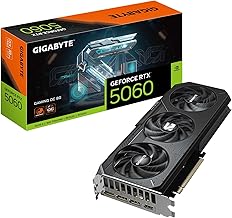
ASUS Dual RTX 5060 OC
The efficient entry point, the compact 5060 delivers smooth 1080p with DLSS 4, a quiet dual-fan design, and 0dB technology. It’s ideal for small builds and mainstream gaming.
Frequently Asked Questions
How much VRAM do I need?
8GB is fine for 1080p, 12GB is a comfortable baseline for 1440p, and 16GB or more is ideal for 4K and future titles with heavy textures.
Is DLSS or FSR worth using?
Definitely. Both upscaling technologies boost frame rates significantly with minimal visual loss, effectively letting a card punch above its native performance.
Do I need a new power supply?
Higher-end cards like the RTX 5080 demand a robust PSU, so check the manufacturer’s recommended wattage and connector requirements before buying.
AMD or NVIDIA — which is better?
AMD often leads on raw rasterization value, while NVIDIA excels at ray tracing and DLSS. Choose based on the games and features you care about most.
Final Thoughts
For high-refresh 4K, the ASUS TUF RTX 5080 is our top recommendation, while the RX 9070 XT delivers the best value for 1440p and light 4K. Mainstream builders on a budget will be well served by the efficient RTX 5060.