Key takeaways
- Wattage headroom: Calculate your system’s peak draw and add at least 20-30% headroom to account for transient power spikes from modern GPUs.
- Efficiency rating: Look for 80+ Gold or higher; it means less wasted heat, lower electricity costs, and generally better internal components.
- ATX 3.1 & PCIe 5.1 support: These standards handle GPU power spikes gracefully and typically include a native 12V-2×6 connector, avoiding melting-cable risks seen with older adapters.
- Modularity: Fully modular units let you use only the cables you need, improving airflow and making cable management far less painful.
- Warranty and build quality: A 7-10 year warranty backed by known internals (Japanese capacitors, dual ball-bearing fans) signals a manufacturer that trusts its own hardware.
What's inside
Choosing the wrong power supply is one of the most expensive mistakes a PC builder can make. A weak or unreliable unit can bottleneck a high-end GPU, trigger random shutdowns under load, or in worst cases damage the very components it’s supposed to protect. With modern graphics cards drawing more transient power than ever, picking a PSU with the right wattage, connector standard, and efficiency rating matters just as much as picking the GPU itself.
This guide breaks down the best power supply units for gaming PCs in 2026, covering everything from compact 600W units for budget builds to 1200W monsters built for multi-GPU or overclocked flagship rigs. We’ll walk through what actually matters when shopping for a PSU, review our top picks in detail, and answer the questions we hear most often from builders.
As an Amazon Associate we earn from qualifying purchases at no extra cost to you. Product prices and availability are accurate as of the date shown and are subject to change.




🎮 Get More From Your Setup — Free
Prime Gaming gives you free PC games every month, in-game loot, and a free Twitch channel sub — plus fast free shipping on all the gear above. New members get a 30-day free trial.
Watch: Best Power Supply Unit For Gaming PC — Video Review
How to Choose a Power Supply Unit For Gaming PC (2026)
- Wattage headroom: Calculate your system’s peak draw and add at least 20-30% headroom to account for transient power spikes from modern GPUs.
- Efficiency rating: Look for 80+ Gold or higher; it means less wasted heat, lower electricity costs, and generally better internal components.
- ATX 3.1 & PCIe 5.1 support: These standards handle GPU power spikes gracefully and typically include a native 12V-2×6 connector, avoiding melting-cable risks seen with older adapters.
- Modularity: Fully modular units let you use only the cables you need, improving airflow and making cable management far less painful.
- Warranty and build quality: A 7-10 year warranty backed by known internals (Japanese capacitors, dual ball-bearing fans) signals a manufacturer that trusts its own hardware.
The Best Power Supply Unit For Gaming PC (2026)s Reviewed
MSI MAG A750GL PCIE5
MSI’s compact 750W unit punches above its weight for mid-range builds, pairing ATX 3.1 readiness and a native dual-color 12V-2×6 cable with a surprisingly small chassis that fits tight cases. Backed by a 10-year warranty, it’s an easy recommendation for anyone running a single high-end GPU without going overboard on capacity.
ASUS TUF Gaming 1000W Gold
This is the sweet spot for enthusiasts building around flagship GPUs, offering ATX 3.1 compatibility, military-grade components, and an Axial-tech fan tuned for quiet operation under load. The 10-year warranty and PCB coating make it a durable choice for builders who want headroom without jumping to 1200W.
ASUS TUF Gaming 1200W Gold
For multi-GPU setups, heavily overclocked systems, or anyone future-proofing against next-gen power demands, the 1200W variant delivers the same military-grade reliability with substantially more headroom. It’s overkill for most builds, but exactly right for power users who don’t want to think about wattage again for a decade.
CORSAIR HX1500i (2025)
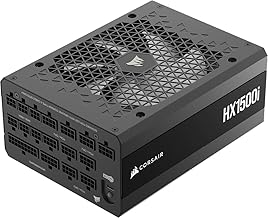
Corsair’s HX1500i is built for extreme builds, combining Cybenetics Platinum efficiency with ultra-low noise operation and full ATX 3.1/PCIe 5.1 compliance. The fluid dynamic bearing fan and native 12V-2×6 cable make it one of the most refined high-wattage options available for no-compromise gaming rigs.
1000W Fully Modular 80+ Gold PSU
This value-focused 1000W unit brings ATX 3.1 readiness, 105°C-rated capacitors, and an RGB low-noise smart fan to builders who want modern standards without paying a premium brand tax. It’s a solid pick for gamers who want strong specs on a tighter budget.
Frequently Asked Questions
How many watts do I need for a gaming PC in 2026?
Most single-GPU builds with a modern mid-to-high-end card run comfortably on 750-1000W, while systems with flagship GPUs or overclocked CPUs should target 1000-1200W for safe headroom.
Is ATX 3.1 necessary for my build?
If you’re running a recent high-wattage GPU, ATX 3.1 is highly recommended since it’s designed specifically to handle the power transient spikes these cards produce, reducing the risk of shutdowns or cable stress.
Does a higher wattage PSU use more electricity?
No. A PSU only draws as much power as your components need; wattage rating is a maximum capacity, not a fixed consumption level, so a higher-rated unit run below its limit is not less efficient.
Is a 600W PSU still viable in 2026?
Yes, for budget or older-GPU builds. A quality 600W unit like the Thermaltake Smart 600W is fine for entry-level gaming systems, but it won’t have the headroom for higher-end current-gen graphics cards.
Final Thoughts
For most gamers, the ASUS TUF Gaming 1000W Gold hits the ideal balance of headroom, reliability, and price, while the Corsair HX1500i (2025) is the clear choice for no-compromise, high-end builds. Budget-conscious builders looking for modern standards without the premium price tag should strongly consider the 1000W Fully Modular 80+ Gold PSU.