Key takeaways
- Resolution and size: Match your panel to your GPU; 1440p at 27 inches is the sweet spot for high frame rates, while 4K at 32 inches maximizes detail.
- Refresh rate: Look for 240Hz or higher for competitive gaming, where OLED’s near-instant 0.03ms response time keeps fast motion crystal clear.
- Panel type: QD-OLED offers vivid, saturated color, while WOLED panels often feature matte coatings that better handle room glare.
- HDR performance: A TrueBlack 400 or HDR10 certification ensures the deep contrast and bright highlights that make OLED HDR so striking.
- Burn-in protection: Modern OLEDs include pixel-shifting, panel refresh cycles, and care features that keep static-image wear at bay over years of use.
What's inside
OLED monitors have become the gold standard for gamers who demand the best image quality money can buy, and in 2026 they are more affordable and more refined than ever. With perfect blacks, per-pixel lighting, near-instant response times, and blistering refresh rates, an OLED gaming panel delivers a picture that traditional LCDs simply cannot match.
We compared the latest QD-OLED and WOLED displays across sizes and resolutions, judging motion clarity, HDR punch, panel coatings, and burn-in protection features. Here is how to choose the right OLED for your setup, followed by the standout monitors we recommend this year.
As an Amazon Associate we earn from qualifying purchases at no extra cost to you. Product prices and availability are accurate as of the date shown and are subject to change.


⚡ Save on Your Next PC — Amazon Prime
Prime members get fast free shipping on the systems above, plus early access to Prime Day & Black Friday PC deals. New members get a 30-day free trial.
Watch: Best OLED Monitor 2026 — Video Review
How to Choose an OLED Gaming Monitor
- Resolution and size: Match your panel to your GPU; 1440p at 27 inches is the sweet spot for high frame rates, while 4K at 32 inches maximizes detail.
- Refresh rate: Look for 240Hz or higher for competitive gaming, where OLED’s near-instant 0.03ms response time keeps fast motion crystal clear.
- Panel type: QD-OLED offers vivid, saturated color, while WOLED panels often feature matte coatings that better handle room glare.
- HDR performance: A TrueBlack 400 or HDR10 certification ensures the deep contrast and bright highlights that make OLED HDR so striking.
- Burn-in protection: Modern OLEDs include pixel-shifting, panel refresh cycles, and care features that keep static-image wear at bay over years of use.
The Best OLED Gaming Monitors Reviewed
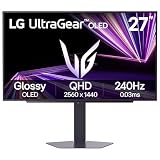
LG 27GX704A-B UltraGear
The LG 27GX704A-B is our top pick for most gamers, delivering a 27-inch QHD OLED panel at 240Hz with a lightning 0.03ms response. G-Sync and FreeSync Premium Pro support, VESA DisplayHDR TrueBlack 400, and HDMI 2.1 make it a superbly balanced, future-ready choice for high-refresh gaming.
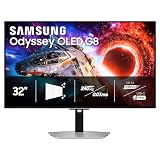
Samsung Odyssey OLED G6
The Samsung Odyssey OLED G6 brings QD-OLED’s rich, punchy color to a 27-inch QHD panel running at 240Hz with a 0.03ms response. A glare-free coating, HDR10, Pantone validation, and Samsung’s OLED Safeguard burn-in protection make it a vibrant, worry-free pick backed by a three-year warranty.
LG 32GX850A-B UltraGear
Gamers who want 4K clarity and speed should look at the LG 32GX850A-B, a 32-inch UHD glossy OLED with a clever dual-mode that switches between 4K at 165Hz and 1080p at 330Hz. G-Sync, FreeSync Premium Pro, and TrueBlack 400 deliver a stunning, flexible flagship experience.
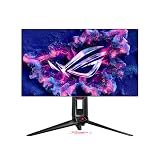
ASUS ROG XG27AQDMGR
The ASUS ROG XG27AQDMGR is a feature-packed 27-inch 1440p 240Hz glossy OLED with a 0.03ms response and 99% DCI-P3 coverage. Its OLED Care Pro suite, TrueBlack glossy coating, and neo proximity sensor make it a smart, protective choice that also plays nicely with PS5 and Xbox.
Samsung Odyssey OLED G93SC
For the ultimate immersive setup, the Samsung Odyssey G93SC is a massive 49-inch curved QD-OLED with a super-ultrawide DQHD resolution at 240Hz. Its 0.03ms response, G-Sync compatibility, and FreeSync Premium Pro wrap you in a cinematic, panoramic view that transforms both gaming and productivity.
Frequently Asked Questions
Should I worry about OLED burn-in?
For typical mixed use, modern OLED monitors include pixel-shifting and panel refresh features that make burn-in unlikely over years. Just avoid leaving bright static elements on screen at max brightness for hours.
QD-OLED or WOLED, which is better?
QD-OLED offers more vivid, saturated color and excellent brightness, while WOLED panels often use matte coatings that reduce glare. Both deliver perfect blacks and superb motion clarity.
Is 1440p or 4K better for OLED gaming?
1440p at 27 inches is ideal for high frame rates and is easier to drive, while 4K at 32 inches offers sharper detail if you have a powerful GPU to push it.
Do I need HDMI 2.1?
HDMI 2.1 matters if you want to run high refresh rates at 4K or connect a PS5 or Xbox Series X at their full capability. For PC via DisplayPort it is less critical.
Final Thoughts
An OLED monitor is the single most impactful upgrade for image quality in 2026. The LG 27GX704A-B is the best-balanced pick for most gamers, the LG 32GX850A-B satisfies 4K enthusiasts, and the Samsung G93SC delivers jaw-dropping ultrawide immersion. Once you experience OLED’s perfect blacks and instant response, going back to a standard LCD feels impossible.