Key takeaways
- Sharp 4K image at desk or near-bed viewing distances.
- Reliable smart-TV software and broad app support.
- Low-latency Game Mode for 60Hz consoles.
- More polished build and image processing than many budget 32-inch TVs.
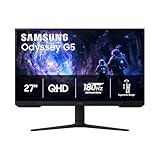
The best 32 inch TV for most bedrooms and compact gaming spaces is the Samsung QN32Q60D if you want 4K, HDR, and a polished smart-TV platform; choose the TCL 32S350G for a cheaper 1080p Google TV, or use a 32-inch gaming monitor if refresh rate matters more than built-in streaming.
Best 32-inch TVs at a glance
| Model | Resolution and refresh rate | HDR and gaming features | Best for | Typical market range |
|---|---|---|---|---|
| Samsung QN32Q60D | 3840×2160, 60Hz | HDR10+, low-latency Game Mode, Tizen | Best overall compact TV | Usually $300–$500 |
| TCL 32S350G | 1920×1080, 60Hz | HDR support, low-latency Game Mode, Google TV | Affordable bedrooms and casual console gaming | Usually $150–$250 |
| Hisense 32A4NV | 1920×1080, 60Hz | HDR support, Game Mode, Google TV | Simple streaming and everyday viewing | Usually $150–$250 |
| LG 32LQ630B | 1366×768, 60Hz | HDR support, Game Optimizer, webOS | Basic cable, streaming, and low-cost use | Usually $130–$220 |
1. Best overall: Samsung QN32Q60D
The Samsung QN32Q60D is the strongest all-round choice when a 32-inch screen must function as both a TV and a gaming display. Its 4K resolution makes text, menus, and close-up console graphics sharper than 1080p, while Samsung’s Tizen platform provides the major streaming services and a familiar interface.
It runs at 60Hz, so it is not a high-refresh gaming TV. That is sufficient for Nintendo Switch, Xbox Series S, PlayStation 5, and most PC gaming at 60 frames per second, but it cannot show 120Hz gameplay. Its Game Mode reduces processing delay; with a modern console connected to the correct HDMI input, practical input lag is generally in the low-teens of milliseconds or better at 60Hz, depending on settings and measurement method.
HDR10+ support is useful for compatible streaming content, but expectations should remain realistic. A small edge-lit TV cannot produce the highlight brightness or deep blacks of a premium full-array or OLED display. HDR may look more colorful, but it will not deliver the dramatic contrast seen on larger high-end screens.
Why choose it
- Sharp 4K image at desk or near-bed viewing distances.
- Reliable smart-TV software and broad app support.
- Low-latency Game Mode for 60Hz consoles.
- More polished build and image processing than many budget 32-inch TVs.
What to know first
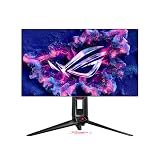
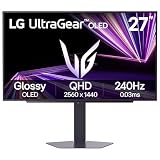
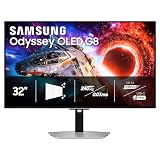
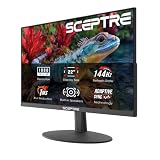
There is no 120Hz panel, HDMI 2.1 gaming pipeline, or sophisticated local dimming. If your priority is competitive PC gaming, a 32-inch 144Hz or 165Hz monitor will be a better display, paired with a separate streaming stick or small computer.
2. Best value: TCL 32S350G
The TCL 32S350G is a practical budget pick for a bedroom, guest room, or small gaming setup. Its 1080p resolution is a good match for a screen viewed from several feet away, and Google TV makes it easy to combine streaming apps, recommendations, and Google Assistant features in one interface.
At 32 inches, 1080p is not automatically a weakness. From roughly 5 to 8 feet away, the difference between 1080p and 4K is difficult to appreciate during normal video. The limitation becomes more obvious when the TV sits on a desk, where small text and PC interfaces benefit from 4K.
The TCL is suited to 60Hz console gaming. Activate Game Mode to bypass extra image processing. Do not use vivid picture modes for games: they often increase brightness and saturation while making shadow detail less accurate and sometimes adding processing delay.
3. Best for simple streaming: Hisense 32A4NV
The Hisense 32A4NV is aimed at buyers who want a straightforward 32-inch smart TV without paying for 4K hardware. Its Google TV interface is useful if your household already uses Android phones, Google Assistant, or YouTube heavily.
It is a sensible choice for streaming shows, news, and sports in a bedroom. Its 60Hz panel and Game Mode are adequate for casual console play, although motion clarity and HDR impact are limited compared with larger or more advanced displays. Treat its HDR capability as a compatibility feature rather than a guarantee of premium HDR brightness.
4. Best low-cost basic TV: LG 32LQ630B
The LG 32LQ630B uses a 1366×768 panel, making it the least sharp option here, but that can be perfectly acceptable for cable television and streaming from a normal sofa or bed distance. LG’s webOS platform is easy to navigate, and Game Optimizer provides useful console settings without requiring extensive manual adjustment.
Choose it when the budget is tight and the TV will be viewed from at least 6 feet away. Avoid it for desktop use: 768p provides noticeably less workspace, and text appears softer when you are sitting close to the screen.
32-inch TV versus 32-inch gaming monitor
The central buying decision is not simply 4K versus 1080p. It is whether you need a television first or a gaming display first.
| Your situation | Recommended class | Why |
|---|---|---|
| Bed or sofa, mostly Netflix and live TV | 1080p smart TV | Lower cost and sufficient sharpness at 5–8 feet |
| Desk, PC gaming, and streaming | 4K smart TV or 4K monitor | Sharper text at 2–3 feet; monitor wins for refresh rate |
| PlayStation 5 or Xbox Series X at 60fps | 4K 60Hz TV | Matches the common 4K/60 console mode |
| Competitive shooters above 60fps | 144Hz or 165Hz gaming monitor | Much smoother motion and lower frame-to-frame latency |
| Small room with several viewers | TV with a wide-viewing-angle panel | Image consistency matters more when viewers sit off-center |
Input lag and refresh rate: what matters in practice
Refresh rate determines how often the display can show a new frame. A 60Hz display refreshes every 16.7 milliseconds. A 120Hz display refreshes every 8.3 milliseconds, while a 144Hz monitor refreshes every 6.9 milliseconds. A faster panel can make camera movement and aiming look smoother, but it does not reduce all latency by itself.
For a 60Hz console, select Game Mode, disable motion interpolation, and turn off unnecessary noise reduction. These settings prevent the television from delaying the image while processing it. A 32-inch TV that measures around 10–15ms of lag at 60Hz will feel responsive for ordinary console play. Competitive players should prefer a monitor with a verified high-refresh mode.
Check the television’s HDMI specification as well as its marketing terms. “Game Mode” does not mean HDMI 2.1, variable refresh rate, or 4K at 120Hz. Most 32-inch TVs in this category are 60Hz models with HDMI inputs designed for 4K at 60Hz or 1080p at 60Hz.
Viewing distance and resolution
Use this practical distance guide:
- 2–3 feet: prefer 4K, especially for PC text, spreadsheets, and strategy games.
- 4–5 feet: 1080p remains good, while 4K provides extra crispness.
- 6–8 feet: 1080p is usually sufficient for films, television, and casual gaming.
- Beyond 8 feet: screen size becomes more important than moving from 1080p to 4K.
A useful bandwidth check explains why 4K/60 and 4K/120 are different purchases. Uncompressed 4K video contains 3840 × 2160 × 60 = about 498 million pixels per second before accounting for color depth and blanking intervals. A 4K/120 signal doubles that to almost 1 billion pixels per second, which is why 4K/120 commonly requires HDMI 2.1 and a compatible panel. A typical 32-inch 60Hz TV is not designed for that signal path.
Picture settings that improve gaming
- Enable Game Mode. This removes cinema processing that can add delay.
- Set sharpness near the neutral midpoint. Excessive sharpness creates halos around text and game objects.
- Use warm or standard color temperature. This usually produces more natural skin tones than Cool mode.
- Set contrast enhancement to low or off. Aggressive dynamic contrast can crush shadow detail.
- Keep HDR enabled on the console, but calibrate it. Adjust the console’s HDR logo until the symbol is barely visible, rather than making the screen permanently over-bright.
- Disable motion smoothing for games. It can create artifacts and increase latency.
Smart-TV features worth paying for
For a bedroom TV, software support can matter more than a small contrast difference. Google TV is convenient for households already using Google accounts and Assistant. Samsung Tizen offers a mature interface and broad app coverage. LG webOS is simple and responsive on basic televisions.
Also check whether the TV supports dual-band Wi-Fi, Bluetooth headphones, casting from your phone, and automatic low-latency mode. Bluetooth is particularly useful in a bedroom because headphones can prevent sound from disturbing others. If the built-in software becomes slow after several years, an external streaming device can usually extend the TV’s useful life, provided the HDMI ports remain available.
Final verdict
Buy the Samsung QN32Q60D for the best combination of 4K sharpness, smart features, HDR compatibility, and responsive 60Hz gaming. Choose the TCL 32S350G when value and Google TV matter more than 4K. The Hisense 32A4NV is another sensible 1080p streaming option, while the LG 32LQ630B makes sense only when low price and distant viewing are the priorities. For desktop gaming above 60fps, skip compact TVs and buy a 144Hz or 165Hz monitor instead.