Key takeaways
- Outstanding QD-OLED image quality with true blacks, high contrast and vivid, accurate color
- Sharp 4K resolution on a 32-inch flat panel that suits gaming, media and creative work
- Near-instant OLED response times with high refresh rate and G-Sync compatibility for smooth motion
- Fully adjustable stand, modern DP 2.1/HDMI 2.1 connectivity and a 3-year burn-in warranty
What's inside
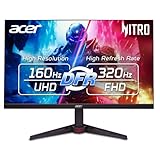
The Samsung Odyssey OLED G8 (G80SH) is a 32-inch 4K gaming monitor built around a QD-OLED panel, combining Ultra HD resolution with the deep blacks, per-pixel contrast and vivid color that quantum-dot OLED is known for. It targets gamers who want a flat, big-screen display that doubles as a stunning panel for movies and creative work, with a fast refresh rate and OLED’s near-instant response times.
This monitor is for players who prioritize image quality and want 4K sharpness at a high refresh rate on a 32-inch canvas. It suits a mix of single-player showcase titles, competitive play and content consumption. If you sit close and want an immersive curve, or you are on a tight budget, a curved ultrawide or a cheaper QHD OLED may serve you better.
As an Amazon Associate we earn from qualifying purchases at no extra cost to you.


⚡ Save on Your Next PC — Amazon Prime
Prime members get fast free shipping on the systems above, plus early access to Prime Day & Black Friday PC deals. New members get a 30-day free trial.
Watch: Samsung Odyssey OLED G8 Review — Video Review
Design & Build
Samsung gives the G80SH a slim metal design with a thin profile and a tidy stand that supports tilt, height, swivel and pivot adjustment. The flat 32-inch QD-OLED panel has a glossy finish that makes colors pop but can show reflections in bright rooms. Connectivity is modern, with DisplayPort 2.1 and HDMI 2.1 support and USB-C with power delivery on the higher-end variants, and Samsung includes its OLED Safeguard features plus a 3-year warranty that covers burn-in, a reassuring inclusion for an OLED panel.
Performance
In use the G80SH is genuinely impressive. The QD-OLED panel delivers inky blacks, exceptional contrast and saturated, accurate color, and 4K resolution on a 32-inch screen looks razor sharp. OLED’s near-instantaneous pixel response means motion is clean with almost no ghosting, and the high refresh rate paired with G-Sync compatibility keeps fast-paced games smooth and tear-free. HDR content looks excellent, with bright specular highlights against true blacks.
There are the usual OLED caveats to weigh. Full-screen peak brightness is more modest than the best mini-LED displays, so in a very bright room the glossy panel and OLED’s lower sustained brightness can feel less punchy. Burn-in remains a theoretical long-term risk with static elements, though Samsung’s protection features and warranty mitigate it, and a 4K-at-high-refresh signal demands a powerful GPU and DisplayPort 2.1 or HDMI 2.1 to drive fully.
Pros & Cons
- Outstanding QD-OLED image quality with true blacks, high contrast and vivid, accurate color
- Sharp 4K resolution on a 32-inch flat panel that suits gaming, media and creative work
- Near-instant OLED response times with high refresh rate and G-Sync compatibility for smooth motion
- Fully adjustable stand, modern DP 2.1/HDMI 2.1 connectivity and a 3-year burn-in warranty
- Lower full-screen brightness than mini-LED, and the glossy finish shows reflections in bright rooms
- Driving 4K at high refresh requires a strong GPU and the latest display outputs
- OLED burn-in remains a long-term consideration with heavy static-content use
Alternatives to Consider
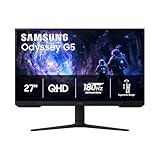
If you want a higher 240Hz refresh in the same 4K, 32-inch class, the Samsung Odyssey OLED G8 (G80SD) is a strong pick, while the 34-inch Odyssey OLED G8 (G85SD) trades flat 4K for an immersive curved ultrawide. Gamers on a tighter budget who can accept lower resolution should look at the 27-inch Samsung Odyssey OLED G6, which brings QD-OLED quality at QHD for considerably less.
Frequently Asked Questions
Is the Odyssey OLED G8 good for competitive gaming?
Yes. OLED’s near-instant response times and the high refresh rate with G-Sync compatibility make motion very clean, though dedicated esports players may prefer a lower-resolution, higher-refresh panel for maximum frame rates.
Does it suffer from burn-in?
Burn-in is a long-term risk with any OLED, but Samsung includes OLED Safeguard features and a 3-year warranty that covers burn-in, which greatly reduces the practical concern for typical mixed use.
What GPU do I need to drive it?
To take full advantage of 4K at high refresh you want a powerful modern graphics card and a DisplayPort 2.1 or HDMI 2.1 connection; less capable GPUs will need to lower settings or use upscaling.
Is the glossy screen a problem?
The glossy finish enhances color and contrast but reflects light, so it looks best in a controlled or dimmer room. In very bright spaces reflections can be distracting.
Verdict
The Samsung Odyssey OLED G8 (G80SH) is a superb 4K QD-OLED display that delivers reference-grade image quality, sharp detail and clean motion in a slim, well-built package with a reassuring burn-in warranty. Its compromises are OLED’s modest full-screen brightness, a reflective glossy panel and the GPU demands of 4K high-refresh gaming. For image-quality-focused gamers with the hardware to feed it, it is one of the most rewarding monitors available.