Key takeaways
- Prioritise cache over core count: For gaming specifically, large L3 cache (AMD’s 3D V-Cache) delivers far bigger frame-rate gains than extra cores. A well-cached 8-core chip will beat a 16-core processor without it in almost every game engine.
- Budget for the whole platform, not just the chip: An AM5 processor needs a new motherboard and DDR5 memory. If your budget is genuinely tight, an AM4 chip lets you reuse existing DDR4 and boards, freeing up cash for a better GPU.
- Check whether a cooler is included: Some budget chips ship with a competent stock cooler, while most X and X3D models don’t. Factor in £25–£60 for aftermarket cooling on any processor sold without one.
- Match the CPU to your resolution and GPU: At 1440p and 4K the GPU does most of the heavy lifting, so a mid-range CPU is often sufficient. At 1080p with a high-refresh monitor, the CPU becomes the bottleneck and the extra spend is justified.
- Think about upgrade headroom: AM5 is supported well into the coming years, so a modest chip today can be swapped for a flagship later on the same board. AM4 is a mature, excellent-value dead end — great now, no future upgrades.
What's inside
Shopping for a gaming CPU under $300 in 2026 is a genuinely confusing exercise. Most benchmark charts are dominated by flagship chips that cost two or three times your budget, and the mid-range is crowded with overlapping SKUs across multiple sockets, generations, and cache configurations. Worse, a “cheap” processor can quietly become expensive once you factor in the motherboard, DDR5 memory, and a cooler that the chip may or may not include in the box.
This guide cuts through that noise. We’ve focused on processors that deliver genuinely high frame rates in real games — not synthetic benchmarks — while staying realistically within a $300 ceiling at typical street prices. Below you’ll find our top recommendations, a practical buying checklist covering sockets, cache, and platform costs, short expert reviews of each pick, and answers to the questions we hear most often from readers building a gaming PC on a sensible budget.
As an Amazon Associate we earn from qualifying purchases at no extra cost to you. Product prices and availability are accurate as of the date shown and are subject to change.





⚡ Save on Your Next PC — Amazon Prime
Prime members get fast free shipping on the systems above, plus early access to Prime Day & Black Friday PC deals. New members get a 30-day free trial.
Watch: Best CPU for Gaming Under $300 — Video Review
How to Choose CPU for Gaming Under $300
- Prioritise cache over core count: For gaming specifically, large L3 cache (AMD’s 3D V-Cache) delivers far bigger frame-rate gains than extra cores. A well-cached 8-core chip will beat a 16-core processor without it in almost every game engine.
- Budget for the whole platform, not just the chip: An AM5 processor needs a new motherboard and DDR5 memory. If your budget is genuinely tight, an AM4 chip lets you reuse existing DDR4 and boards, freeing up cash for a better GPU.
- Check whether a cooler is included: Some budget chips ship with a competent stock cooler, while most X and X3D models don’t. Factor in £25–£60 for aftermarket cooling on any processor sold without one.
- Match the CPU to your resolution and GPU: At 1440p and 4K the GPU does most of the heavy lifting, so a mid-range CPU is often sufficient. At 1080p with a high-refresh monitor, the CPU becomes the bottleneck and the extra spend is justified.
- Think about upgrade headroom: AM5 is supported well into the coming years, so a modest chip today can be swapped for a flagship later on the same board. AM4 is a mature, excellent-value dead end — great now, no future upgrades.
The Best Picks Reviewed
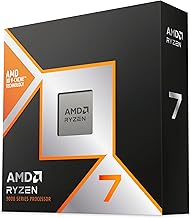
AMD Ryzen 7 9800X3D
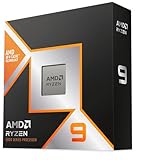
Still the definitive gaming processor of this generation, the 9800X3D’s second-gen 3D V-Cache delivers class-leading 1080p frame rates and, unlike its predecessor, it’s fully unlocked for overclocking. It sits right at the top of our budget bracket at typical 2026 street prices, but if you can find it near $300 it is comfortably the best value performance-per-dollar buy here.
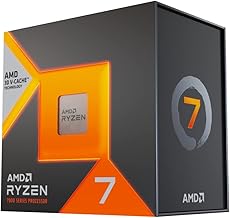
AMD Ryzen 7 7800X3D
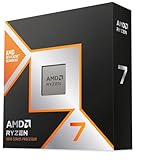
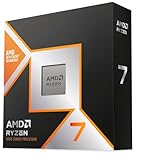
Now that pricing has settled, the 7800X3D is arguably the smartest gaming purchase on AM5 — it trails the 9800X3D by only a handful of frames in most titles while costing meaningfully less. Its modest power draw also means you can pair it with a mid-range air cooler rather than a 360mm AIO.
AMD Ryzen 7 5800X3D
The best upgrade in PC gaming for anyone still on an AM4 motherboard: drop it in, update the BIOS, and you’ll see gains that would otherwise require a full platform rebuild. It keeps pace with far newer chips in cache-sensitive games like flight sims and large-scale strategy titles, all while reusing your existing DDR4.
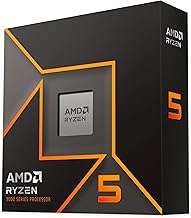
AMD Ryzen 5 9600X
A superb choice for 1440p and 4K builds where the GPU is the limiting factor, the 9600X offers excellent single-thread performance and very low power consumption on the current AM5 socket. Six cores is enough for gaming today, and the platform gives you a clear upgrade path to an X3D chip down the line.
AMD Ryzen 5 5500
The genuine budget option, and remarkable value if you’re pairing it with an entry-level GPU at 1080p. It includes the Wraith Stealth cooler in the box and runs on inexpensive AM4 boards, making it the cheapest credible route to a working gaming PC.
Frequently Asked Questions
Is a $300 CPU enough for high-refresh 1080p gaming?
Absolutely. The X3D chips in this guide are among the fastest gaming processors available at any price, and they’ll saturate a 144Hz or 240Hz monitor in most competitive titles provided your graphics card can keep up.
Should I buy AM4 or AM5 in 2026?
Choose AM5 if you’re building from scratch and want future upgrade options. Choose AM4 if you already own a compatible board and DDR4, or if total system cost is the overriding priority — the 5800X3D and 5500 remain excellent value on that platform.
Do I need more than six or eight cores for gaming?
Not for gaming alone. Very few games benefit meaningfully beyond eight cores, so extra spend is better directed at cache, clock speed, or your GPU unless you also stream, render, or compile regularly.
Will these CPUs bottleneck a high-end graphics card?
At 1440p and 4K, none of our top picks will hold back a modern flagship GPU in any meaningful way. At 1080p, stick with one of the X3D models to avoid leaving frames on the table.
Final Thoughts
For most gamers building in 2026, the AMD Ryzen 7 7800X3D is the sweet spot — near-flagship gaming performance, sensible power draw, and a socket with years of life left in it. If you can stretch to it, the Ryzen 7 9800X3D remains the outright fastest gaming chip in this bracket and is worth the premium for high-refresh 1080p play. And if you’re already on AM4, the Ryzen 7 5800X3D delivers the single biggest performance uplift per dollar of anything on this list, no new motherboard or memory required.