Key takeaways
- Core layout: The Core Ultra 9 285K uses 24 hybrid cores (8 performance + 16 efficiency) with 24 threads and no Hyper-Threading; Ryzen 9 flagships use 16 identical Zen 5 cores with 32 threads via SMT.
- Cache strategy: Intel pairs 36 MB of Smart Cache with high clocks up to 5.7 GHz; AMD’s X3D models stack extra L3 onto one core complex, which is the single biggest reason they lead in game benchmarks.
- Gaming performance: In GPU-limited 4K scenarios the two are effectively tied. Drop to 1080p or 1440p with a top-tier card and X3D parts typically pull ahead, with the gap widest in simulation and open-world titles.
- Productivity: Intel’s 16 E-cores make the 285K excellent at parallel encoding, compiling, and batch export work, where it trades blows with — and sometimes beats — a 16-core Ryzen 9.
- Platform longevity: AM5 has been supported across multiple generations and is the stronger bet for a mid-life CPU swap. LGA 1851 is the newer socket but has a shorter published roadmap.
- Built-in features: Arrow Lake ships with Intel Arc integrated graphics, an NPU for on-device AI features, native Thunderbolt 4, and official DDR5-6400 support — a more generous baseline than AMD’s minimal iGPU.
What's inside
Building a high-end gaming PC in 2026 still comes down to the same fork in the road it did two years ago: Intel’s Core Ultra 9 on the LGA 1851 platform, or AMD’s Ryzen 9 on AM5. Both sit at the top of their respective consumer stacks, both feed the fastest graphics cards you can buy without stuttering, and both will happily chew through a 4K render queue after you’re done playing. But they get there in genuinely different ways — one leans on a wide hybrid core layout and a modern I/O feature set, the other on a stacked cache design that flatters game engines specifically.
That choice matters more than it used to. Socket decisions are effectively multi-year commitments, GPUs have become fast enough that CPU bottlenecks show up at 1440p and not just 1080p, and DDR5 kits, coolers, and boards are all platform-specific spending you don’t get back. This comparison breaks down where each chip actually wins, which builds suit each one, and how to avoid overpaying for performance you’ll never see in the games you play.
As an Amazon Associate we earn from qualifying purchases.


⚡ Save on Your Next PC — Amazon Prime
Prime members get fast free shipping on the systems above, plus early access to Prime Day & Black Friday PC deals. New members get a 30-day free trial.
Watch: Intel Core Ultra 9 vs Ryzen 9: 2026 Battle — Video Review
Quick Verdict
If your priority is the highest average and 1% low frame rates in CPU-bound games — competitive shooters, simulators, strategy titles, heavily modded RPGs — a Ryzen 9 with 3D V-Cache remains the safer pick, and AM5’s longer upgrade runway is a real bonus. If you split your time between gaming and productivity, want strong all-core throughput, native Thunderbolt 4, a capable integrated GPU, and an on-package NPU, the Intel Core Ultra 9 285K is the more complete chip, and the Micro Center bundles make the platform cost far easier to swallow.
Key Differences
- Core layout: The Core Ultra 9 285K uses 24 hybrid cores (8 performance + 16 efficiency) with 24 threads and no Hyper-Threading; Ryzen 9 flagships use 16 identical Zen 5 cores with 32 threads via SMT.
- Cache strategy: Intel pairs 36 MB of Smart Cache with high clocks up to 5.7 GHz; AMD’s X3D models stack extra L3 onto one core complex, which is the single biggest reason they lead in game benchmarks.
- Gaming performance: In GPU-limited 4K scenarios the two are effectively tied. Drop to 1080p or 1440p with a top-tier card and X3D parts typically pull ahead, with the gap widest in simulation and open-world titles.
- Productivity: Intel’s 16 E-cores make the 285K excellent at parallel encoding, compiling, and batch export work, where it trades blows with — and sometimes beats — a 16-core Ryzen 9.
- Platform longevity: AM5 has been supported across multiple generations and is the stronger bet for a mid-life CPU swap. LGA 1851 is the newer socket but has a shorter published roadmap.
- Built-in features: Arrow Lake ships with Intel Arc integrated graphics, an NPU for on-device AI features, native Thunderbolt 4, and official DDR5-6400 support — a more generous baseline than AMD’s minimal iGPU.
Intel Core Ultra 9: Wide, Modern, and Well-Equipped
The Core Ultra 9 285K is the flagship: 24 cores, boost up to 5.7 GHz, 36 MB of Smart Cache, and an LGA 1851 socket that brings a cleaner, cooler-running design than Intel’s previous generation. It’s a strong gaming CPU in absolute terms — nothing in a modern title is going to feel slow — and it’s a genuinely excellent workstation chip. Streamers, editors, and developers benefit most: the E-cores absorb background encoding, shader compilation, and browser tabs without touching the P-cores driving your frame rate.
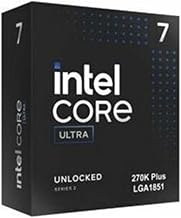
Intel’s real advantage in 2026 is choice at every budget. The Core Ultra 9 285 offers the same 24-core configuration at a 65W base power with 5.6 GHz boost, ideal for small-form-factor or quiet builds. The Core Ultra 7 270K Plus keeps the full 8P + 16E layout at up to 5.5 GHz for meaningfully less money, and the Core Ultra 5 250K Plus (18 cores, up to 5.3 GHz) is the value pick for a 1440p rig. If you want the flagship without hunting for a board, the Micro Center CPU + motherboard combos pairing the 285K with the TUF Gaming Z890-Plus WiFi or MAG Z890 Tomahawk WiFi remove most of the guesswork.
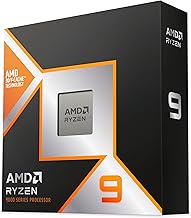
AMD Ryzen 9: The 3D V-Cache Gaming Specialist
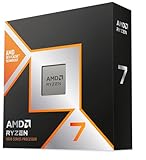
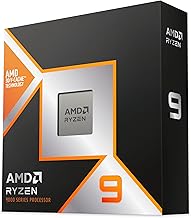
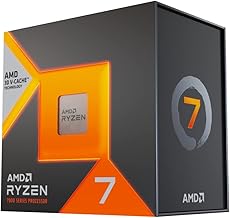
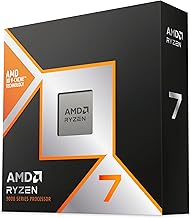
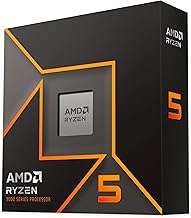
Ryzen 9 takes the opposite approach. Instead of adding more cores, AMD adds more cache, and game engines respond to that dramatically. The result is a CPU that posts higher 1% lows and smoother frame pacing in exactly the situations where a fast GPU exposes CPU weakness: dense city scenes, large multiplayer lobbies, mod-heavy save files, and late-game strategy turns. If you play at 1080p or 1440p on a high-refresh monitor, this is where the money goes furthest.
The trade-offs are real but narrow. Non-X3D Ryzen 9 parts match Intel’s productivity throughput but give up the gaming edge; X3D parts clock slightly lower and cost more. AMD’s integrated graphics are display-output tier rather than usable for gaming, and Thunderbolt support depends on your motherboard. In exchange you get 32 threads, excellent power efficiency under sustained load, and an upgrade path that has already proven itself over several CPU generations.
Which Should You Buy?
- For competitive and high-refresh gaming: pick a Ryzen 9 with 3D V-Cache — the 1% lows justify it.
- For streaming, editing, or code compilation alongside gaming: pick the Core Ultra 9 285K; 16 E-cores handle background
Affiliate disclosure. As an Amazon Associate we earn from qualifying purchases at no extra cost to you. Prices accurate as of the date shown.Intel Core Ultra 9 vs Ryzen 9: 2026…Check price on Amazon