Key takeaways
- Cache: The 9800X3D carries 96MB of L3 thanks to second-generation 3D V-Cache, versus 32MB on the 9700X — the single biggest reason for its gaming lead.
- Clock speeds: The 9700X boosts higher (up to 5.5GHz) while the 9800X3D tops out around 5.2GHz, which occasionally flips the result in lightly threaded, cache-insensitive tasks.
- Gaming performance: Expect roughly 15–25% higher average frame rates from the 9800X3D at 1080p, stretching to 40%+ in cache-hungry simulation and strategy titles, and near-parity when you are fully GPU-bound at 4K.
- Power and cooling: The 9700X is a 65W-class part (with an optional 105W mode) that runs cool on modest air cooling; the 9800X3D is rated at 120W and wants a strong tower cooler or 240mm AIO.
- Overclocking: Both are unlocked, and the 9800X3D was the first X3D chip to allow full multiplier overclocking — a genuine change from the locked-down 7800X3D generation.
- Value: The 9700X sits well below the 9800X3D at retail, and that gap is often large enough to fund a full GPU tier upgrade.
What's inside
The Ryzen 7 9800X3D and the Ryzen 7 9700X are, on paper, near-twins: both are 8-core, 16-thread Zen 5 chips built on the same AM5 platform, both support DDR5 and PCIe 5.0, and both slot into the same motherboards. In practice, they behave like two very different products. One is engineered almost single-mindedly around frame rates; the other is a lean, efficient all-rounder that happens to be a strong gaming chip as a side effect.
In 2026 that distinction matters more than it used to. High-refresh 1440p monitors are now the mainstream default, GPUs like the RTX 50-series and RX 9000-series routinely push past 120 fps in competitive titles, and frame generation shifts more of the workload back onto the CPU. Choosing between these two comes down to a simple question: are you building a gaming PC that occasionally does other things, or a general-purpose PC that occasionally games?
As an Amazon Associate we earn from qualifying purchases.


⚡ Save on Your Next PC — Amazon Prime
Prime members get fast free shipping on the systems above, plus early access to Prime Day & Black Friday PC deals. New members get a 30-day free trial.
Watch: Ryzen 7 9800X3D vs 9700X: 2026 Gaming CPU — Video Review
Quick Verdict
The AMD Ryzen 7 9800X3D is the better buy for anyone whose primary goal is maximum frame rates, particularly at 1080p and 1440p with a high-end GPU, in CPU-bound genres like simulators, strategy games, MMOs and competitive shooters. The Ryzen 7 9700X is the smarter value pick for mixed-use builds, mid-range GPU pairings, small-form-factor systems and anyone who would rather spend the price difference on a better graphics card, more storage or a higher-refresh display.
Key Differences
- Cache: The 9800X3D carries 96MB of L3 thanks to second-generation 3D V-Cache, versus 32MB on the 9700X — the single biggest reason for its gaming lead.
- Clock speeds: The 9700X boosts higher (up to 5.5GHz) while the 9800X3D tops out around 5.2GHz, which occasionally flips the result in lightly threaded, cache-insensitive tasks.
- Gaming performance: Expect roughly 15–25% higher average frame rates from the 9800X3D at 1080p, stretching to 40%+ in cache-hungry simulation and strategy titles, and near-parity when you are fully GPU-bound at 4K.
- Power and cooling: The 9700X is a 65W-class part (with an optional 105W mode) that runs cool on modest air cooling; the 9800X3D is rated at 120W and wants a strong tower cooler or 240mm AIO.
- Overclocking: Both are unlocked, and the 9800X3D was the first X3D chip to allow full multiplier overclocking — a genuine change from the locked-down 7800X3D generation.
- Value: The 9700X sits well below the 9800X3D at retail, and that gap is often large enough to fund a full GPU tier upgrade.
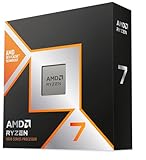
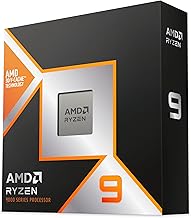
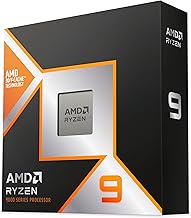
AMD Ryzen 7 9800X3D
AMD’s decision to move the stacked cache beneath the compute die on the 9800X3D fixed the two long-standing weaknesses of X3D parts: thermal headroom and clock ceiling. The result is a chip that no longer asks you to trade productivity performance for gaming performance. It holds its own in rendering, compilation and streaming workloads while remaining, well into 2026, the reference point every gaming CPU review is measured against.
If you are buying into AM5 from scratch, bundles are worth a look — the Ryzen 7 9800X3D paired with the TUF Gaming X870-PLUS WiFi is a clean, well-supported combination, while the Micro Center combo with the GIGABYTE X870 Gaming WIFI6 board adds USB4 and triple M.2 for heavier storage setups. Budget-focused builders can get the same CPU on a B850 platform via the Micro Center 9800X3D and MSI B850 Gaming Plus WF pairing, which keeps PCIe 5.0 and Wi-Fi 7 intact.
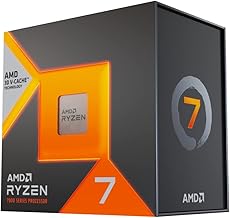
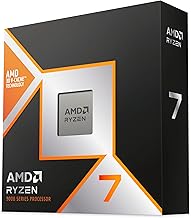
AMD Ryzen 7 9700X
The 9700X is easy to underrate. It delivers the same Zen 5 IPC, the same core count and slightly higher peak clocks, and it does so while sipping power — making it one of the easiest CPUs to cool and one of the best fits for compact ITX builds where a 120W chip would be a nuisance. In office, browser, photo-editing and general creative workloads, you will not perceive a difference between these two processors.
Its limitation is specific rather than general: when a game’s working set exceeds 32MB of L3, the 9800X3D pulls away sharply. If you play Microsoft Flight Simulator, Factorio, Cities: Skylines II, Escape from Tarkov, Stellaris or heavily modded survival games, that gap is impossible to ignore. If you mostly play GPU-bound single-player titles at 1440p or 4K, it is largely academic.
Which Should You Buy?
- For competitive esports at high refresh: pick the 9800X3D — CPU-bound frame rates are exactly where it earns its premium.
- For 4K gaming with a mid-range GPU: pick the 9700X and redirect the savings toward your graphics card.
- For simulators, strategy and MMOs: pick the 9800X3D; large-cache workloads are its home turf.
- For a compact, quiet or low-power build: pick the 9700X for its 65W-class efficiency and easy cooling.
- For maximum longevity on AM5: pick the 9800X3D, or consider the newer Ryzen 7 9850X3D if you want the latest X3D revision.
Frequently Asked Questions
Is the 9800X3D worth the extra cost over the 9700X?
If you play at 1080p or 1440p with a high-end GPU, yes — the frame-rate uplift is real and consistent. At 4K with a mid-range card, the difference shrinks considerably and the 9700X becomes the better-value choice.
What about the older Ryzen 7 7800X3D?
The Ryzen 7 7800X3